Drying Oven Manufacturer,Supplier and Exporter in India
Product Code : EL-CL-8859
Jlab Export is a leading Drying Oven Manufacturer,and suppliers in India
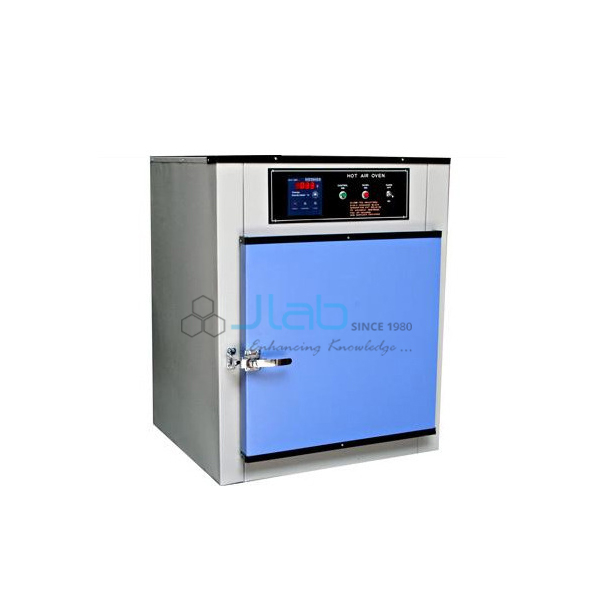
Aggregate and soil for concrete and road tests often has to be dried in bulk, and this 225 litre oven is sized for that work. A blower fan drives hot air through the stainless steel chamber. A microcomputer PID controller with a timer sets the temperature anywhere from 50 to 300°C.
Specifications
| Use | Drying large batches of aggregate and soil samples |
| Capacity | 225 litres |
| Temperature range | 50–300°C |
| Temperature fluctuation and resolution | ±0.75°C and 0.1°C |
| Timer range | 1–9999 min |
| Controller | Microcomputer PID with timer, digital display and temperature control protection |
| Air circulation | Blower fan and air channels, blast and exhaust adjustable on the control panel |
| Construction | Argon-arc welded stainless steel interior, steel sheet exterior, door with silicone gasket and glass viewing window |
| Heater power | 2.5 kW |
| Shelves | 3, with 4 shelf positions |
| Minimum order quantity | 1 unit |
| Dispatch time | Usually 14–18 working days |
| Manufacturer | JLab (Jain Laboratory Instruments Pvt Ltd), Ambala, India |
Drying Practicals in the Concrete Lab
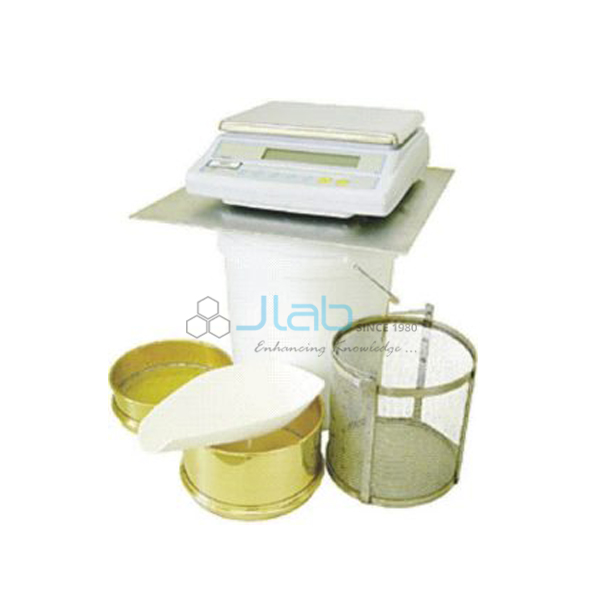
Water absorption and specific gravity of coarse aggregate both depend on a dry mass. Students soak a sample, surface-dry it and weigh it in air and in water with the Coarse Aggregate Density Test Set. The sample then goes into the oven until its mass stops changing, and the dry weighing completes the calculation.
Sieve analysis needs dry material too. A bulk sample is reduced with Sample Splitters (Riffle Boxes), dried here, then graded on Test Sieves. With three shelves, a class can dry the trays of several groups in one run and compare grading curves in the same session.
Frequently Asked Questions
What temperature should I use to dry soil or aggregate?
Use the temperature your test method gives. The oven covers 50 to 300°C, so it can hold the usual drying temperature for soil and aggregate. Soils with gypsum or a lot of organic matter are dried cooler, as the method directs.
How do I know a sample has reached constant mass?
Weigh it, put it back for a further period, and weigh again. When two weighings agree within the limit set by your method, the sample is dry. Let it cool in a closed container before each weighing, so it does not pick up moisture from the air.
What do the blast and exhaust controls do?
The blast setting changes the fan-driven air flow over the trays, and the exhaust lets moist air leave the chamber. Opening the exhaust while wet samples dry carries the water vapour away and shortens the drying time.
How should trays be loaded on the shelves?
Spread each sample thinly in a shallow tray and leave space around the trays so the air can move. The shelves fit in four positions, so a deep container can sit on a lower shelf with the one above moved up.
How is this oven different from the Laboratory Bench Oven?
Both share the controller, range and construction. This one has the larger chamber, a third shelf and the bigger heater, for bulk aggregate and soil. The Laboratory Bench Oven is the two-shelf model for general sample drying.
Other Aggregate and Concrete Test Equipment
For a quote, use Add To Cart or send us a message through the contact page.
Last updated: 6 November 2026