Laboratory Bench Oven Manufacturer,Supplier and Exporter in India
Product Code : EL-SM-8860
Jlab Export is a leading Laboratory Bench Oven Manufacturer,and suppliers in India
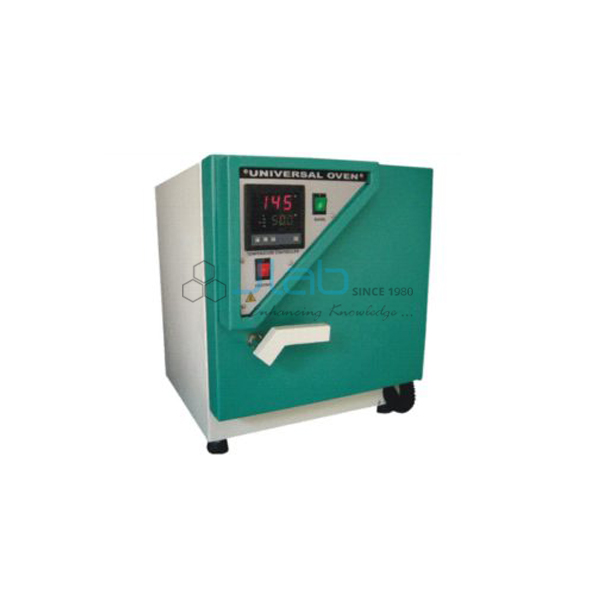
Nearly every soil test needs a water content, and every water content needs a sample dried in an oven. This 220 litre bench oven handles that routine drying. Hot air is moved by a blower fan, and a microcomputer PID controller with a timer holds the set temperature in a 50 to 300°C range.
Specifications
| Use | General drying of laboratory samples |
| Capacity | 220 litres |
| Temperature range | 50–300°C |
| Temperature fluctuation and resolution | ±0.75°C and 0.1°C |
| Timer range | 1–9999 min |
| Controller | Microcomputer PID with timer and digital display, temperature control protection |
| Air circulation | Blower fan with air channels, adjustable blast and exhaust |
| Construction | Stainless steel interior, argon-arc welded, steel sheet exterior, silicone door gasket, glass window |
| Heater power | 2.4 kW |
| Shelves | 2, with 3 shelf positions |
| Minimum order quantity | 1 unit |
| Dispatch time | Usually 14–18 working days |
| Manufacturer | JLab (Jain Laboratory Instruments Pvt Ltd), Ambala, India |
Soil Lab Practicals That Need Drying
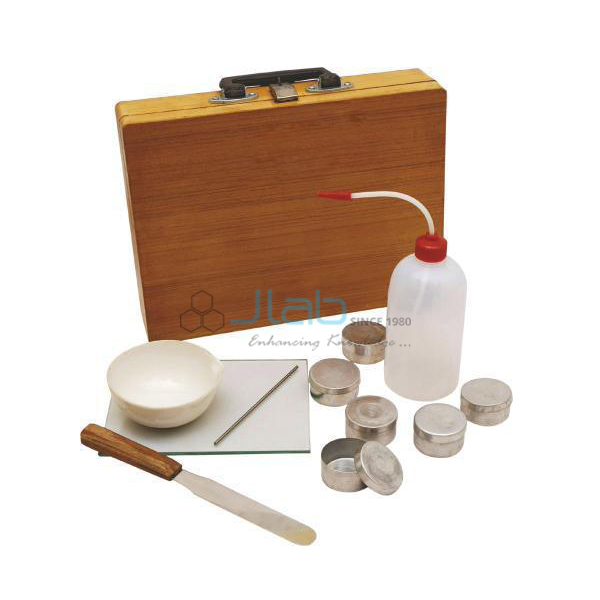
Each liquid limit and plastic limit trial ends with a small sample weighed in a tin and dried here, usually overnight. Students using the Plastic Limit Set and the Hand Operated Casagrande Equipment collect a tray of tins after each class. The next morning they weigh them again and work out the water contents.
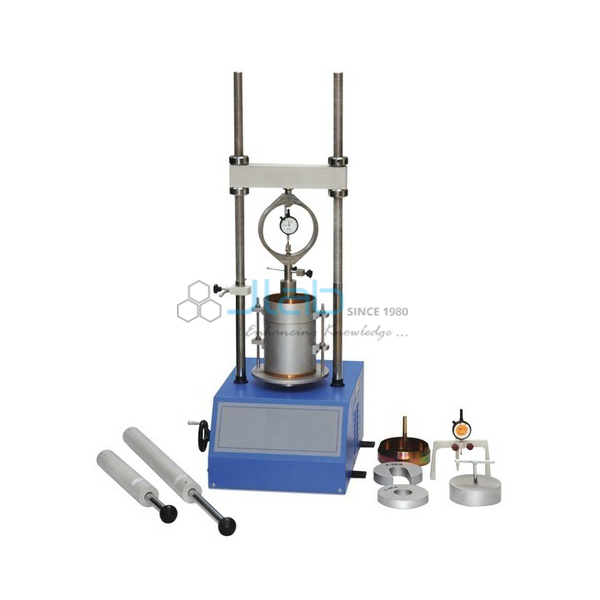
Field density work uses the oven as well. Soil cut from the ground with a Core Cutter is weighed wet. Part of it is then dried for its water content, which gives the dry density. Compaction and CBR samples are handled the same way, one point at a time.
Frequently Asked Questions
How is soil water content found by oven drying?
Weigh the empty tin, then the tin with wet soil. Dry it to constant mass and weigh again. The water content is the mass of water lost divided by the mass of dry soil, given as a percentage.
Can wet samples go in while others are nearly dry?
It is better not to. Fresh wet samples give off a lot of vapour. Nearly dry samples in the same chamber can take some of it back up, so their mass stops falling. Load a new batch together at the start of a drying run.
Why does the door have a glass window?
The transparent thermal glass lets you look at the samples without opening the door, so the chamber temperature is not disturbed. The silicone gasket seals the door when it is closed.
What is the timer used for?
It lets you set a drying period on the controller, from 1 to 9999 minutes. That helps with long runs, but a sample still counts as dry only when repeat weighings show its mass has stopped changing.
Is this the same as the Drying Oven?
Not quite, though the controller, temperature range and stainless steel chamber are alike. This bench oven has two shelves in three positions and a 2.4 kW heater for general sample drying. The Drying Oven is a little larger, with an extra shelf, for bulk aggregate and soil.
Other Soil Mechanics Test Equipment
For a quote, use Add To Cart or send us a message through the contact page.
Last updated: 6 November 2026