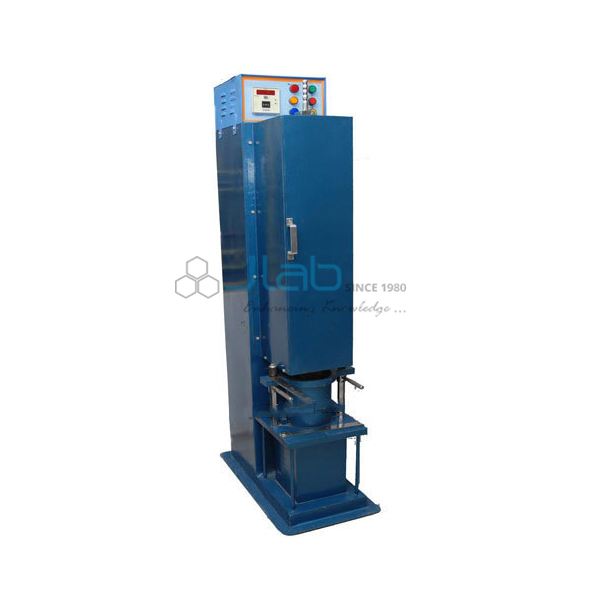
Core Cutter Manufacturer,Supplier and Exporter in India

Product Code : EL-SM-8872
Jlab Export is a leading Core Cutter Manufacturer,and suppliers in India
Driven into the ground and dug out full of soil, a steel core cutter gives a sample of known volume for field bulk density. The core is trimmed, weighed and dried for its moisture content. The set has the cutter, a driving dolly and a driving rammer, and suits soft to firm soils free of stones. It comes in two sizes, 100 mm dia x 130 mm high and 150 mm dia x 180 mm.
Specifications
| Set contents | Core cutter, driving dolly and driving rammer |
| Material | Steel, protected against corrosion |
| Sizes | 100 mm dia x 130 mm high, or 150 mm dia x 180 mm |
| Test | Field density and moisture content of soil |
| Minimum order quantity | 10 units |
| Dispatch time | Usually 4–6 working days |
| Manufacturer | JLab (Jain Laboratory Instruments Pvt Ltd), Ambala, India |
Field Density Practicals
Students level a small patch of ground and put the dolly on the cutter. They drive both down with the rammer until the cutter is just below the surface. They dig it out, trim the soil flush with both ends and weigh it. The bulk density is the mass of soil in the cutter divided by the cutter volume.
A sample from the core is dried in a Laboratory Bench Oven to give the water content w, and dry density = bulk density / (1 + w). The class can compare that figure with the maximum dry density from a Proctor test in a Compaction Mould. On stony ground nearby, the same density is measured with the Sand Replacement Equipment.
Frequently Asked Questions
Which soils suit the core cutter method?
Soft to firm fine-grained soils such as clays and silty soils without gravel. In stony, very hard or dry crumbly ground the cutter rim gets damaged or the core falls apart, so the sand replacement method is used there.
How is the dry density calculated?
Subtract the empty cutter mass from the mass of the cutter full of trimmed soil, then divide by the inside volume of the cutter to get bulk density. Dry density is bulk density divided by (1 + w), with w written as a decimal.
What is the driving dolly for?
The dolly sits on top of the cutter while it is rammed in. It takes the blows instead of the cutter rim and lets the cutter go fully into the soil, so the cylinder comes out completely filled.
Which cutter size should I choose?
Both work the same way. The 150 mm dia cutter takes a larger core, which averages out small changes in the soil. The 100 mm dia cutter is lighter to drive, carry and weigh, and suits most teaching labs.
What mistakes give wrong densities?
Common errors are leaving soil proud of the ends or scooping it hollow, losing moisture before weighing, and using a nominal volume. Measure the inside diameter and height of your own cutter and work out its volume from them.
Other Field Density Apparatus
- Cone Apparatus (sand cone for gravels and coarse soils)
- Sand Pouring Cylinder
- Bulk Density Kit (small soil cores in brass cylinders)
For a quote, use Add To Cart or send us a message through the contact page.
Last updated: 6 November 2026