CBR Test Machine Hand Operated Manufacturer,Supplier and Exporter in India

Product Code : EL-SM-8862
Jlab Export is a leading CBR Test Machine Hand Operated Manufacturer,and suppliers in India
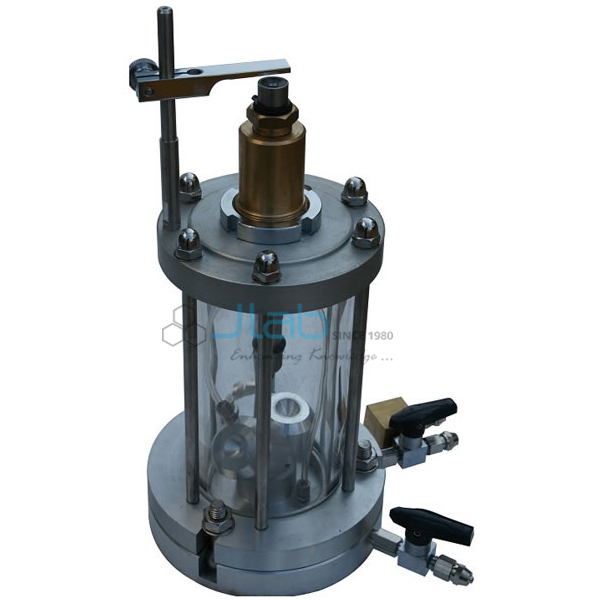
California Bearing Ratio tests in the lab are run on soil compacted in a mould, and this hand-operated machine does the loading. Its 5000 kg load frame has high and low rates of travel on the load screw. The set includes the mould, piston, spacer disc, surcharge weights, perforated plate and two rammers.
Specifications
| Load frame | Hand operated, 5000 kg capacity, high and low rates of travel of the load screw |
| Mould | Gun-metal/brass, 150 mm internal diameter × 175 mm high, perforated base plate, 50 mm extension collar |
| Penetration piston | 50 mm face diameter, adjustable bracket for the penetration dial gauge |
| Spacer disc | 148 mm diameter × 47.7 mm high, detachable handle |
| Surcharge weights | Annular 2.5 kg, 147 mm dia with 53 mm hole, and slotted 2.5 kg, 147 mm dia with 53 mm slot |
| Perforated plate | Gun-metal/brass, 148 mm dia, adjustable stem and lock nut, metal tripod for a dial gauge |
| Rammers | 2.6 kg with 310 mm drop, and 4.89 kg with 450 mm drop |
| Also in the set | Cutting collar |
| Minimum order quantity | 1 unit |
| Dispatch time | Usually 14–18 working days |
| Manufacturer | JLab (Jain Laboratory Instruments Pvt Ltd), Ambala, India |
CBR Practicals for Highway Students
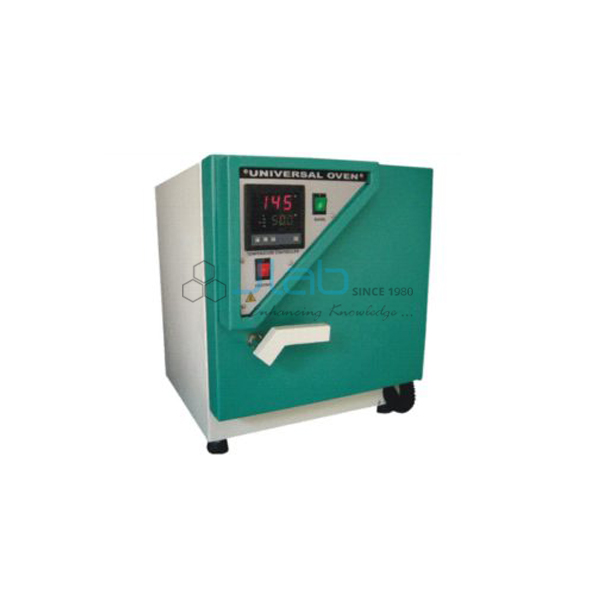
Students mix the soil at the planned water content and compact it in the mould over the spacer disc, using the light or heavy rammer to suit the method. A sample from each batch goes to the Laboratory Bench Oven to confirm the water content. For a soaked test, the mould stands in water under the surcharge weights, and the tripod dial gauge on the perforated plate records any swell.
The piston is then pushed in at a steady rate by turning the handle. Load is read on a proving ring, such as JLab Proving Rings, at set penetrations. The CBR is that load as a percentage of the standard load, and the class can compare it with in-place results from the Field CBR Equipment.
Frequently Asked Questions
Which rammer should I use?
The 2.6 kg rammer with a 310 mm drop is for light compaction, and the 4.89 kg rammer with a 450 mm drop is for heavy compaction. Follow the number of layers and blows your test method gives for the one you choose.
What is the spacer disc for?
It sits in the bottom of the mould while the soil is compacted. When the disc is taken out and the mould turned over, the gap above the soil holds the perforated plate and the surcharge weights for soaking and testing.
Why are there high and low rates of travel?
The high rate brings the piston quickly down to the specimen. The low rate is for the test itself, where the piston has to go in at a steady speed while you read the load and penetration dials.
What are the usual mistakes in a CBR practical?
Forgetting to seat the piston with a small load before zeroing the dials, letting the rate of penetration vary, and leaving off the surcharge weights. A load curve that is concave at the start also needs its zero corrected before the CBR is read.
What else is needed to run the test?
The frame applies the load, and a proving ring fitted to it measures that load. The piston bracket and the tripod each take a dial gauge, one for penetration and one for swell. Add these to your enquiry if your lab has none.
Other CBR and Compaction Equipment
For a quote, use Add To Cart or send us a message through the contact page.
Last updated: 6 November 2026