Sand Replacement Equipment Manufacturer,Supplier and Exporter in India

Product Code : EL-SM-8885
Jlab Export is a leading Sand Replacement Equipment Manufacturer,and suppliers in India
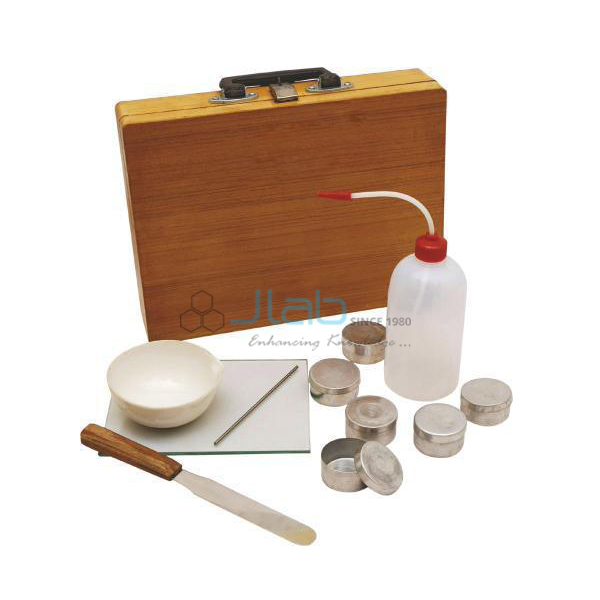
This set measures the dry density of a compacted layer by replacing the soil dug from a test hole with calibrated sand. Sand poured from the machined cast aluminium cylinder fills the hole, and its mass divided by its bulk density gives the hole volume. A calibrating container and a tray of plated sheet steel come with the cylinder.
Specifications
| Use | Dry density of compact, fine and medium-grained soils |
| Pouring cylinder | Cast aluminium, machined |
| Calibrating container | Plated sheet steel |
| Tray | Plated sheet steel |
| Minimum order quantity | 10 units |
| Dispatch time | Usually 4–6 working days |
| Manufacturer | JLab (Jain Laboratory Instruments Pvt Ltd), Ambala, India |
Field Density Practicals with Sand
In the lab, students first calibrate a clean, dry sand graded through Test Sieves. Running it into the calibrating container gives its bulk density, and pouring onto a flat surface gives the mass that fills the cone. On site they level the surface, dig a hole through the layer and keep every bit of the excavated soil for weighing.
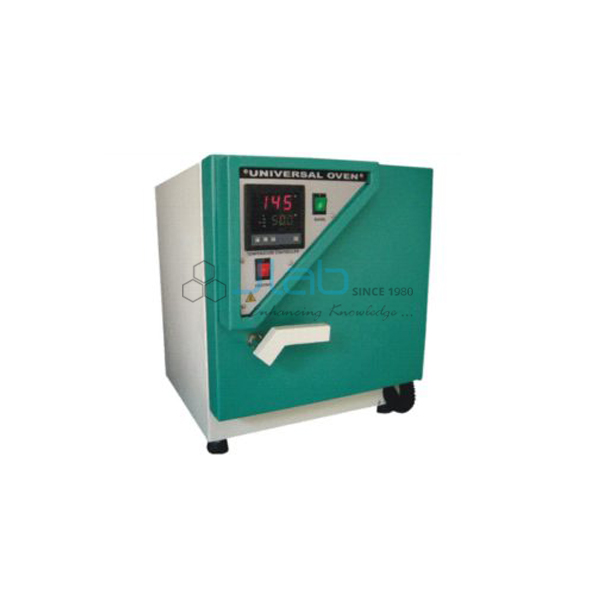
The cylinder is set over the hole and sand runs in until it stops. The hole volume is the mass of sand used, less the cone mass, divided by the sand bulk density. Soil mass over that volume gives the bulk density, and a moisture sample dried in a Laboratory Bench Oven gives the dry density. On clay fill the class can repeat the test with a Core Cutter.
Frequently Asked Questions
Why is the pouring cylinder filled to the same level each time?
How full the cylinder is sets the height the sand falls into the cone and the hole. A different fill changes how densely the sand packs, and so the hole volume worked out from it. Fill the cylinder to the same mark for calibration and for every field test.
What kind of sand should be used?
Clean, dry, uniformly graded sand that flows freely. Damp sand or sand with mixed grain sizes packs differently from one pour to the next, which changes the volume worked out for the hole.
Why is the sand left in the cone subtracted?
When the cylinder is opened over the hole, sand fills the hole and also the cone beneath the cylinder. The mass that fills the cone is found during calibration and taken off the total, leaving only the sand in the hole.
Which soils suit this method?
Compact fine and medium-grained soils, including ground too stony or hard for a core cutter to be driven. For coarse gravels a larger sand cone, such as the Cone Apparatus, holds enough sand for the bigger hole.
What errors are common in student tests?
Footsteps or traffic near the hole shake the sand into a denser state, so too much is used. Other errors are losing part of the dug soil and leaving it in the sun before weighing.
Other Field Density and Compaction Apparatus
- Sand Pouring Cylinder (small and large cylinders with conical funnel)
- Compaction Mould
- Plate Bearing Test
For a quote, use Add To Cart or send us a message through the contact page.
Last updated: 20 November 2026