Cone Apparatus Manufacturer,Supplier and Exporter in India
Product Code : EL-SM-8866
Jlab Export is a leading Cone Apparatus Manufacturer,and suppliers in India
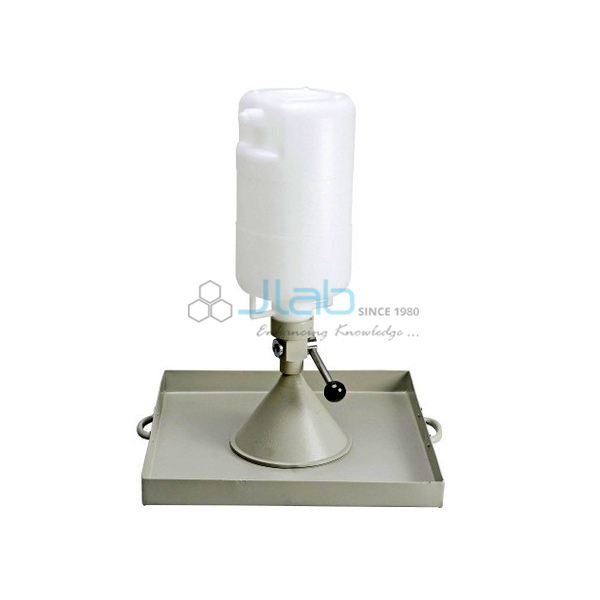
The sand cone method finds the in-place density of compacted fill. A small hole is dug, the soil from it is weighed, and the hole is filled with sand of known density. This 305 mm (12 in) apparatus is the large size, meant for gravels and coarse soils. Two identical cones are joined by a central valve below a metal sand cylinder.
Specifications
| Use | Field density of gravels and coarse soils |
| Cone diameter | 305 mm (12 in) |
| Cones | Two identical cones with a valve in the centre |
| Sand container | Metal cylinder on the top cone, clear plastic end for viewing the sand flow, carrying handles |
| Density plate | Circular |
| Thermometer | Pocket dial type, 25–125°F |
| Hand tools | 1 in steel chisel, stainless steel spoon, bristle brush, rubber mallet |
| Sample bags | Poly bags, 100 |
| Minimum order quantity | 10 units |
| Dispatch time | Usually 4–6 working days |
| Manufacturer | JLab (Jain Laboratory Instruments Pvt Ltd), Ambala, India |
Field Density Practicals for Civil Students
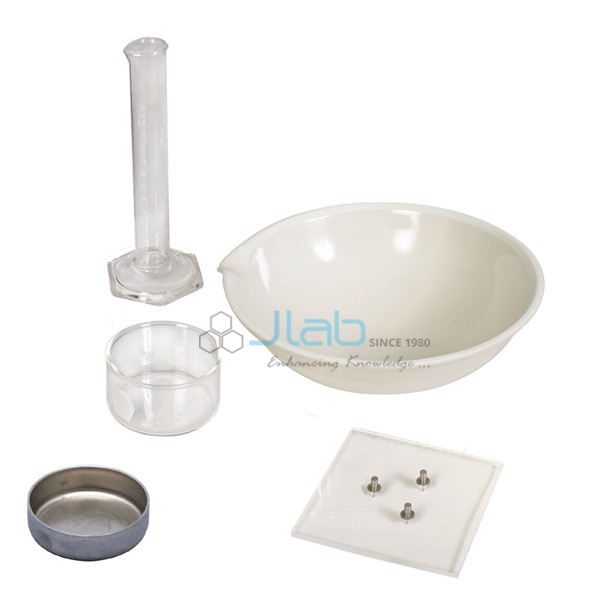
On a compacted fill, students level a spot, seat the density plate and dig a hole through its opening with the chisel, spoon and mallet. Every bit of soil goes into a sample bag for weighing. Part of it is then dried in the Laboratory Bench Oven for the water content.
The apparatus is turned valve-down onto the plate and the valve opened, so sand runs into the hole and the lower cone. The mass of sand used, less the amount that fills the cone and plate, gives the hole volume. Teachers can compare the result with the Sand Replacement Equipment on finer soil, or with the Core Cutter on soft cohesive soil.
Frequently Asked Questions
Why does the sand have to be calibrated?
The method rests on two values: the bulk density of the sand and the mass that fills the cone and plate. Both are found in the lab with the same sand before field work, and found again for each new batch of sand.
Why use the large 305 mm cone?
Gravels and coarse soils need a bigger hole for the sample to be representative of the fill. The 305 mm cone covers a wider opening than the smaller cones used on sands and fine soils.
What causes errors in a sand cone test?
Vibration from nearby plant, which packs the sand more densely, and soil lost while digging. Damp or dirty sand, a plate that rocks on the surface and closing the valve too early also give a wrong hole volume.
What is the clear plastic end on the cylinder for?
It lets you watch the sand as it runs, so you can see the moment the flow stops and close the valve. The handles let one person lift and turn the full apparatus.
How is dry density worked out from the readings?
Divide the mass of soil dug out by the hole volume to get the bulk density. Divide that by one plus the water content, as a decimal, to get the dry density. Comparing it with the maximum dry density from a compaction test gives the relative compaction.
Other Field Testing Equipment for Soil
For a quote, use Add To Cart or send us a message through the contact page.
Last updated: 6 November 2026