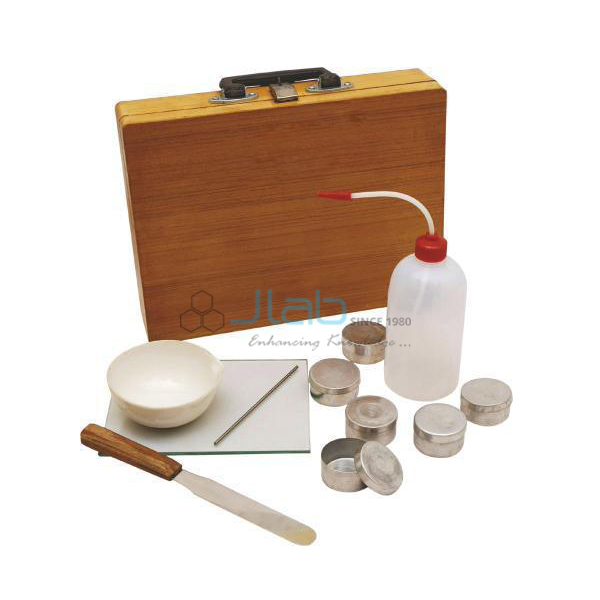
Direct Shear Apparatus Manufacturer,Supplier and Exporter in India
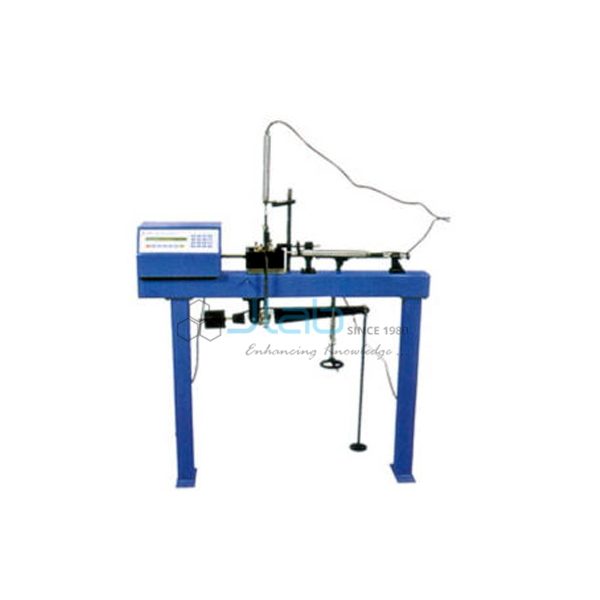
Product Code : EL-SM-8883
Jlab Export is a leading Direct Shear Apparatus Manufacturer,and suppliers in India
A direct shear test pushes the two halves of a soil specimen past each other along one plane while a normal load presses on it. This motorised apparatus shears round specimens of 60 or 100 mm and square ones of 60 x 60 or 100 x 100 mm. It runs at 0.00001 to 9.99999 mm/minute with up to 5000 N of shear force, on undisturbed or remoulded soils.
Specifications
| Specimens | 60 and 100 mm dia; 60 x 60 and 100 x 100 mm square (60 x 60 x 25 mm for direct shear strength) |
| Drive | Closed loop controlled motor with epicycloid reducers |
| Shear speed | 0.00001 to 9.99999 mm/minute, with a separate return speed for residual shear |
| Display resolution | 0.00001 mm for speed and displacement |
| Maximum shear force | 5000 N over the whole speed range |
| Vertical load | Direct up to 500 N, or up to 5500 N with 10:1 lever arm |
| Controls | Keyboard and alphanumeric display with memory, automatic check and position reset, settable maximum box travel, alarm lamps |
| Box carriage | On ball track with antifriction system |
| Ordered separately | Shear box, hollow punch and tamper |
| Power supply | 230 V AC, single phase, 50 Hz |
| Minimum order quantity | 1 unit |
| Dispatch time | Usually 14–18 working days |
| Manufacturer | JLab (Jain Laboratory Instruments Pvt Ltd), Ambala, India |
Shear Strength Practicals for Students
Students trim or compact a specimen into the shear box, set the normal load through the lever and let the sample consolidate. They then shear it at a chosen rate, logging shear force against horizontal displacement. A Dial Gauge on the loading cap shows whether the soil compresses or dilates, and the specimen is dried in a Laboratory Bench Oven for its water content.
Repeating the test at three or more normal loads gives points of peak shear stress against normal stress. A straight line through them follows tau = c + sigma tan(phi), giving the cohesion c and friction angle phi on a Mohr-Coulomb plot. The class can then compare these values with results from the Triaxial Test Set.
Frequently Asked Questions
How many specimens do I need for c and phi?
Test at least three specimens of the same soil, each under a different normal load. Plot peak shear stress against normal stress. The slope of the fitted straight line gives phi and its intercept on the shear axis gives c.
How slow should a drained test run?
Slow enough that no pore water pressure builds up while shearing. Sands can be sheared fairly fast, but clays need very slow rates, which is why the speed goes down to 0.00001 mm/minute. Base the rate on the consolidation time of the soil.
What is a residual shear test?
After the peak, a clay keeps losing strength as displacement grows, down to a residual value. The box is sheared, returned and sheared again several times. A faster return speed and a set maximum travel let the machine run those reversals by itself.
Which box size should I use?
The 60 mm boxes suit fine-grained soils and the usual teaching tests. The 100 mm boxes take soils with coarser particles, which need room to move in the shear zone. Even the biggest grains should be small compared with the specimen thickness.
Is the shear box included?
No. The shear box, hollow punch and tamper are ordered separately, so you can choose the round or square box sizes for the specimens you plan to test.
What are the limits of the direct shear test?
The failure plane is forced along the gap between the box halves, and pore pressure is not measured. Drainage can only be controlled through the shearing rate. Triaxial tests give that control when it is needed.
Other Soil Strength and Consolidation Equipment
For a quote, use Add To Cart or send us a message through the contact page.
Last updated: 6 November 2026