Flask Round Bottom Manufacturer,Supplier and Exporter in India
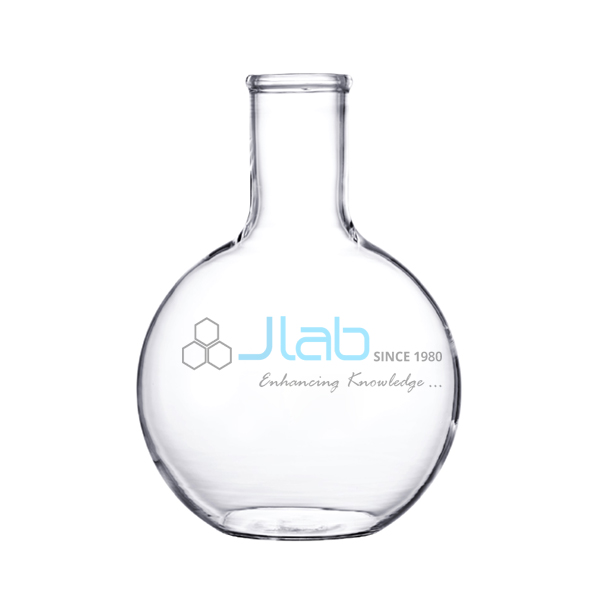
Product Code : EL-SLE-5710
Jlab Export is a leading Flask Round Bottom Manufacturer,and suppliers in India
Flask Round Bottom (code EL-SLE-5710) is a narrow-neck borosilicate glass flask with a round bottom, used for heating, boiling and distilling liquids in school, college and university chemistry labs. JLab lists it in four capacities — 50, 100, 500 and 1000 ml — each with its own neck outside diameter. It is made by Jain Laboratory Instruments Pvt Ltd (JLab) at its works in Ambala, India.
Get a quote: use the Add To Cart enquiry button below, or send your quantity and destination through the contact page.
Specifications
| Parameter | Detail |
|---|---|
| Material | Borosilicate glass |
| Neck | Narrow neck |
| Bottom | Round bottom |
| Capacities listed | 50 ml, 100 ml, 500 ml and 1000 ml |
| 50 ml flask | Neck O.D. 26 (as listed) |
| 100 ml flask | Neck O.D. 26 (as listed) |
| 500 ml flask | Neck O.D. 34 (as listed) |
| 1000 ml flask | Neck O.D. 45 (as listed) |
| Neck O.D. unit | Not stated in the listing — ask JLab to confirm the neck size if a bung, clamp or adapter must fit |
| Quality check | Each flask is visually inspected before dispatch |
| Pack quantity | Each (sold individually) |
| Minimum order quantity | 10 units |
| Dispatch time | Usually 7–10 working days |
| This listing covers | The flask in the capacity you order; flask stand, clamp and heating equipment are separate catalogue items |
| Product code | EL-SLE-5710 |
| Manufacturer | Jain Laboratory Instruments Pvt Ltd (JLab) — OEM |
| Country of origin | India (made in Ambala, Haryana) |
How Does It Compare with Other JLab Flasks?
| Model | Bottom and neck | Capacities listed | Other listed details |
|---|---|---|---|
| This flask (EL-SLE-5710) | Round bottom, narrow neck | 50, 100, 500 and 1000 ml | Borosilicate glass; neck O.D. given for each size |
| Flask Flat Bottom | Flat bottom, narrow neck | Five sizes listed | Borosilicate glass |
| Narrow Neck Round Bottom Flasks, Borosilicate Glass | Round bottom, narrow neck | 100, 250, 500, 1000, 2000, 3000 and 5000 ml | Borosilicate glass |
| Round Bottom Flask | Round bottom | 500 ml | Borosilicate glass; heat and chemical resistant; clear |
Choose this flask for small-scale teaching work: the 50 and 100 ml sizes suit individual student set-ups, and the 500 and 1000 ml sizes suit demonstrations and bigger batches. The narrow-neck round bottom range goes up to 5000 ml for larger preparations, and the flat-bottom flask stands on the bench without a support ring.
What Is the Round Bottom Flask Used For?
A round bottom flask is the usual vessel for heating and boiling liquids, for simple distillation and for reflux, because its curved wall spreads heat evenly and copes with heating and reduced pressure better than a flat base. In schools it is used to demonstrate distillation, and in class 11 and 12 chemistry practicals and college organic chemistry labs it holds the reaction mixture in heating and reflux set-ups. The narrow neck takes a cork or rubber bung bored for a delivery tube or thermometer. It is everyday chemistry lab glassware for any school lab setup in India or abroad.
Because the bottom is round, the flask will not stand on its own: rest it on a flask stand or cork ring, and clamp it by the neck to a retort stand while heating. Heat it in a heating mantle, a water bath or over a wire gauze rather than in a bare flame, add a few anti-bumping granules before boiling, and fill it only about half to two-thirds full for distillation. Borosilicate glass tolerates heating and temperature changes far better than soda-lime glass, but let a hot flask cool before washing it and check for chips or star cracks before each use, as damaged glass can fail when heated.
What to Specify When Ordering
- Capacity — 50, 100, 500 or 1000 ml; list each capacity with its quantity in your enquiry.
- Neck size — if the flask must take an existing bung, clamp or adapter, ask JLab to confirm the neck O.D. of the size you choose.
- Quantity — the minimum order is 10 units; schools often add a few spares for breakage.
- Supports and heating — add a flask stand, retort clamp or heating mantle to the same enquiry if your benches need them.
Frequently Asked Questions
What is a round bottom flask used for?
Heating, boiling, simple distillation and reflux. The round shape heats evenly, so it is the usual flask wherever a liquid is boiled in a school, college or research chemistry lab.
Which capacities are available?
Four: 50, 100, 500 and 1000 ml, all in borosilicate glass with a narrow neck. For larger volumes, JLab’s separate narrow-neck round bottom flask listing goes up to 5000 ml.
What is the neck diameter of each size?
The listing gives neck O.D. figures of 26 for the 50 and 100 ml flasks, 34 for the 500 ml and 45 for the 1000 ml, but does not state the unit. Ask JLab to confirm the dimension when a bung, clamp or adapter has to fit.
Does this flask have a ground-glass joint?
No joint is mentioned; the listing describes a plain narrow neck. A round bottom flask with joint is listed separately, linked below, for assemblies built from jointed glassware.
How is it different from the flat bottom flask?
Both are narrow-neck borosilicate glass flasks. The flat-bottom version stands on the bench by itself, while the round bottom needs a stand or clamp but heats more evenly, which makes it the normal choice for boiling and distillation.
Are a flask stand and clamp included?
No. This listing covers the flask only; the polypropylene flask stand, the 3-finger retort clamp and the heating mantle are separate items, linked below, and can go on the same enquiry.
What is the minimum order and dispatch time?
The minimum order is 10 units, supplied as individual pieces. Dispatch is usually within 7–10 working days after each flask has been visually inspected; transit time for export orders depends on the destination and shipping method.
What should an export enquiry include?
The capacities and quantities, the destination country and port or city, your preferred delivery terms such as FOB or CIF, any packing or labelling needs, and the tender reference if you are buying against a tender.
Who manufactures this flask?
Jain Laboratory Instruments Pvt Ltd, trading as JLab, makes it at its works in Ambala, Haryana, India, and quotes for it directly as the manufacturer.
OEM Manufacturer
JLab is the trading name of Jain Laboratory Instruments Pvt Ltd, a maker of laboratory glassware and school science equipment in India, incorporated in 2017 and based on Hargolal Road, Ambala, Haryana. These round bottom flasks are produced at JLab’s own works rather than sourced from a trader, so schools, colleges, dealers and importers buy direct from the factory, every flask is visually inspected before it is packed, and repeat orders are handled by the manufacturer itself. JLab exports worldwide and ships to buyers in every region — Austria in Western Europe, Romania in Eastern Europe, Mexico in North America, Turkmenistan in Central Asia and Oman in the Middle East are examples. Tender buyers will find details on the JLab lab tenders page.
Flasks, Supports and Heating
- Flask Flat Bottom — the flat-bottom borosilicate version that stands on the bench.
- Narrow Neck Round Bottom Flasks, Borosilicate Glass — listed from 100 ml up to 5000 ml for larger volumes.
- Round Bottom Flask with Joint — borosilicate round bottom flasks with a joint, for jointed assemblies.
- Flask Stand — a polypropylene stand with stepped supports for round bottom flasks up to 10 litre capacity.
- Heating Mantle — a heating surface for flasks of various capacities, used for distillation, digestion and extraction.
- Retort Clamp (3 Finger) — an aluminium clamp with rubber-covered jaws for holding glassware on a retort stand.
See more in the School Lab Equipment range or the Beakers and Flasks range of laboratory glassware.
Request a Quote
Quotes come direct from the manufacturer. Use the Add To Cart enquiry button on this page, or send the capacities and quantity you need (minimum 10 units), any stand, clamp or heating mantle to add, and your delivery location through the contact page.
Last updated: 4 October 2026