Force Pump Manufacturer,Supplier and Exporter in India
Product Code : EL-SLE-4557
Jlab Export is a leading Force Pump Manufacturer,and suppliers in India
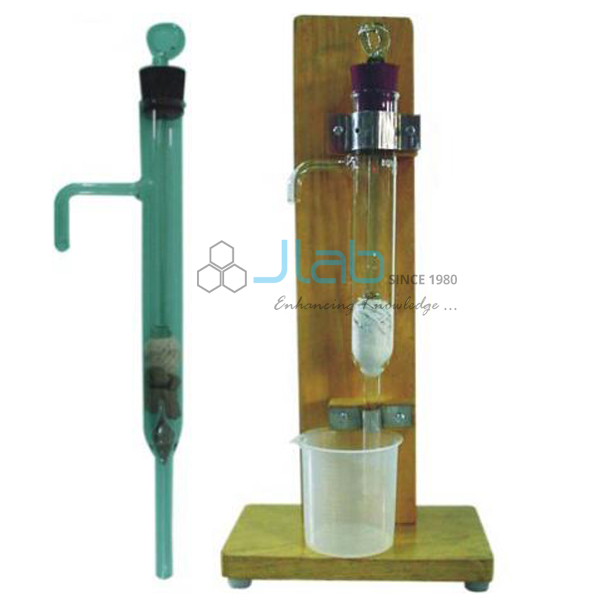
Force Pump (code EL-SLE-4557) is a working demonstration model that shows the principle of a force pump — water is taken into a cylinder and then driven out under pressure — for physics lessons in schools and colleges. It has a cylinder with a non-return valve, and the outlet tube from the subordinate cylinder is drawn out into a jet so that students see the water expelled at high force. It is made by Jain Laboratory Instruments Pvt Ltd (JLab) at its works in Ambala, India.
Specifications
| Parameter | Detail |
|---|---|
| Purpose | Demonstrates the working principle of a force pump |
| Construction | Cylinder with a non-return valve |
| Outlet | Outlet tube from the subordinate cylinder, drawn out into a jet to show water expelled at high force |
| Quality check | Each force pump is visually inspected before dispatch |
| Pack quantity | Each (sold individually) |
| Minimum order quantity | 10 units |
| Dispatch time | Usually 7–10 working days |
| Product code | EL-SLE-4557 |
| Manufacturer | Jain Laboratory Instruments Pvt Ltd (JLab) — OEM |
| Country of origin | India (made in Ambala, Haryana) |
How Does It Compare with Other JLab Pump Models?
| Model | Pump type | Details given in each listing |
|---|---|---|
| This force pump (EL-SLE-4557) | Force pump | Cylinder with non-return valve; outlet tube from the subordinate cylinder drawn out into a jet |
| Force Pump on Stand | Force pump, mounted on a stand | Glass; approx. 400 mm overall height |
| Lift Pump | Lift pump | Borosilicate glass; non-return valves; tube fitted for fluid outlet; height approx. 355 mm |
Choose this model when the lesson centres on the jet — the drawn-out outlet makes the forcing stroke easy to see from the back of the room. The Force Pump on Stand is listed as a stand-mounted glass version, and the Lift Pump shows the other classic pump design, so many teachers order the two pump types together to compare them.
What Is the Force Pump Used For?
The force pump is a standard example in secondary-school lessons on pressure and atmospheric pressure, usually taught next to the lift pump. In a force pump, raising the piston lowers the pressure inside the barrel, so atmospheric pressure pushes water in through the inlet valve; pushing the piston down closes that valve and drives the water out through a non-return valve to the delivery side. Because the water is pushed out rather than simply lifted to a spout, a force pump can send water above its own barrel and out as a jet — the effect this model’s drawn-out outlet tube is designed to show. Teachers use it to explain hand pumps, fire-pump and fountain principles, and why valves matter in any reciprocating pump.
For a clean demonstration, use clear water (a drop of food colour helps visibility), keep a tray under the outlet, and point the jet away from the class. After the lesson, empty and dry the model, and handle the narrow jet tip with care.
What to Specify When Ordering
- Quantity — the minimum order is 10 force pumps; plan one per demonstration bench or student group.
- Stand or no stand — this listing does not mention a stand, while the Force Pump on Stand is a separate listing; say which version you need.
- Material and size — not stated in this listing, so ask JLab to confirm them in the quotation if your syllabus or tender specifies them.
- Companion lift pump — add the Lift Pump to the same enquiry if you teach both pump types.
Frequently Asked Questions
What does the Force Pump demonstrate?
How a force pump takes in water and then forces it out under pressure through a non-return valve. The outlet tube is drawn out into a jet, so the strength of the delivery stroke is easy to see.
What does the non-return valve do?
It lets water pass in one direction only. Once water has been pushed past it, the valve closes and stops the water flowing back into the cylinder on the next stroke.
How is a force pump different from a lift pump?
A lift pump raises water that passes up through a valve in its piston and lets it run out of a spout, so how high it can raise water is limited by atmospheric pressure. A force pump pushes the water out of the cylinder under pressure, so it can deliver water above itself or as a jet. JLab lists a separate Lift Pump model for comparison.
How does this model differ from the Force Pump on Stand?
That listing describes a glass force pump on a stand of about 400 mm overall height. This listing gives the cylinder, non-return valve and jet outlet but no stand, material or dimensions, so ask JLab to compare the two before you choose.
What is the material and size of this force pump?
They are not stated in this listing. JLab can confirm the material and dimensions in your quotation.
What details does an export quotation need?
Send the quantity, destination country and port or city, delivery terms (for example FOB or CIF), any packing or labelling instructions, and the tender reference where there is one.
Who manufactures the Force Pump?
Jain Laboratory Instruments Pvt Ltd (JLab) makes it at its own works in Ambala, Haryana, India, and supplies it directly.
OEM Manufacturer
JLab is the trading name of Jain Laboratory Instruments Pvt Ltd, a manufacturer of physics lab equipment for schools in India, incorporated in 2017 and located on Hargolal Road, Ambala, Haryana. The force pump comes from JLab’s own works rather than a trader’s shelf, which means schools, colleges, dealers and importers buy it straight from the factory, each unit is visually inspected before packing, and repeat orders are handled by the people who make it. JLab exports worldwide, shipping to buyers in every region — Singapore in Southeast Asia, Samoa in Oceania, Nepal in South Asia, Togo in West Africa and Bahrain in the Middle East among them. Institutions buying through a tender can see the JLab lab tenders page.
Related Pressure and Pump Apparatus
- Lift Pump — a borosilicate glass lift pump with non-return valves, for comparing the two pump designs.
- Force Pump on Stand — a stand-mounted glass force pump.
- Fluid Pressure Apparatus — two piston cylinders joined by a tube, to demonstrate the transmissibility of fluid pressure.
More demonstration apparatus is listed in the School Lab Equipment range.
Request a Quote
Quotes come straight from the manufacturer. Click Add To Cart on this page, or write through the contact page with the quantity (minimum 10 units), whether you also need the lift pump or the stand-mounted version, and the delivery address or port.
Last updated: 4 October 2026