Gram Staining of Bacteria Manufacturer,Supplier and Exporter in India

Product Code : EL-ME-7145
Jlab Export is a leading Gram Staining of Bacteria Manufacturer,and suppliers in India
Gram Staining of Bacteria (code EL-ME-7145) is a hands-on class kit for lessons on bacterial morphology and the Gram stain. It contains five ‘snap & stain’ ampoule sets — each with crystal violet, Gram’s iodine, safranin and a decolorizing solution — enough stain for 40 slides, three bacterial cultures for students to identify, teacher and student guides and a prepared reference slide. JLab (Jain Laboratory Instruments Pvt Ltd, Ambala, India) supplies it to schools, colleges and dealers.
Specifications
| Parameter | Detail |
|---|---|
| Activity | Hands-on lesson in bacteria morphology using the Gram stain |
| Stain format | ‘Snap & stain’ ampoules for staining bacteria smears |
| Ampoule sets | Five sets, each with crystal violet, Gram’s iodine, safranin and a decolorizing solution |
| Stain quantity | Enough stain for 40 slides |
| Cultures | Three bacterial cultures for student identification |
| Reference slide | Prepared slide with bacterial smears of cocci, bacilli and spirilla |
| Guides | Detailed teacher and student guides |
| Design | Ampoule format intended to minimise student contact with the stains and avoid storing and disposing of bulk stain bottles |
| Shelf life | Shelf life depends on the chemical, its grade and storage conditions; ask us for the expiry date of the batch you are quoted |
| Quality check | Each kit is visually inspected before dispatch |
| Pack quantity | Each (one kit) |
| Minimum order quantity | 10 units |
| Dispatch time | Usually 7–10 working days |
| Product code | EL-ME-7145 |
| Supplied by | Jain Laboratory Instruments Pvt Ltd (JLab), Ambala, India |
What Is the Gram Staining Kit Used For?
The Gram stain is usually the first step in identifying an unknown bacterium. Students prepare and heat-fix a smear, flood it with crystal violet, add Gram’s iodine to fix the dye, rinse briefly with the decolorizer and finish with the safranin counterstain. Gram-positive bacteria, with their thick peptidoglycan cell wall, keep the crystal violet and look purple under the microscope; Gram-negative bacteria lose it in the decolorizer and take up safranin, so they look pink to red. Combined with cell shape — cocci, bacilli or spirilla — that colour lets a class sort the three cultures in the kit, and the prepared reference slide shows what a good smear of each shape should look like.
Because each step comes in its own sealed ampoule, the teacher does not have to make up, store or dispose of bulk stain solutions, and students handle only small amounts. The kit suits practical work linked to Kingdom Monera in CBSE class 11 biology and Microbes in Human Welfare in class 12, and introductory microbiology courses at college. You will need a compound microscope with an oil-immersion objective to read the slides; follow your institution’s microbiology safety rules when handling and discarding the live cultures.
What to Specify When Ordering
- Number of kits — one kit stains 40 slides; the minimum order is 10 kits.
- Apparatus — ask whether you also need microscopes, blank slides, inoculating loops or a burner, which are not listed as part of this kit.
- Timing — tell JLab when your practical is scheduled, as live cultures should be used soon after they arrive.
Frequently Asked Questions
What comes in the Gram Staining of Bacteria kit?
Five ‘snap & stain’ ampoule sets (crystal violet, Gram’s iodine, safranin and decolorizing solution in each), three bacterial cultures, detailed teacher and student guides, and a prepared reference slide with smears of cocci, bacilli and spirilla.
How many slides can one kit stain?
The kit holds enough stain for 40 slides, which works out at about eight slides for each of the five ampoule sets.
What are the three cultures for?
They are for student identification: students stain smears of each culture, note the Gram reaction and cell shape, and use those results to tell the bacteria apart.
How does the Gram stain tell bacteria apart?
Gram-positive cells have a thick cell wall that holds the crystal violet–iodine complex, so they stay purple; Gram-negative cells have a thinner wall with an outer membrane, lose the purple dye in the decolorizer and show the pink safranin instead.
What is the shelf life of the stains and cultures?
Shelf life depends on the chemical, its grade and storage conditions; ask us for the expiry date of the batch you are quoted.
Who supplies this kit?
Jain Laboratory Instruments Pvt Ltd, trading as JLab, supplies it from Ambala, Haryana, India, and quotes for it directly.
Supplier
JLab is the trading name of Jain Laboratory Instruments Pvt Ltd, a science education and laboratory equipment company incorporated in 2017 and based on Hargolal Road, Ambala, Haryana. It supplies this staining kit together with the microbiology and biology apparatus of its own range, so colleges and dealers can combine kits, slides and lab equipment in one order, and each kit is inspected by eye before dispatch. JLab exports worldwide and ships to buyers in every region — for example Malawi in East Africa, Egypt in North Africa, Chile in South America, Sri Lanka in South Asia and Cambodia in Southeast Asia.
Related Microbiology Teaching Aids
- Bacteria Slide Set — prepared slides that include Gram-positive and Gram-negative cocci and bacilli for comparison.
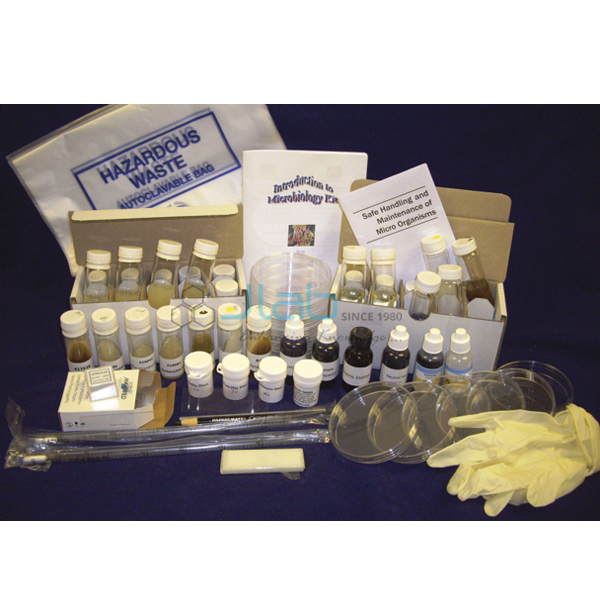
- Introduction to Microbiology Kit — a wider starter kit with staining, culturing and pasteurisation activities.
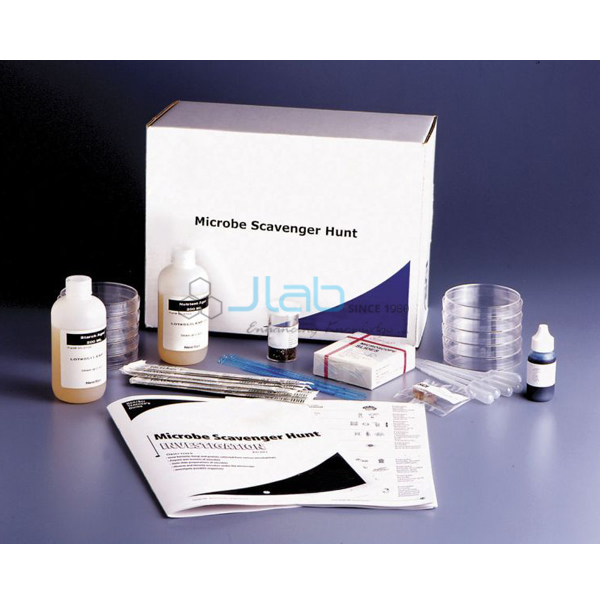
- Microbe Scavenger Hunt — students collect and grow microbes from water, air, soil and food.
- Viruses and Bacteria Poster — a wall poster on how to identify viruses and bacteria.
See the full Microbiology Equipment range or all Biology Lab Equipment.
Request a Quote
Send the number of kits (minimum 10 units), your practical date and your delivery location through the contact page, or use the Add To Cart button on this page; JLab replies with a quotation directly.
Last updated: 5 October 2026