Kymograph Assembly Manufacturer,Supplier and Exporter in India

Product Code : EL-PALE-10527
Jlab Export is a leading Kymograph Assembly Manufacturer,and suppliers in India
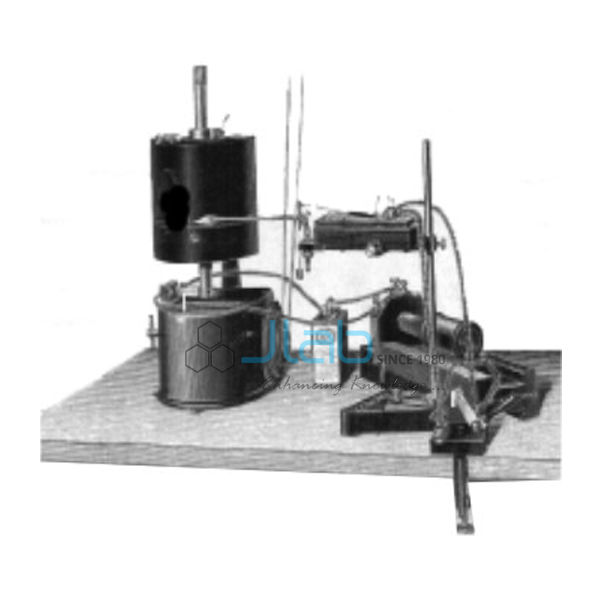
A kymograph records the movement of a contracting tissue as a trace on paper wrapped round a revolving drum, so the effect of each drug can be seen and measured. This assembly uses a microprocessor-controlled Sherrington drum in place of the older pulley-driven type. Seven slow speeds are chosen digitally, and a 16 x 2 LCD shows the settings.
Specifications
| Drum | Sherrington type recording drum, microprocessor controlled, easy height adjustment |
| Drum speeds | 0.12, 0.25, 0.50, 0.75, 1.00, 1.25 and 2.50 mm/s, selected digitally |
| Modes | Auto concentration response curve (CRC) mode and normal mode |
| Timer | Digital timer and time multiplier with audio and visual alarm |
| Display | 16 x 2 LCD |
| Battery backup | Optional |
| Minimum order quantity | 1 unit |
| Dispatch time | Usually 7–10 working days |
| Manufacturer | JLab (Jain Laboratory Instruments Pvt Ltd), Ambala, India |
Pharmacology Experiments with CRC Mode
Concentration response curves are the main use of this drum in pharmacology teaching labs. A frog rectus muscle, dissected on a Frog Board, is mounted in an aerated Organ Bath and linked to a writing lever that rests on the paper. Students add rising doses of acetylcholine, and each contraction writes a peak.
In CRC mode the drum runs for the contact time and then stops while the tissue is washed, so the peaks sit side by side on one sheet. Students measure each peak height and plot response against log dose. A second session adds a blocking drug to the bath and shows the curve shifting to the right.
Frequently Asked Questions
What does the CRC mode do?
It runs the drum in short, timed steps for a concentration response curve, with a pause between doses for washing. The responses are written as a neat row of peaks instead of a long trace with gaps. Normal mode turns the drum continuously for other recordings.
How are the timer, multiplier and alarm used?
The timer counts each stage of a dose cycle, such as drug contact, washing and rest. The multiplier extends the set time for longer intervals. The audio and visual alarm tells the student when to add the next dose or start the wash, so every dose gets the same timing.
Why must the trace return to baseline before the next dose?
If some drug is still acting, the next contraction starts from a raised level and its height is wrong. Wash the tissue until the lever settles back to its first resting line, then wait the set rest period before adding the next dose.
How is the working dose chosen?
Run a few doubling doses until the response stops growing, which marks the maximum. A working dose gives about half of that maximum, so changes caused by a second drug can be seen clearly in either direction.
Can it keep running during a power cut?
Battery backup is an option for this assembly. With it fitted, a short mains failure does not stop the drum or lose the timer settings, so a long tissue experiment can carry on.
Other Kymographs and Recording Accessories
- Student Kymographs Digital
- Universal Kymograph With Inbuilt Stimulator
- Simple Lever
- Student Stimulator
For a quote, use Add To Cart or send us a message through the contact page.
Last updated: 12 November 2026