Rheostat Manufacturer,Supplier and Exporter in India
Product Code : EL-SLE-5800
Jlab Export is a leading Rheostat Manufacturer,and suppliers in India
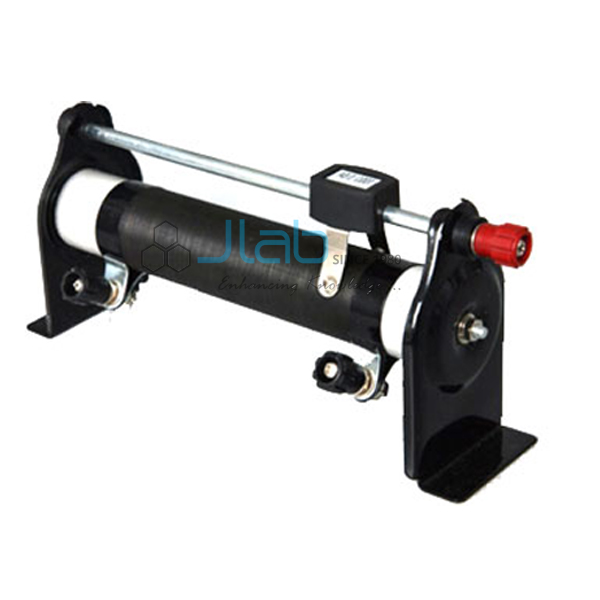
Rheostat (code EL-SLE-5800) is a single-tube, sliding-contact rheostat rated 11 ohm and 3 A, used to vary the current or divide the voltage in school and college electricity practicals. Its slider runs on an aluminium rod, and terminals are provided for connecting it into a circuit. It is made by Jain Laboratory Instruments Pvt Ltd (JLab) at its works in Ambala, India.
Specifications
| Parameter | Detail |
|---|---|
| Type | Sliding-contact rheostat, single tube |
| Resistance | 11 ohm |
| Current rating | 3 A |
| Slider | Sliding contact running on an aluminium rod |
| Connections | Terminals for connection |
| Quality check | Each rheostat is visually inspected before dispatch |
| Pack quantity | Each (sold individually) |
| Minimum order quantity | 10 units |
| Dispatch time | Usually 7–10 working days |
| Product code | EL-SLE-5800 |
| Manufacturer | Jain Laboratory Instruments Pvt Ltd (JLab) — OEM |
| Country of origin | India (made in Ambala, Haryana) |
How Does It Compare with Other JLab Rheostats?
| Model | Construction | Other listed details |
|---|---|---|
| This rheostat (EL-SLE-5800) | Single tube; sliding contact on an aluminium rod | 11 ohm, 3 A; terminals for connection |
| Rheostats (Nichrome Type) | Sliding contact; nichrome resistance wire | Bell terminals; offered in several ohm values |
| Rheostats (Continuous Constantan Type) | Continuous sliding contact; constantan resistance wire, whose resistance changes little as it warms | Bell terminals |
| Rheostat Single Tube | Winding locked in place with ceramic cement; enamelled die-cast end stands | Socket terminals for rheostat or potentiometer connection |
Choose this model when a practical needs a low-resistance variable resistor — 11 ohm — that can carry up to 3 A. The nichrome and constantan rheostats are listed in other values with bell terminals, the constantan version being the one to pick when the resistance should stay steady as the wire warms, and the Rheostat Single Tube has a cemented winding on die-cast end stands.
What Is the Rheostat Used For?
A rheostat is a variable resistor: moving the sliding contact along the winding changes the length of resistance wire in the circuit, and with it the current. This 11 ohm, 3 A rheostat is used in the class 10 Ohm’s law experiment, where it sets several values of current so that the potential difference across a resistor can be plotted against the current, and in class 12 practicals such as the potentiometer, where it controls the current in the driving circuit. It is equally used on college physics benches and in ITI/TVET electrical workshops.
In the usual sliding-rheostat connections, it works as a variable resistor when wired in series through one end terminal and the slider, and as a potential divider when the supply goes across both ends and the output is taken between one end and the slider. Set the slider for maximum resistance before switching on, keep the current within the 3 A rating, and switch off between readings so the winding does not heat up. Keep the aluminium slider rod clean and dry so the contact moves smoothly.
What to Specify When Ordering
- Resistance and current rating — this listing is the 11 ohm, 3 A single-tube model; the nichrome and constantan rheostats linked on this page are listed in other values.
- Size and terminal details — the listing does not state the tube dimensions or the number and type of terminals, so ask JLab if your bench layout or tender specifies them.
- Quantity — the minimum order is 10 units; schools usually plan one rheostat for each circuit set up by a student group.
- Meters, keys and wire — add an ammeter, plug key and connecting wire to the same enquiry so each circuit is complete.
Frequently Asked Questions
What is this rheostat used for?
It controls the current in a circuit, or divides a voltage, in school and college electricity practicals — for example the Ohm’s law experiment and the potentiometer practical.
What are its resistance and current ratings?
It is listed at 11 ohm and 3 A. Keep the current through the winding within 3 A; running it above its rating overheats the wire.
How is a sliding rheostat connected?
For current control, connect it in series through one end terminal and the slider terminal. As a potential divider, connect the supply across both ends and take the output between one end and the slider. Start with the slider at the maximum-resistance position.
What are the tube dimensions and how many terminals does it have?
These are not given in this listing, which states a single tube, a sliding contact on an aluminium rod and terminals for connection. Ask JLab for the details with your enquiry if you need them.
How does it differ from the nichrome and constantan rheostats?
This model is listed as an 11 ohm, 3 A single-tube rheostat with an aluminium slider rod. The nichrome and constantan rheostats are separate listings with bell terminals in other values; constantan is chosen where the resistance should change as little as possible when the wire warms.
Who manufactures this rheostat?
Jain Laboratory Instruments Pvt Ltd, trading as JLab, makes it at its works in Ambala, Haryana, India, and quotes for it directly.
OEM Manufacturer
JLab is the trading name of Jain Laboratory Instruments Pvt Ltd, a physics and school laboratory equipment manufacturer in India, incorporated in 2017 and located on Hargolal Road, Ambala, Haryana. Its rheostats are built at the company’s own works instead of being sourced from a trader, so schools, colleges, dealers and importers deal with the maker directly, every unit is visually checked before it is packed, and repeat orders come from the same production line. The company holds MSME Udyam registration UDYAM-HR-01-0003849 (manufacturing enterprise) and Importer-Exporter Code 3317504552. JLab exports worldwide and ships to buyers in every region — for example Senegal in West Africa, Iraq in the Middle East, Gabon in Central Africa, Bolivia in South America and Ireland in Western Europe. Institutions buying through tenders can see the JLab lab tenders page.
Items for the Same Electricity Practical
- Ammeter — a desk-stand meter for reading the current that the rheostat sets.
- Plug Key — a circuit key for switching the circuit on only while readings are taken.
- Connecting Wires — double-cotton-covered copper wire for making the connections.
- Ohms Law apparatus — a self-contained unit for demonstrating how current, voltage and resistance depend on each other.
- Rheostats (Continuous Constantan Type) — an alternative when a steadier resistance is wanted.
Browse the full School Lab Equipment range for other physics lab equipment for schools.
Request a Quote
Quotes come direct from the manufacturer. Use the Add To Cart enquiry button on this page, or send the quantity (minimum 10 units), any meters, keys or wire you want with it, and your delivery city or port through the contact page.
Last updated: 4 October 2026