Rheostats (Continuous Constantan Type) Manufacturer,Supplier and Exporter in India
Product Code : EL-SLE-4715
Jlab Export is a leading Rheostats (Continuous Constantan Type) Manufacturer,and suppliers in India
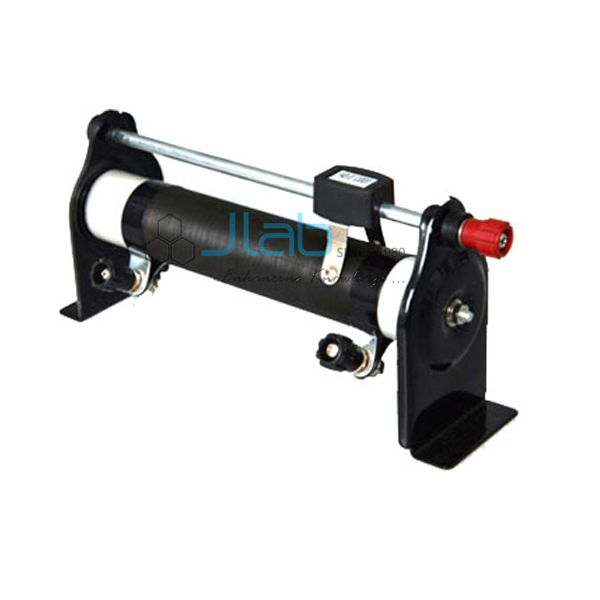
Rheostats (Continuous Constantan Type) (code EL-SLE-4715) are continuous sliding-contact rheostats with a constantan resistance wire, an alloy whose resistance hardly changes as it warms, used as variable series resistors or potentiometers. They have bell terminals, a chrome-plated slider rod for fast, fine adjustment, and 10, 20, 30, 50 and 100 ohm values. They are made by Jain Laboratory Instruments Pvt Ltd (JLab) at its works in Ambala, India.
Specifications
| Parameter | Detail |
|---|---|
| Type | Continuous sliding-contact rheostat |
| Resistance wire | Constantan |
| Values | 10, 20, 30, 50 and 100 ohms |
| Current rating | Differs between models; no figures are listed — confirm the rating for your value with JLab |
| Slider | Contact on a chrome-plated metal slider rod; fast and fine adjustment |
| Terminals | Bell terminals |
| Use | Variable series resistor or potentiometer |
| Quality check | Each rheostat is visually inspected before dispatch |
| Pack quantity | Each (sold individually) |
| Minimum order quantity | 10 units |
| Dispatch time | Usually 7–10 working days |
| Product code | EL-SLE-4715 |
| Manufacturer | Jain Laboratory Instruments Pvt Ltd (JLab) — OEM |
| Country of origin | India (made in Ambala, Haryana) |
How Does It Compare with Other JLab Rheostats?
| Model | Winding | Other listed details |
|---|---|---|
| This rheostat (EL-SLE-4715) | Constantan wire | 10, 20, 30, 50 or 100 ohms; bell terminals; chrome-plated slider rod |
| Rheostats (Nichrome Type) | Nichrome wire | Same five values, bell terminals and slider rod |
| Rheostat Single Tube | Winding locked with ceramic cement | Tube on enamelled die-cast end stands; socket terminals for rheostat or potentiometer connection |
| Rheostat 30 Ohm | Not stated | Contact block on a brass guide rod; three lock-type brass socket terminals |
The constantan and nichrome models share the same values and fittings, so the choice comes down to the wire: constantan holds its resistance steady as the winding warms, while nichrome has a higher resistivity and tolerates more heat. The single-tube and 30 ohm rheostats are alternatives with different terminal and mounting details.
What Is the Constantan Rheostat Used For?
A rheostat sets the current in a circuit. Because constantan’s resistance barely changes with temperature, this version keeps the current steadier during a long set of readings, which helps in the potentiometer experiments of class 12 physics, where the current in the primary circuit must not drift while the balance point is found. It is equally used for Ohm’s law readings in class 10, as a potential divider for diode characteristics, and in college electrical and physics labs.
Wire it in series through one end terminal and the slider to vary the current, or across the supply with all three terminals to use it as a potential divider. Start with the slider at maximum resistance, stay within the current rating JLab confirms, and keep the rod and contact clean for smooth movement.
What to Specify When Ordering
- Value — 10, 20, 30, 50 or 100 ohms, with quantities for each.
- Maximum current — state it, so JLab can confirm the right model.
- Quantity — minimum 10 units.
Frequently Asked Questions
Why choose a constantan rheostat?
Constantan’s resistance stays almost constant as it warms, so the current you set drifts less during an experiment than with a wire whose resistance rises with temperature.
Which resistance values can I order?
10, 20, 30, 50 and 100 ohms.
What is its current rating?
The listing notes that the models differ in current-carrying capacity but does not give figures. Tell JLab your maximum circuit current and it will confirm the rating with the quotation.
Can I use it as a potential divider?
Yes. It is listed for use as a series resistor or a potentiometer: connect the two ends across the supply and take the output from the slider.
What is the difference from the nichrome rheostat?
Only the resistance wire, according to the two listings: constantan here, nichrome in the other. Both have bell terminals, a chrome-plated slider rod and the same five values.
Who makes the constantan rheostat?
JLab (Jain Laboratory Instruments Pvt Ltd), at its own works in Ambala, Haryana, India.
OEM Manufacturer
JLab is the trading name of Jain Laboratory Instruments Pvt Ltd, which manufactures electrical and physics laboratory apparatus in India. The company was incorporated in 2017 and is based on Hargolal Road, Ambala, Haryana, where these rheostats are wound and assembled in its own works, not bought in from a trader. Schools, colleges, dealers and importers therefore buy factory-direct, every rheostat is visually inspected before dispatch, and repeat orders come from the manufacturer itself. JLab exports worldwide and ships to buyers in every region, for example Mozambique in East Africa, Niger in West Africa, Mexico in North America, Denmark in Northern Europe and Egypt in North Africa.
Related Electrical Apparatus
- Potentiometer with Pencil Jockey — constantan-wire potentiometer whose primary circuit needs a steady rheostat.
- Galvanometer — the null detector for potentiometer and bridge work.
- Ammeter — for reading the current you set.
- Voltmeters Dual Range — for potential-difference readings.
- Resistance Box Electronic Type — known resistances in 50 to 1000 ohm values.
See the full School Lab Equipment range.
Request a Quote
The manufacturer quotes directly. Press Add To Cart on this page, or send the values and quantities (minimum 10 units), your maximum circuit current and the delivery location through the contact page.
Last updated: 4 October 2026