
Semi Circular Block Glass Manufacturer,Supplier and Exporter in India
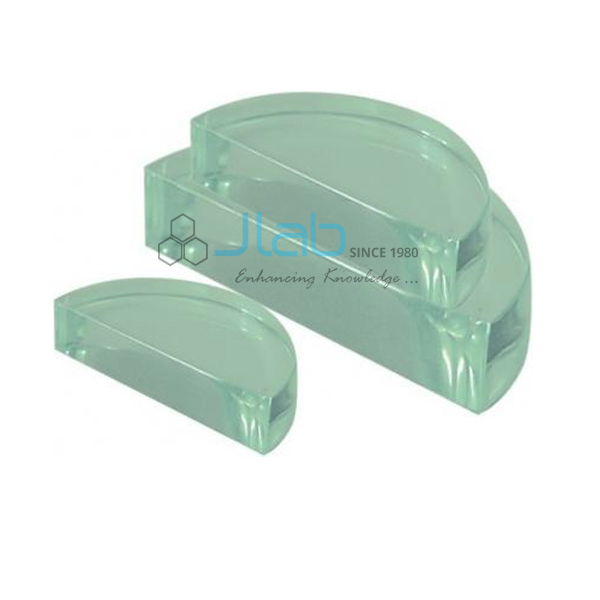
Product Code : EL-SLE-4566
Jlab Export is a leading Semi Circular Block Glass Manufacturer,and suppliers in India
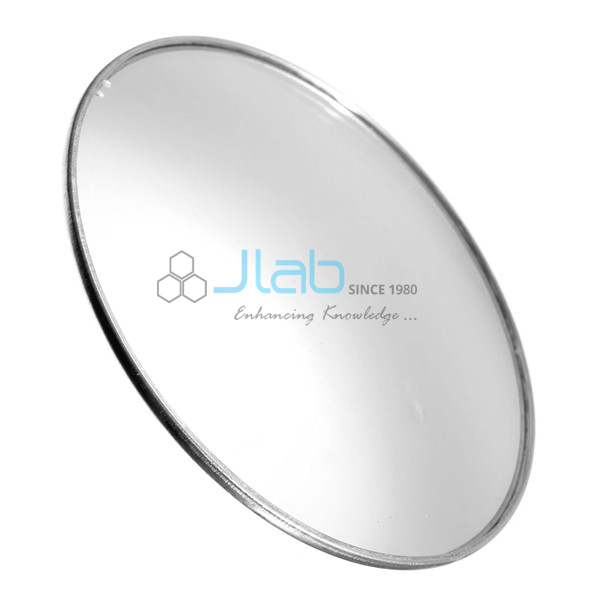
Semi Circular Block Glass (code EL-SLE-4566) is a semicircular glass block with optically worked surfaces, used to demonstrate the total internal reflection of light and to find the critical angle of glass in school and college physics labs. It is 4 inches (about 102 mm) in diameter and 15 mm thick, with all sides polished so a ray can be followed cleanly through the block. It is made by Jain Laboratory Instruments Pvt Ltd (JLab) at its works in Ambala, India.
Specifications
| Parameter | Detail |
|---|---|
| Shape | Semicircular block |
| Material | Glass |
| Diameter | 4 inch (about 102 mm) |
| Thickness | 15 mm |
| Surfaces | Optically worked; all sides polished |
| Use | Demonstrating total internal reflection of light |
| Quality check | Each block is visually inspected before dispatch |
| Pack quantity | Each (sold individually) |
| Minimum order quantity | 10 units |
| Dispatch time | Usually 7–10 working days |
| Product code | EL-SLE-4566 |
| Manufacturer | Jain Laboratory Instruments Pvt Ltd (JLab) — OEM |
| Country of origin | India (made in Ambala, Haryana) |
How Does It Compare with JLab Acrylic Semicircular Blocks?
| Model | Material | Size (diameter x thickness) | Surfaces |
|---|---|---|---|
| This block (EL-SLE-4566) | Glass | 4 inch (about 102 mm) x 15 mm | Optically worked; all sides polished |
| Semi Circular Acrylic Block | Clear acrylic | 90 x 16 mm or 90 x 25 mm | All faces fully polished |
| Acrylic Semi Circular Prism | Acrylic | 90 x 16 mm or 90 x 25 mm | Fully polished faces |
Choose the glass block for a larger diameter and a scratch-resistant surface that stays clear through years of practicals. The acrylic blocks bend light by a similar amount and resist breakage, which suits younger students, but their faces scratch more easily.
What Is the Semicircular Glass Block Used For?
A semicircular block is the classic way to show total internal reflection and measure the critical angle. A narrow ray from a ray box is aimed through the curved face at the centre of the flat face; because it travels along a radius it enters the glass without bending, so all the refraction happens at the flat face. As the angle of incidence is increased, the emerging ray bends further from the normal until, at the critical angle, it skims along the flat surface. Beyond that angle no light leaves — the ray is totally reflected back into the glass. Marking the critical angle c gives the refractive index of glass as one divided by the sine of c.
This experiment belongs to the refraction chapter of ICSE class 10 and to ray optics in CBSE class 12, and it leads into optical fibres, the sparkle of a cut diamond and mirages. The same block can be used to check Snell’s law at angles below the critical angle. Work on white paper with a single-slit ray box or a laser pointer (never look into the beam), keep the flat face spotless, and store the block wrapped so the polished faces stay unscratched.
What to Specify When Ordering
- Quantity — the minimum order is 10 blocks; plan one per student group for the critical-angle practical.
- Light source — add ray boxes with slits to the same enquiry if your lab needs them.
- Material — this glass block, or an acrylic semicircular block if breakage resistance matters more than scratch resistance.
Frequently Asked Questions
What does the semicircular glass block demonstrate?
Total internal reflection of light, and the critical angle at which it begins. It also shows ordinary refraction at a flat glass surface at smaller angles.
Why is the block semicircular?
A ray aimed at the centre of the flat face passes through the curved face along a radius, so it is not bent on entering. Only the flat face refracts the ray, which makes the critical angle easy to see and measure.
How is the refractive index found from the critical angle?
The refractive index of the glass equals one divided by the sine of the critical angle, so measuring that angle on the ray trace gives the refractive index directly.
What size is the block?
It is 4 inches in diameter, about 102 mm, and 15 mm thick, with all sides polished.
Should I choose glass or acrylic?
Both bend light by a similar amount. Glass resists scratching and keeps its clarity longer; acrylic is lighter and less likely to break if dropped. JLab lists acrylic semicircular blocks separately.
What light source works with it?
A ray box fitted with a single narrow slit, or a low-power laser pointer used with care. The ray should be thin and bright on white paper so the angles can be marked.
What information is needed for an export quotation?
The quantity, destination country and port or city, delivery terms such as FOB or CIF, packing or labelling requirements, and a tender reference if applicable.
Who manufactures the Semi Circular Block Glass?
Jain Laboratory Instruments Pvt Ltd, trading as JLab, at its works in Ambala, Haryana, India.
OEM Manufacturer
JLab is the trading name of Jain Laboratory Instruments Pvt Ltd, a manufacturer of optics lab equipment in India, incorporated in 2017 and based on Hargolal Road, Ambala, Haryana. The semicircular block is made at JLab’s own works and is not bought from a trader, so schools, colleges, dealers and importers get it factory-direct, each block is visually inspected before dispatch, and repeat orders are supplied by the same manufacturer. JLab exports worldwide and ships to buyers in every region — Switzerland in Western Europe, Uzbekistan in Central Asia, Myanmar in Southeast Asia, Kuwait in the Middle East and Paraguay in South America, for instance. Tender buyers can see the JLab lab tenders page.
Related Optics Apparatus
- Ray Box with Slits (Superior Type) — a light source with adjustable slits for producing narrow rays.
- Glass Block (Rectangular) — a bubble-free rectangular block for refraction through a slab.
- Prism Glass — right-angle prisms show total internal reflection in another form.
- Semi Circular Acrylic Block — a clear acrylic alternative with fully polished faces.
More optics apparatus is listed in the School Lab Equipment range.
Request a Quote
JLab quotes directly as the manufacturer. Use the Add To Cart enquiry button on this page, or send the number of blocks (minimum 10 units), any ray boxes you need, and your delivery location through the contact page.
Last updated: 4 October 2026