Stirrer Manufacturer,Supplier and Exporter in India
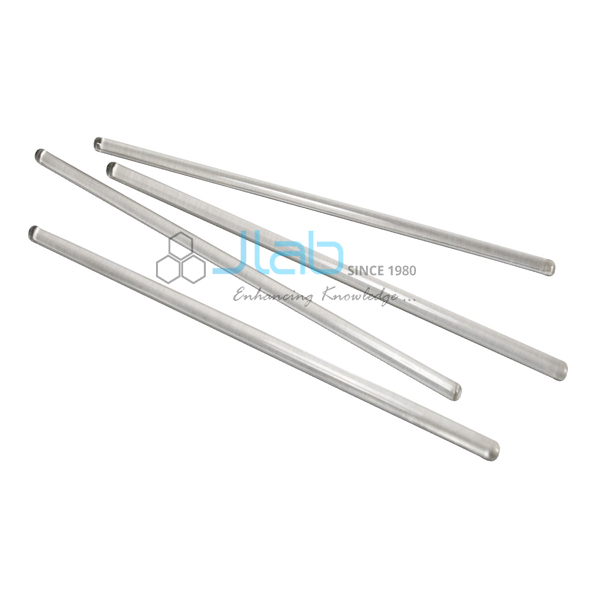
Product Code : EL-SLE-5696
Jlab Export is a leading Stirrer Manufacturer,and suppliers in India
Stirrer (code EL-SLE-5696) is a glass stirring rod with fused ends, 6 mm in diameter and 200 mm long, used to stir solutions, help solids dissolve and guide liquids into a filter funnel in school and college science labs. Its fused ends are rounded off in the flame, so the rod has no sharp cut edges to scratch beakers or fingers. It is made by Jain Laboratory Instruments Pvt Ltd (JLab) at its works in Ambala, India.
Specifications
| Parameter | Detail |
|---|---|
| Type | Glass stirring rod |
| Ends | Fused |
| Diameter | 6 mm |
| Length | 200 mm |
| Quality check | Each stirrer is visually inspected before dispatch |
| Pack quantity | Each (sold individually) |
| Minimum order quantity | 10 units |
| Dispatch time | Usually 7–10 working days |
| Product code | EL-SLE-5696 |
| Manufacturer | Jain Laboratory Instruments Pvt Ltd (JLab) — OEM |
| Country of origin | India (made in Ambala, Haryana) |
How Does It Compare with Other JLab Glass Rods?
| Model | Glass | Size | Ends and supply |
|---|---|---|---|
| This stirrer (EL-SLE-5696) | Glass (type not stated) | 6 mm diameter, 200 mm long | Fused ends; sold individually |
| Stirring Rod Glass | Soft glass | 5 mm diameter, 6 inches long | Rounded ends |
| Glass Rod | Soda glass | 6–7 mm outside diameter, 1.5 m lengths | Uncut stock rod in packs of 10, for cutting your own stirrers |
Choose this stirrer when you want a ready-finished rod long enough to reach the bottom of tall beakers and flasks. The shorter soft-glass stirring rod suits small beakers and test-tube work, and the long glass rod stock suits labs that cut and finish their own rods.
What Is the Glass Stirrer Used For?
A glass stirrer mixes liquids without reacting with them, which makes it the standard tool for dissolving salt or sugar in class 6 to class 10 science, preparing solutions and growing crystals, and for the solution and salt-analysis work of class 11 and class 12 chemistry. During filtration, liquid is poured down the rod so it runs into the funnel without splashing, and the tip of the rod is used to transfer a drop of solution onto litmus or pH paper.
Stir with a gentle circular movement without knocking the wall of the beaker, and do not use the rod as a lever to break up caked solids. Glass resists most laboratory acids and salt solutions, although hydrofluoric acid and hot concentrated alkalis attack it. Rinse the stirrer with distilled water between solutions so nothing is carried over.
What to Specify When Ordering
- Quantity — the minimum order is 10 units; schools often allow one stirrer per student or per beaker set, with spares for breakage.
- Glass type — say whether you need borosilicate glass for hot solutions, as the listing does not state the glass.
- Other lengths — for a shorter rod or for stock rod to cut yourself, see the alternatives compared above.
- Filtration items — add funnels and beakers to the same enquiry if you are equipping a practical bench.
Frequently Asked Questions
What size is this glass stirrer?
It is 6 mm in diameter and 200 mm long, which reaches the bottom of most beakers and conical flasks used in school practicals.
What does “fused ends” mean?
The cut ends of the rod are melted in a flame until they are smooth and rounded. That removes sharp edges which could scratch glassware or cut a hand, and makes the ends less prone to chipping.
Can I use it in hot solutions?
It can stir warm solutions in normal practical work, but the listing does not state the glass type. If you will stir near-boiling or rapidly heated liquids, ask for borosilicate glass, which handles sudden temperature changes better than soda glass.
How is it different from the Stirring Rod Glass?
That rod is soft glass, 5 mm thick and 6 inches long with rounded ends. This stirrer is thicker at 6 mm and longer at 200 mm, so it suits taller vessels.
What should I include in an export enquiry?
The quantity, any glass-type requirement, the destination country and port or city, delivery terms such as FOB or CIF, packing or labelling instructions, and a tender reference if there is one.
Who manufactures this stirrer?
Jain Laboratory Instruments Pvt Ltd (JLab) makes it at its works in Ambala, Haryana, India, and quotes for it directly.
OEM Manufacturer
JLab is the trading name of Jain Laboratory Instruments Pvt Ltd, a laboratory glassware and equipment manufacturer in India, incorporated in 2017 and based on Hargolal Road, Ambala, Haryana. The stirrers are finished at JLab’s own works rather than bought from a trader, so schools, colleges, dealers and importers order them factory-direct, each rod is checked by eye before dispatch, and repeat supplies come from the same maker. The company is registered for GST under GSTIN 06AADCJ9848D1ZE and has the Legal Entity Identifier 549300DTGS77DGYD6N03. JLab exports worldwide and ships to buyers in every region — for example Guyana in South America, Chad in Central Africa, South Africa in Southern Africa, Belize in Central America and the Caribbean and Cyprus in Southern Europe. Tender buyers can use the JLab lab tenders page.
Glass Rods and Filtration Items
- Stirring Rod Glass — a shorter soft-glass stirring rod with rounded ends.
- Glass Rod — soda-glass stock rod for cutting your own stirrers.
- Policeman Stirring Rods — a stirrer whose flattened ends also act as small spatulas.
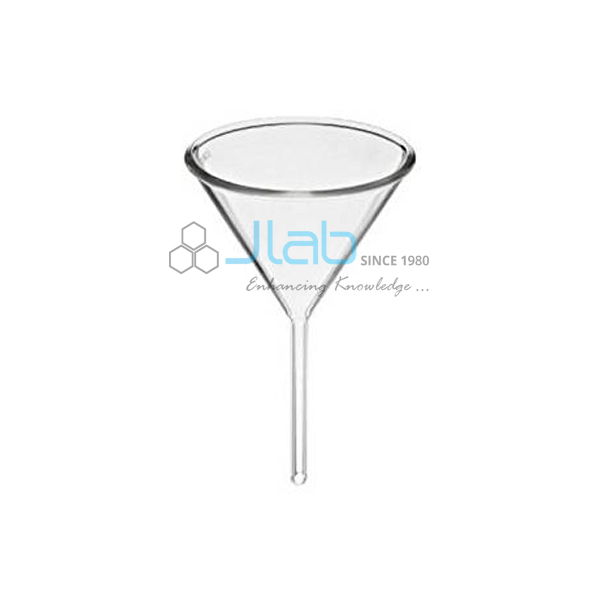
- Funnel Glass — a plain conical filter funnel to pour into along the rod.
See the full School Lab Equipment range.
Request a Quote
Quotes come direct from the manufacturer. Use the Add To Cart button on this page, or send the quantity (minimum 10 units), any glass-type requirement and your delivery location through the contact page.
Last updated: 4 October 2026