Valve Type Stopcocks, PTFE Key Manufacturer,Supplier and Exporter in India
Product Code : EL-SCSAS-1660
Jlab Export is a leading Valve Type Stopcocks, PTFE Key Manufacturer,and suppliers in India
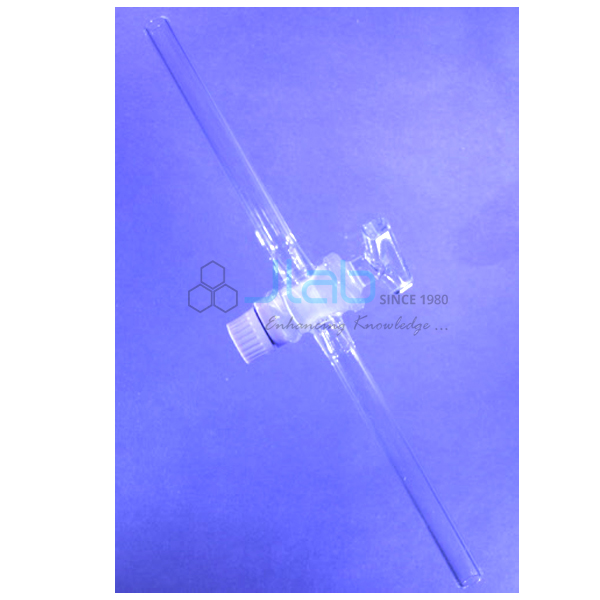
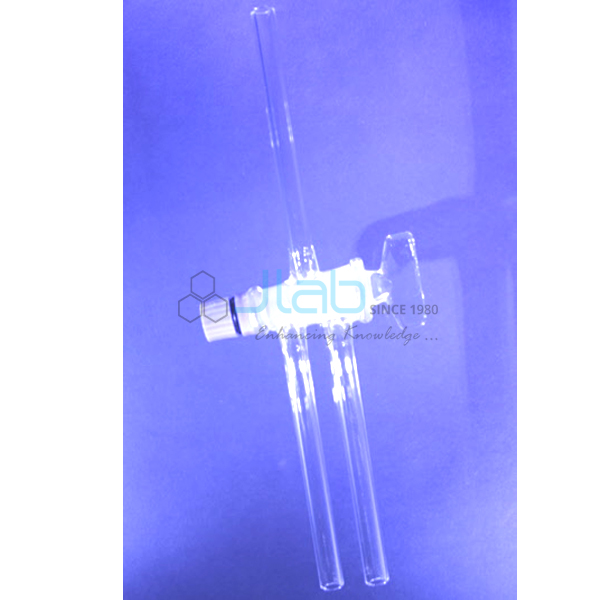
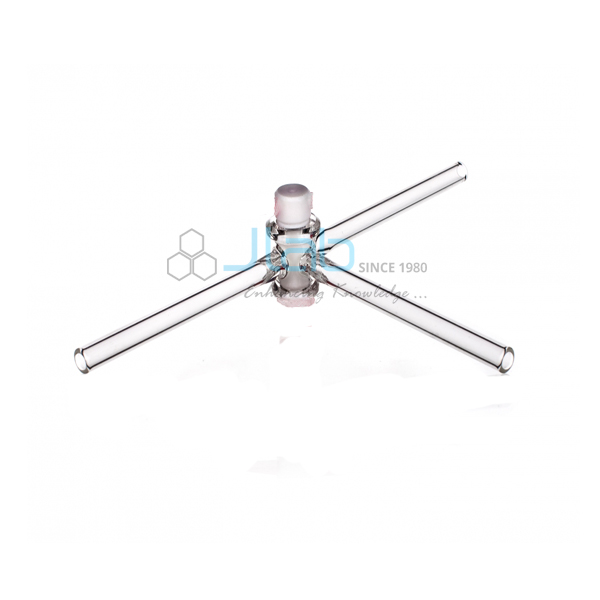
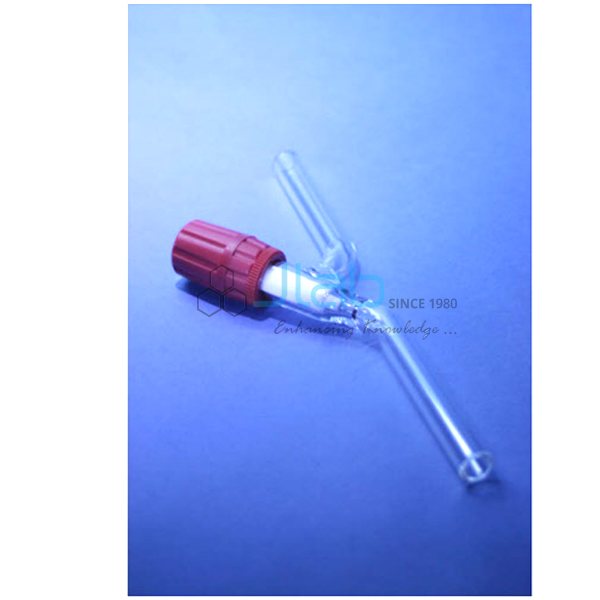
A valve type stopcock controls flow by screwing its PTFE key in or out rather than turning a bored plug. Each turn moves the tip of the key closer to or further from its seat, so slow, steady flow rates can be set and held. It is made in 2 mm and 4 mm sizes.
Specifications
| Type | Valve type |
| Key | PTFE |
| Sizes | 2 mm and 4 mm |
| Minimum order quantity | 50 units |
| Dispatch time | Usually 3–5 working days |
| Manufacturer | JLab (Jain Laboratory Instruments Pvt Ltd), Ambala, India |
Experiments Needing Fine Flow Control
A simple flow exercise joins the stopcock with Rubber Tubing below a raised bottle of water. Students open the key by set amounts and collect the outflow for one minute in a Glass Foot Measuring Cylinders Hexagonal Base Borosilicate Glass Class B JLab. They then plot flow against the number of turns.
In a gas practical, the same valve in a delivery line lets students set a slow, countable stream of bubbles through a test solution instead of a sudden rush of gas. Teachers can compare it with a plain stopcock, which goes from shut to full flow in a small part of a turn.
Frequently Asked Questions
How does a valve stopcock differ from a plug stopcock?
A plug stopcock opens or closes with a quarter turn of a bored key. In a valve stopcock the PTFE key is screwed in or out, so its tip moves towards or away from a seat. Flow changes only a little with each turn, which makes slow rates easy to set and repeat.
Can it be used as a simple on and off tap?
It does close fully when screwed down, but it takes several turns to go from shut to fully open. Where a line has to be opened and shut quickly and often, an ordinary plug stopcock is faster to use. The valve type is the better choice when the rate matters.
How do I check the valve is shut before filling the line above it?
Screw the key down gently until it stops, without forcing it. Pour a little water into the line and watch the outlet for a minute. If it drips, open the key a little, close it again gently and recheck, since grit on the seat is the usual cause.
Other Valve and Plug Stopcocks
- Valve Type Stopcocks, PTFE Key, Right Angle (arms at a right angle)
- Stopcocks, PTFE Key, Straight Through
- Double Oblique Stopcocks, Borosilicate Glass, PTFE Key
For a quote, use Add To Cart or send us a message through the contact page.
Last updated: 14 November 2026