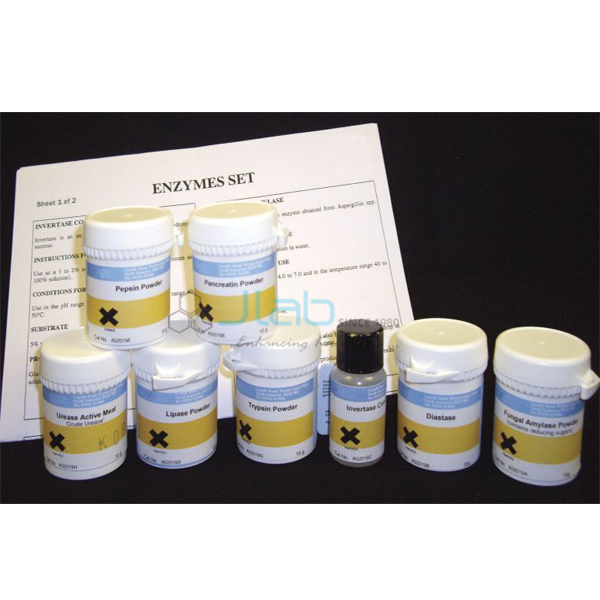
Concentrated Enzyme Buffer pH 7.0 Manufacturer,Supplier and Exporter in India

Product Code : EL-EE-6871
Jlab Export is a leading Concentrated Enzyme Buffer pH 7.0 Manufacturer,and suppliers in India
Concentrated Enzyme Buffer pH 7.0 (code EL-EE-6871) is a neutral buffer for enzyme experiments, supplied as a 50 ml concentrate in a storage bottle and diluted before use to hold reaction mixtures at pH 7.0 in school, college and university biology labs. It is prepared by experienced technicians and made by Jain Laboratory Instruments Pvt Ltd (JLab) at its works in Ambala, India.
Specifications
| Parameter | Detail |
|---|---|
| pH | 7.0 |
| Form | Buffer concentrate for enzyme work |
| Quantity and container | 50 ml concentrate in a storage bottle |
| Preparation | Prepared by experienced technicians in clean laboratory production facilities |
| Shelf life | Shelf life depends on the chemical, its grade and storage conditions; ask us for the expiry date of the batch you are quoted |
| Quality check | Each bottle is visually inspected before dispatch |
| Pack quantity | Each (one 50 ml bottle) |
| Minimum order quantity | 10 units |
| Dispatch time | Usually 7–10 working days |
| Product code | EL-EE-6871 |
| Manufacturer | Jain Laboratory Instruments Pvt Ltd (JLab) — OEM |
| Country of origin | India (made in Ambala, Haryana) |
What Is the Enzyme Buffer Used For?
A buffer resists a change in pH when small amounts of acid or alkali are added, so an enzyme reaction run in buffer stays at the pH the experimenter chose. Because enzyme activity depends strongly on pH, practicals on amylase, catalase and other enzymes use buffers to fix the conditions; this concentrate gives the neutral point of a pH series, or the working buffer for a reaction run at neutral pH, without weighing salts and adjusting each batch with a pH meter. It links the effect of pH on enzymes in CBSE class 11 biology with buffer solutions in class 11 chemistry.
What to Specify When Ordering
- Quantity — the minimum order is 10 bottles of 50 ml.
- Dilution and composition — ask for the dilution ratio and buffer composition if your method or risk assessment needs them.
- Batch expiry — ask for the expiry date of the batch you are quoted.
Frequently Asked Questions
What is Concentrated Enzyme Buffer pH 7.0 used for?
Keeping enzyme reactions at a steady neutral pH. Once diluted, it holds the reaction mixture at pH 7.0 so that results reflect the variable being tested, not drifting acidity.
How much water is the concentrate diluted with?
The listing does not state the dilution ratio. Ask JLab for the dilution instructions when you request a quote, and use distilled or deionised water.
Who makes this buffer?
JLab (Jain Laboratory Instruments Pvt Ltd) prepares it at its works in Ambala, Haryana, India, and quotes for it directly.
OEM Manufacturer
JLab is the trading name of Jain Laboratory Instruments Pvt Ltd, an Indian manufacturer of laboratory solutions, reagents and teaching apparatus, incorporated in 2017 and based on Hargolal Road, Ambala, Haryana. The buffer is produced at JLab’s own works rather than bought from a trader, so schools, colleges, dealers and importers order it factory-direct and repeat batches come from the manufacturer. JLab exports worldwide and ships to buyers in every region — for example Japan in East Asia, Lesotho in Southern Africa, Cameroon in Central Africa, Croatia in Southern Europe and Canada in North America. Tender information is on the JLab lab tenders page.
Enzymes and Kits That Use a Buffer
- Catalase 50ml — an enzyme for hydrogen peroxide breakdown practicals.
- Bacterial Amylase Project Pack — pH and temperature experiments with amylase, starch and iodine.
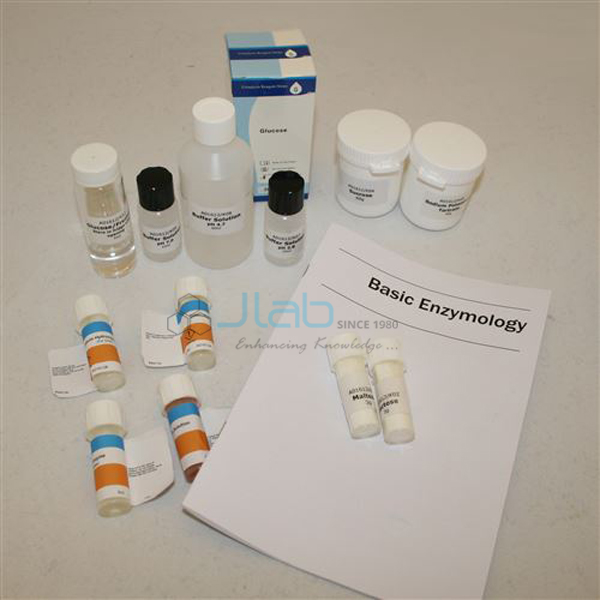
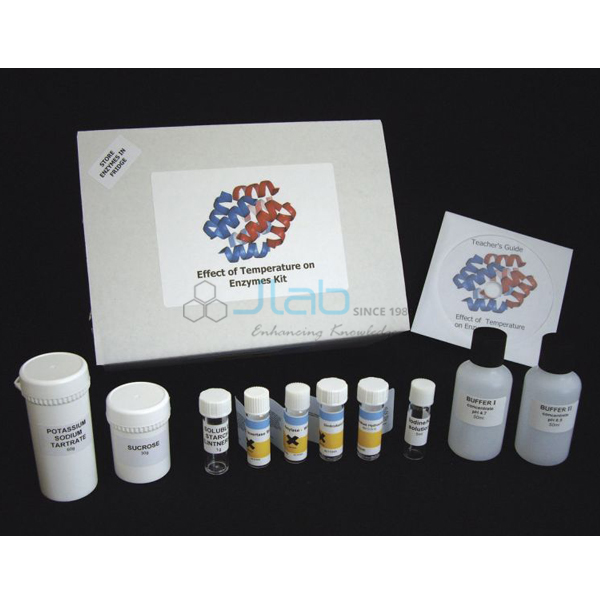
- Introduction To Enzymes — a kit on the effects of pH and temperature and on enzyme specificity.
- Enzymes Set — eight tubes of enzymes for further investigations.
See the Enzyme Equipments range or all Biology Lab Equipment.
Request a Quote
Quotes come direct from the manufacturer. Use the Add To Cart enquiry button on this page, or send the number of bottles (minimum 10 units) and the delivery location through the contact page.
Last updated: 5 October 2026