Dicot Root T.S. Model Manufacturer,Supplier and Exporter in India

Product Code : EL-PE-7552
Jlab Export is a leading Dicot Root T.S. Model Manufacturer,and suppliers in India
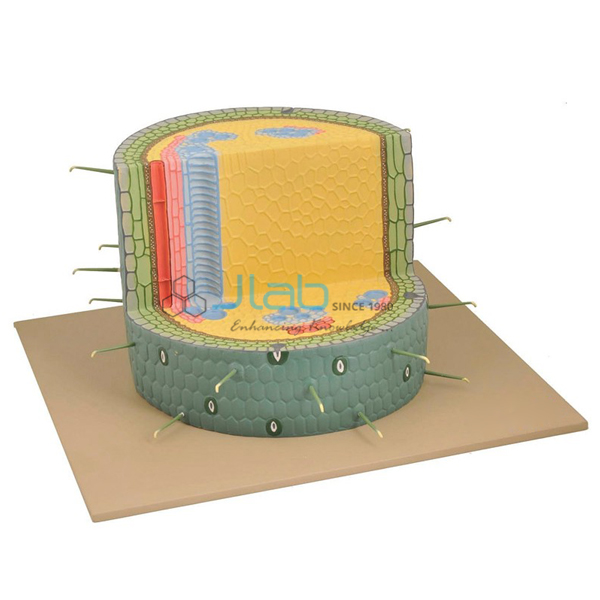
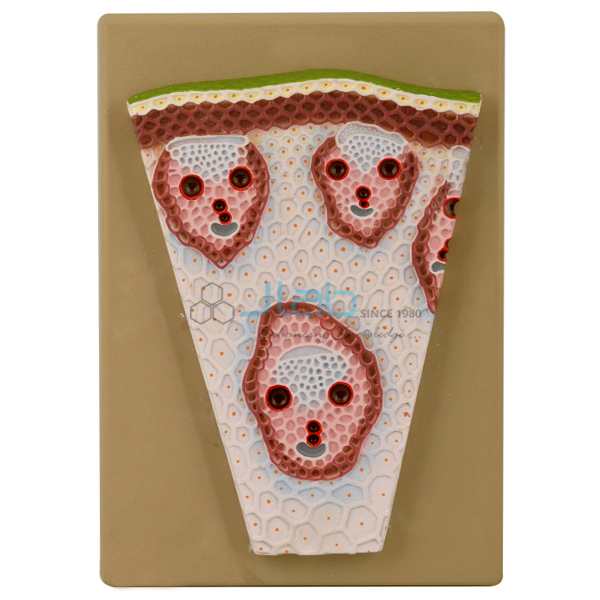
Dicot Root T.S. Model (code EL-PE-7552) is a botany teaching model of a dicot root cut in transverse section (T.S.), showing the internal details of the root at a size of 25 cm wide by 33 cm high. Teachers use it to explain root anatomy before students examine real sections under the microscope. It is made by Jain Laboratory Instruments Pvt Ltd (JLab) at its works in Ambala, India.
Specifications
| Parameter | Detail |
|---|---|
| Model type | Transverse section (T.S.) of a dicot root |
| What it shows | Internal details of the dicot root |
| Size | 25 cm (W) x 33 cm (H) |
| Quality check | Each model is visually inspected before dispatch |
| Pack quantity | Each (sold individually) |
| Minimum order quantity | 10 units |
| Dispatch time | Usually 7–10 working days |
| Product code | EL-PE-7552 |
| Manufacturer | Jain Laboratory Instruments Pvt Ltd (JLab) — OEM |
| Country of origin | India (made in Ambala, Haryana) |
What Is the Dicot Root T.S. Model Used For?
Class 11 biology asks students to identify the tissues in transverse sections of dicot and monocot roots, and the same sections come up in college botany practicals. A large model lets the whole class study them together before each student turns to a stained section under the microscope. From the outside inwards, a young dicot root has an epiblema bearing root hairs, a parenchymatous cortex, an endodermis with Casparian strips, a pericycle, and separate patches of xylem and phloem — usually two to four of each — alternating around a small or absent pith. Clean the model with a soft, dry cloth.
What to Specify When Ordering
- Quantity — the minimum order is 10 units.
- Companion models — the monocot root and the dicot and monocot stem T.S. models complete the four primary sections.
- Material and labelling — ask for these with the quotation if a tender specifies them.
Frequently Asked Questions
What does the Dicot Root T.S. Model show?
The internal details of a dicot root in transverse section — the view students draw in the class 11 root anatomy practical. The listing does not name the labelled parts one by one, so ask JLab for the key if you need it.
How do you tell a dicot root section from a monocot root section?
Count the xylem patches and look at the centre. A dicot root usually has two to four xylem patches and little or no pith; a monocot root has more than six around a large pith.
Who manufactures this root model?
Jain Laboratory Instruments Pvt Ltd, trading as JLab, makes it at its works in Ambala, Haryana, India.
OEM Manufacturer
JLab is the trading name of Jain Laboratory Instruments Pvt Ltd, a biology and botany teaching equipment manufacturer in India, incorporated in 2017 and based on Hargolal Road, Ambala, Haryana. The model is produced at JLab’s own works, not bought from a trader, so schools, colleges, dealers and importers deal with the maker, and repeat orders stay with the manufacturer. The company holds MSME Udyam registration UDYAM-HR-01-0003849 (manufacturing enterprise) and exports under Importer-Exporter Code 3317504552. JLab exports worldwide and ships to buyers in every region — for example Panama in Central America and the Caribbean, Fiji in Oceania, Slovenia in Southern Europe, Kuwait in the Middle East and Brunei in Southeast Asia. See the JLab lab tenders page for tender buying.
Root and Stem Anatomy Teaching Aids
- Monocot Root T.S. Model — the matching monocot root section, for side-by-side comparison.
- T.S. of Dicot Root Chart — a laminated wall chart of the same section.
- Ts Of Dicot Root — a borosilicate glass slide of the section, in a plastic box.
- The Root of a Flowering Plant — root tip, root hairs, root cap and growth zones.
See more in Plant Equipment or the full Biology Lab Equipment range.
Request a Quote
Quotes come direct from the manufacturer. Use the Add To Cart button on this page, or send the number of models (minimum 10 units), any companion models, and your destination and delivery terms (for example FOB or CIF) through the contact page.
Last updated: 4 October 2026