Energy Needs Manufacturer,Supplier and Exporter in India
Product Code : EL-GSC-2949
Jlab Export is a leading Energy Needs Manufacturer,and suppliers in India
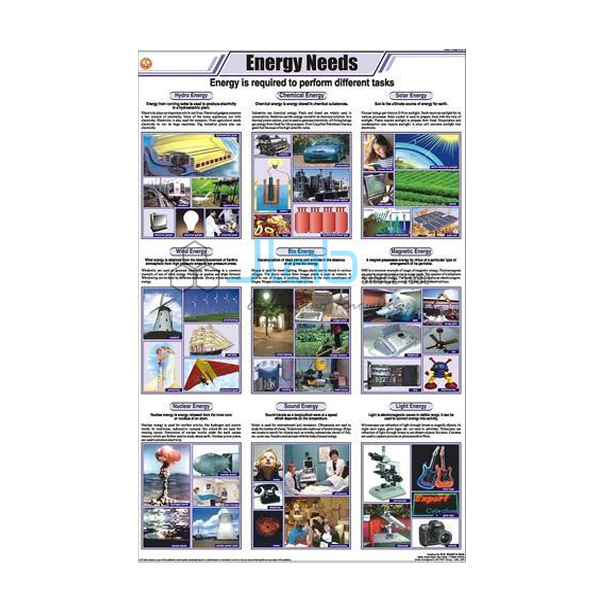
Energy Needs (code EL-GSC-2949) is a 58 x 90 cm wall chart on why we need energy and the forms in which we use it — for cooking, transport, lighting, machines and our own bodies — in physics and general science lessons. It is printed in full colour on coated art paper, laminated on both sides and fitted with plastic rollers. JLab (Jain Laboratory Instruments Pvt Ltd, Ambala, India) supplies it to schools, colleges and dealers.
Specifications
| Parameter | Detail |
|---|---|
| Chart topic | Energy needs |
| Size (overall) | 58 x 90 cm (about 22.8 x 35.4 in) |
| Size when rolled | 58 x 4 x 2 cm |
| Paper | Coated art paper, 130 gsm |
| Printing | Full colour, offset printing using CTP (computer-to-plate) technology |
| Lamination | Both sides, thick plastic film (30 micron heat-sealable polyester) |
| Fittings | Plastic rollers, for wall hanging |
| Surface | Markable and washable |
| Weight | 228 g |
| Language | English only |
| Quality check | Each chart is visually inspected before dispatch |
| Pack quantity | Each (sold individually) |
| Minimum order quantity | 10 units |
| Dispatch time | Usually 7–10 working days |
| Product code | EL-GSC-2949 |
| Supplied by | Jain Laboratory Instruments Pvt Ltd (JLab), Ambala, India |
What Is the Energy Needs Chart Used For?
Energy is the capacity to do work, and almost every activity depends on it: food supplies chemical energy to the body, fuels release heat for cooking and industry, electricity runs lights and machines, and sunlight drives the weather and the growth of plants. Energy is never created or destroyed, only converted from one form to another — chemical to heat in a stove, electrical to light in a bulb, the kinetic energy of wind to electrical energy in a turbine — and in each conversion part of it ends up as heat that is hard to use again. From there a lesson moves easily to the difference between renewable and non-renewable sources and to ways of saving energy.
The chart fits the work-and-energy lessons of secondary physics (class 9 in the NCERT scheme), middle-school lessons on sources of energy and environmental studies on energy resources. Science clubs can use it to start an energy audit of the classroom. Because the surface is listed as markable and washable, students can tick off the forms of energy they used that day and the teacher can wipe the chart clean for the next class.
What to Specify When Ordering
- Quantity — the minimum order is 10 charts, each sold individually.
- Companion charts — Renewable Sources of Energy, Fossil Fuels and Nuclear Energy, from the same series, give single energy sources their own sheet.
- Demonstration kits — a solar energy kit or windmill model lets students see an energy conversion happen.
- Language — listed in English only; ask for a larger image of the current print if you need to check the panels.
Frequently Asked Questions
What does the Energy Needs chart cover?
Why people need energy and the forms in which it is used. The listing does not itemise the panels, so ask JLab for a larger image of the current print if you need to match it to a lesson plan.
Which classes is it meant for?
Middle-school science and secondary physics, especially the class 9 work-and-energy lessons in India, plus environmental studies and teacher training on energy conservation.
What is the chart made of?
130 gsm coated art paper, offset printed in full colour using CTP technology and laminated on both sides with 30 micron heat-sealable polyester; the surface is listed as markable and washable.
How big is it when rolled, and what does it weigh?
Open, it is 58 x 90 cm; rolled on its plastic rollers it measures 58 x 4 x 2 cm and weighs 228 g.
What should I send for an export quotation?
The quantity, the destination country and port or city, delivery terms such as FOB or CIF, packing or labelling instructions and any tender reference.
Who supplies the Energy Needs chart?
JLab (Jain Laboratory Instruments Pvt Ltd) of Ambala, Haryana, supplies it and quotes directly.
Supplier
JLab is the trading name of Jain Laboratory Instruments Pvt Ltd, incorporated in 2017 and based on Hargolal Road, Ambala, Haryana. It supplies printed physics and general science charts alongside the school laboratory equipment it produces, so a physics department can order energy charts together with demonstration kits and models; every chart is visually checked before packing. JLab exports worldwide and ships to buyers in every region — for example Bhutan in South Asia, Bahrain in the Middle East, DR Congo in Central Africa, the Netherlands in Western Europe and the USA in North America. Tender buyers can consult the JLab lab tenders page.
Energy Charts and Demonstration Kits
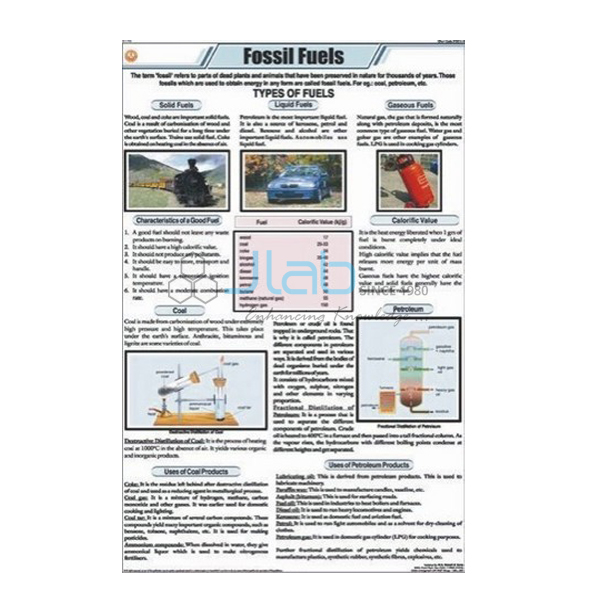
- Renewable Sources of Energy — the series chart on sources that are replenished naturally.
- Fossil Fuels — the series chart on coal, petroleum and natural gas.
- Nuclear Energy — the series chart on energy from the atomic nucleus.
- Solar Energy Kit — a solar panel drives a fan to power small boats or model cars in direct sunlight.
- Windmill Model — demonstrates electricity generation from wind power.
Browse the General Science Charts range or all Charts.
Request a Quote
Quotations come directly from JLab. Use the Add To Cart enquiry button on this page or the contact page, and include the quantity (minimum 10 units), any kits or other charts and the delivery location.
Last updated: 4 October 2026