Engine Stethoscope Manufacturer,Supplier and Exporter in India
Product Code : EL-AELE-9400
Jlab Export is a leading Engine Stethoscope Manufacturer,and suppliers in India
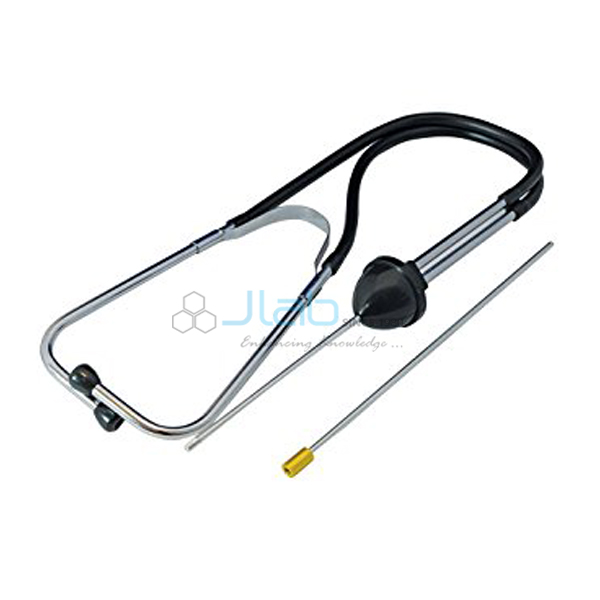
A mechanic listens through this stethoscope with its probe held on the engine, so a knock, tick or whine can be traced to the part that makes it. It also follows the sound of water, oil, gas or steam moving through a line or passage. The handle is shockproof.
Specifications
| Use | Locating the source of engine noise |
| Also traces | Sound of flowing water, oil, gas or steam |
| Handle | Shockproof |
| Minimum order quantity | 5 units |
| Dispatch time | Usually 7–10 working days |
| Manufacturer | JLab (Jain Laboratory Instruments Pvt Ltd), Ambala, India |
Workshop Exercises in Noise Diagnosis
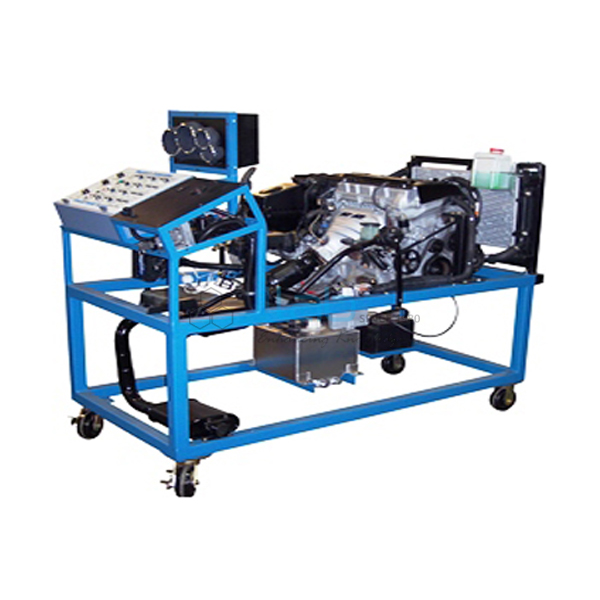
With the EFI Petrol Engine Test Bed at idle, students touch the probe on each injector in turn and listen for its regular click. A silent injector points to a wiring or injector fault. They then move to the valve cover, alternator and water pump, and learn to tell a valve tick from a bearing rumble. The same exercise on the Diesel Engine Test Bed shows how much louder diesel combustion knock is.
Noise alone rarely proves a fault, so the class follows up. A cylinder that sounds rough is checked with the Cylinder Compression Tester for Petrol Engine. Teachers can also fit a known faulty part, such as a dry pulley bearing, and let students find it by ear.
Frequently Asked Questions
How do I find which part a noise is coming from?
Move the probe in short steps towards the noise and note where it is loudest. That point is usually the source. Then compare it with the same point on a similar part, such as the next injector or the other side of the engine.
Which noises point to common engine faults?
A light, regular tick from the top of the engine often comes from the valve train. A deep knock from low down points to a crankshaft bearing. A whine or grinding at a pulley usually means a worn bearing in the alternator, water pump or idler.
Can it help find leaks?
Yes. Water, oil, gas or steam moving through a line makes a hiss or gurgle that the probe picks up. Run the probe along the hose, pipe or joint and the sound grows where the leak or blockage is.
Why use a stethoscope instead of listening by ear?
Engine noise spreads through the whole block and the air around it. The probe carries sound from the one part it touches, so other noises are shut out and a faint fault noise becomes clear.
How do I use it safely on a running engine?
Keep the probe, the tube, your hands, sleeves and hair well away from the fan, belts and pulleys. Touch only parts that do not move, and keep clear of the exhaust manifold, which gets very hot.
Other Engine Fault-Finding Tools
- Vacuum and Fuel Pump Tester
- Digital Advance Timing Light
- Belt Tension Gauge
- Hand Held Tune-Up Analyzer
For a quote, use Add To Cart or send us a message through the contact page.
Last updated: 5 November 2026