Fibre Optics Kit Manufacturer,Supplier and Exporter in India

Product Code : EL-TWL-9182
Jlab Export is a leading Fibre Optics Kit Manufacturer,and suppliers in India
This fibre optics kit teaches how light travels along an optical fibre and how fibres carry data. It has analog and digital transmitter and receiver modules, data transmission and reception cards, a frequency generator, and a microphone transmitter with a loudspeaker receiver. Students send tones, speech and digital data down the fibre and try out optical sensors.
Specifications
| Transmitters and receivers | Analog and digital |
| Data cards | Data transmission card and data reception card |
| Audio link | Transmitter with microphone, receiver with loudspeaker |
| Signal source | Frequency generator |
| PC link | Optical data transmission between two PCs, which are optional |
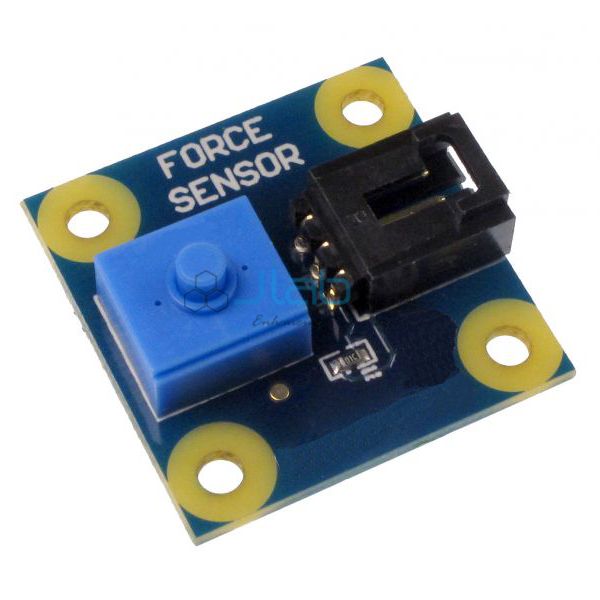
| Sensor exercises | Optical level, force and photogate sensors |
| Minimum order quantity | 1 unit |
| Dispatch time | Usually 7–10 working days |
| Manufacturer | JLab (Jain Laboratory Instruments Pvt Ltd), Ambala, India |
Fibre Optic Experiments for Students
A good first lesson is Tyndall’s experiment, in which light stays trapped inside a curved jet of water. It shows total internal reflection, the effect that guides light along a fibre core. A Laser Refraction Tank lets students find the critical angle in its semicircular block first. A length of Optical Fiber shows the light leaving the far end.
With the kit, students feed a tone from the frequency generator into the analog transmitter and pick it up at the receiver. Viewing the received signal on an Oscilloscope and comparing it with the input shows how well it survives the optical link. They then speak into the microphone transmitter, hear the speech at the loudspeaker, and send data through the digital link.
Frequently Asked Questions
What is numerical aperture?
It is the sine of the greatest angle at which light can enter the fibre from air and still be guided. For a core of index n1 and cladding of index n2, NA = √(n1² - n2²). A larger NA accepts light from a wider cone.
Why does light stay inside an optical fibre?
The core has a higher refractive index than the cladding around it. Light striking the boundary at more than the critical angle is totally reflected, so it zigzags along the core even when the fibre bends gently.
Does the kit need a computer?
Most exercises run on the kit modules alone. Only the optical data link between computers needs two PCs, and these are optional items outside the kit.
What do the analog and digital links show?
The analog link carries a continuous signal, such as a tone or speech, as a varying light level. The digital link sends data as light pulses. Comparing them shows why pulses cope better with noise and loss along the line.
Which sensor exercises are included?
The training programme gives examples of optical sensors: a level sensor, a force sensor and a photogate sensor. Each shows how a change in the light reaching a detector can measure a physical quantity.
Other Fibre Optic Trainers
- Fibre Optic Trainer for Numerical Aperture (PMMA fibre, built-in DC power supply)
- Fiber Optic Trainer (sine and square wave generator, LED transmitter)
- Physics of Fiber Optics Trainer
For a quote, use Add To Cart or send us a message through the contact page.
Last updated: 6 November 2026