Hydrocephalus Model Manufacturer,Supplier and Exporter in India
Product Code : EL-BE-5190
Jlab Export is a leading Hydrocephalus Model Manufacturer,and suppliers in India
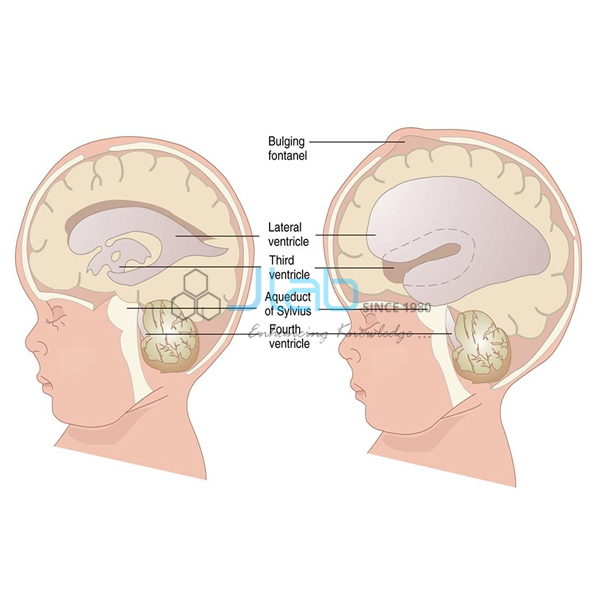
Hydrocephalus is a build-up of cerebrospinal fluid in the ventricles of the brain, which widens them and raises the pressure inside the skull. In a baby whose skull bones have not yet joined, the head grows larger than normal. The Hydrocephalus Model is an infant head in two parts on a base, with a median cut-away that shows the brain and the enlarged ventricles.
Specifications
| Type | Pathology teaching model |
| Condition | Hydrocephalus (excess cerebrospinal fluid in the brain ventricles) |
| Subjects | Paediatric nursing, neuroanatomy and pathology |
| Use | Classroom teaching and display |
| Form | Infant head with a median cut-away showing the brain and enlarged ventricles, in two parts plus a base |
| Overall height | About 300 mm |
| Base | About 220 x 180 mm |
| Material | Rigid painted PVC or resin |
| Key | Shows the ventricular enlargement |
| Minimum order quantity | 10 units |
| Dispatch time | Usually 4–6 working days |
| Manufacturer | JLab (Jain Laboratory Instruments Pvt Ltd), Ambala, India |
Neuroanatomy Practicals on CSF Flow
Students begin with the median section of the Human Brain Model and find where the third ventricle, the cerebral aqueduct and the fourth ventricle lie. They trace the normal path of cerebrospinal fluid, then mark the narrow points where a blockage would trap it upstream.
Paediatric nursing tutors set this model beside the Anencephaly Model to compare two birth defects of the brain and skull. The Model of Human Spinal Cord then helps explain spina bifida, a spinal defect that often comes with hydrocephalus. Students finish by plotting a baby’s weekly head circumference and spotting an abnormal rise.
Frequently Asked Questions
Can the model be used to practise shunt placement or endoscopic surgery?
It is a teaching model for showing the condition, not a surgical trainer. Practising shunt placement or endoscopic procedures needs a purpose-built simulator with fluid-filled ventricles that can be punctured and refilled.
How should the model be cleaned after a practical?
Wipe it with a soft cloth dampened in mild soapy water and dry it straight away. Solvents, alcohol and strong disinfectants can fade the colours or remove markings, so test any new cleaner on a hidden spot first.
Where is cerebrospinal fluid made, and where does it drain?
The choroid plexus in the ventricles makes it. The fluid passes from the lateral ventricles to the third ventricle, through the cerebral aqueduct to the fourth ventricle, and out around the brain and spinal cord. It drains into the venous sinuses through arachnoid granulations.
What commonly blocks the flow in babies born with hydrocephalus?
Narrowing of the cerebral aqueduct is a common cause. Infection before birth, bleeding into the ventricles in premature babies and spina bifida with a myelomeningocele are others, and some cases are inherited.
Why do many babies with spina bifida also develop hydrocephalus?
Open spina bifida often comes with a Chiari II malformation, in which the lower brain sits low in the top of the spinal canal. This crowding blocks fluid leaving the fourth ventricle, so cerebrospinal fluid builds up in the ventricles above.
Other Brain and Development Teaching Aids
- Fetus Development Model (set of embryo and fetus stages)
- Human Embryology Chart
- Nervous System Chart
For a quote, use Add To Cart or send us a message through the contact page.
Last updated: 20 November 2026