Infra Red Moisture Balance Manufacturer,Supplier and Exporter in India

Product Code : EL-MM-1258
Jlab Export is a leading Infra Red Moisture Balance Manufacturer,and suppliers in India
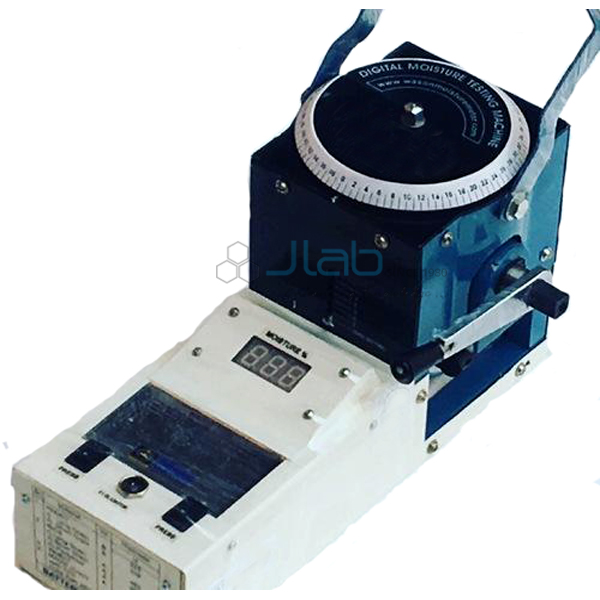
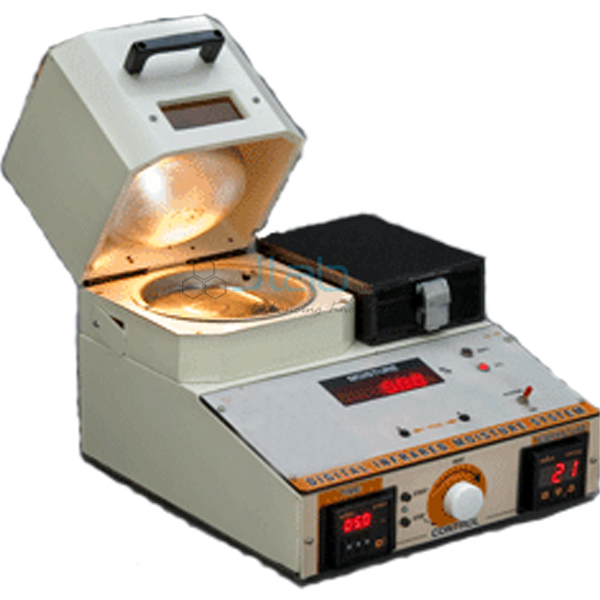
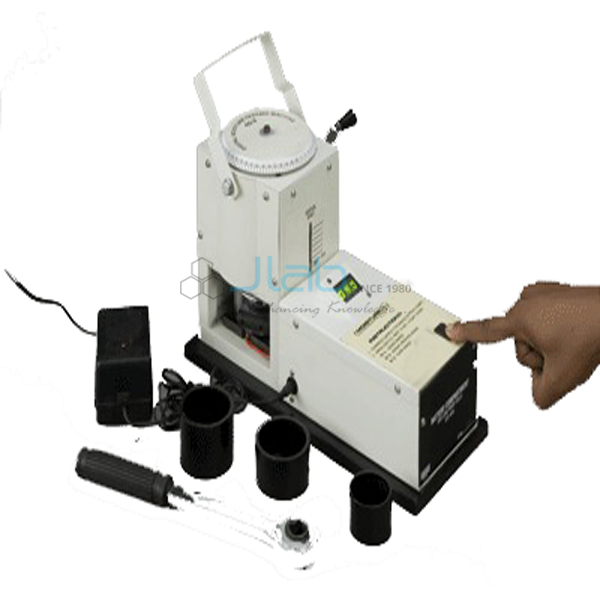
On this balance the sample dries and is weighed at the same time. A reflected infrared bulb heats a weighed sample of 5, 20 or 25 g on the pan, and a regulator sets the temperature. As water leaves, the balance reads off a scale divided directly in moisture per cent on the net weight basis, from 0 to 100%. It runs on 220 V 50 Hz mains.
Specifications
| Method | Drying and weighing at the same time |
| Heat source | Infrared bulb with reflector, temperature set by a regulator |
| Scale | Divided in moisture content on the net weight basis |
| Range | 0–100% |
| Sample weight | 5 g, 20 g or 25 g |
| Dimensions | 38 x 35 x 38 cm |
| Weight | 20 kg approx. |
| Power supply | 220 V 50 Hz AC mains |
| Minimum order quantity | 1 unit |
| Dispatch time | Usually 7–10 working days |
| Manufacturer | JLab (Jain Laboratory Instruments Pvt Ltd), Ambala, India |
Food Moisture Experiments for Students
In a food science practical, students grind biscuits, rice or pulses in a Multipurpose Grains Grinder Mixer and find the moisture of each powder on this balance. They then dry a second portion of the same powder in a Silica Crucible inside a Laboratory Oven and compare the two results. The infrared figure comes in minutes, while the oven method takes hours.
The scale reads on the wet basis: moisture per cent equals the loss in mass divided by the starting mass, times 100. Teachers can have students check this by hand from the starting and final masses.
Frequently Asked Questions
Why does the scale read moisture instead of grams?
The scale is divided for a set starting mass, so each step of mass lost stands for a fixed share of the sample. You read moisture per cent on the wet basis directly, with no sum to work.
Should I use the 5 g, 20 g or 25 g sample?
A small sample dries faster. A larger one gives a steadier result for coarse or uneven material and for samples with little water in them. Use the starting mass that matches the scale setting you read from.
How should the sample sit on the pan?
Spread it in a thin, even layer over the whole pan. A heap dries on top while the centre stays wet, and the reading stops early and comes out low.
What happens if the lamp is set too hot?
Sugary or fatty foods start to brown or scorch. The loss from burning is read as extra moisture, so the result comes out high. Turn the regulator down until the sample dries without changing colour.
Other Moisture Balances and Analysers
- Digital Infrared Moisture System (infrared rods, software for wet or dry basis)
- Infra Red Moisture Balance
- Halogen Moisture Balance
- Moisture Analyzer
For a quote, use Add To Cart or send us a message through the contact page.
Last updated: 12 November 2026