Laboratory Cement Autoclave Manufacturer,Supplier and Exporter in India

Product Code : EL-CACTE-9463
Jlab Export is a leading Laboratory Cement Autoclave Manufacturer,and suppliers in India
Autoclave expansion is the accelerated soundness test for cement. Bars of neat cement paste are held in steam at a constant pressure, which brings out expansion from free lime and magnesia within hours. This autoclave has a stainless steel cylinder in a welded, heat-insulated housing and a chamber 10.5 cm across and 40.5 cm high.
Specifications
| Pressure vessel | Stainless steel cylinder in a welded, heat-insulated metal housing |
| Chamber | 10.5 cm dia x 40.5 cm high |
| Control unit | Pressure regulator, pressure gauge, power switches and pilot lights |
| Temperature control | Digital PID controller |
| Heating | Electric heating units |
| Specimen rack | Holds bars upright above the water level, with test bar holder |
| Power supply | 230 V, 50 Hz, single phase AC |
| Minimum order quantity | 1 unit |
| Dispatch time | Usually 14–18 working days |
| Manufacturer | JLab (Jain Laboratory Instruments Pvt Ltd), Ambala, India |
Autoclave Soundness Experiments
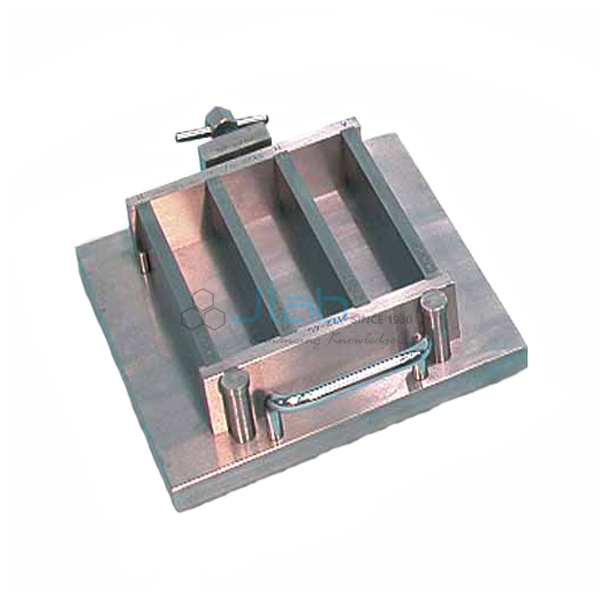
Students cast bars of neat cement paste in Test Bar Moulds, with contact points set in the ends. After moist curing they read each bar on a Length Comparator, stand the bars in the rack above the water and close the vessel. The heaters raise the steam pressure, and the regulator holds it for the test period.
The autoclave is then left to cool, and the pressure gauge must read zero before the lid is opened. A second comparator reading gives the expansion as a percentage of the gauge length. Testing the same cement in the Le Chatelier Mould shows why the autoclave catches unsoundness that a boiling test can miss.
Frequently Asked Questions
What does the autoclave expansion test show?
It shows whether a cement will expand after hardening because of free lime or magnesia. Steam under pressure speeds up their hydration, so expansion that might take years in a structure shows up in one test run.
Why is the steam pressure held constant?
The rate at which free lime and magnesia hydrate depends on the steam temperature, which is tied to its pressure. Holding one pressure means every bar sees the same conditions, so runs can be compared with each other.
What does the PID controller do?
The digital PID controller switches the electric heaters to hold the set temperature without large swings. It works with the pressure regulator in the control unit, and the gauge shows the vessel pressure throughout the run.
How are the specimens held?
A special rack holds the bars upright above the water in the vessel, so steam reaches them all in the same way. The chamber is 10.5 cm across and 40.5 cm high, and a test bar holder comes with it.
What does a failed autoclave result look like?
The bars grow by more than the limit the cement standard sets for that type of cement. Badly unsound bars may also bend or crack in the vessel. High free lime or magnesia is the usual cause, so the cement should be retested before use.
Other Cement Soundness Apparatus
For a quote, use Add To Cart or send us a message through the contact page.
Last updated: 5 November 2026