Cement Mortar Mixer Manufacturer,Supplier and Exporter in India

Product Code : EL-CACTE-9460
Jlab Export is a leading Cement Mortar Mixer Manufacturer,and suppliers in India
Mortar and paste for cement strength tests are mixed by machine so that every batch gets the same mixing. This mixer drives an epicyclic stainless steel paddle through gears. The paddle spins on its own axis while it travels round a stainless steel bowl of about six litres. It runs at two speeds.
Specifications
| Paddle | Epicyclic, stainless steel, gear driven |
| Low speed | 140 ± 5 rpm, planetary about 62 ± 5 rpm |
| High speed | 285 ± 10 rpm, planetary about 125 ± 10 rpm |
| Bowl | Stainless steel, about six litres |
| Bowl lift | Stand raises and lowers the bowl |
| Power supply | 230 V, 50 Hz, single phase AC |
| Minimum order quantity | 1 unit |
| Dispatch time | Usually 14–18 working days |
| Manufacturer | JLab (Jain Laboratory Instruments Pvt Ltd), Ambala, India |
Mortar Mixing for Cement Practicals
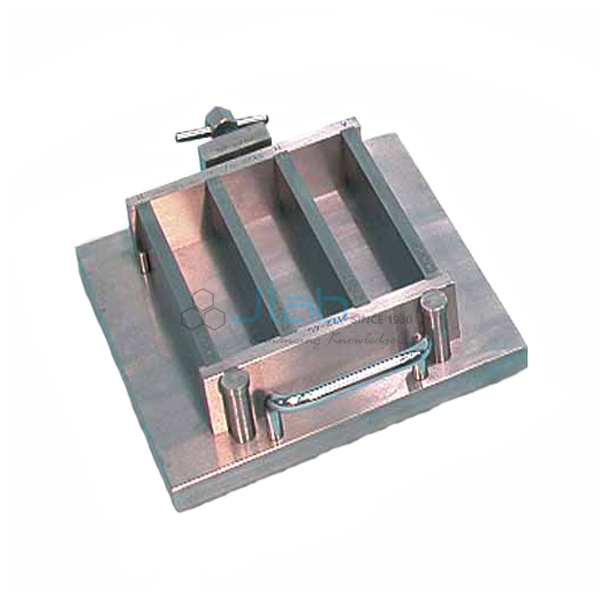
In a cement testing practical, students weigh out cement, standard sand and water, put the water and cement in the bowl and raise it to the paddle. They mix at low speed, add the sand while it runs, then finish at high speed. The mortar is compacted into Cube Moulds on the Mortar Cube Vibrating Machine, or into a Prism Mould Three Gang on the Jolting Apparatus.
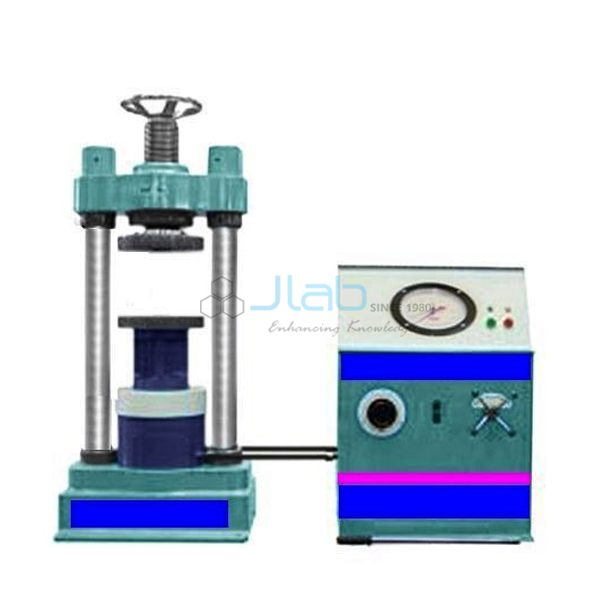
After curing, the cubes are crushed at 3, 7 and 28 days on the Compression Testing Machine. Students divide the failure load by the loaded area of the cube face to get the compressive strength in N/mm². Comparing hand-mixed and machine-mixed batches shows how much the mixing itself changes the result.
Frequently Asked Questions
What are the two speeds used for?
Low speed, 140 ± 5 rpm with planetary motion of about 62 rpm, blends the materials without throwing them out of the bowl. High speed, 285 ± 10 rpm with about 125 rpm planetary motion, finishes the mix. The test method sets which speed is used at each stage.
What does the epicyclic paddle action do?
The paddle turns on its own axis and also travels round the bowl, so it passes through every part of the batch. That leaves no unmixed pockets near the wall or the bottom and gives the same mix from batch to batch.
How much mortar does the bowl take?
The stainless steel bowl holds about six litres. That leaves room for a normal batch of test mortar or cement paste, with space for the paddle to work without spilling.
Why mix test mortar by machine and not by hand?
Hand mixing changes with the person, the time taken and the effort put in, and the strength results change with it. The mixer gives every batch the same speeds, the same paddle path and the same mixing times. Results from different days and groups then compare fairly.
Other Cement Strength Test Apparatus
- Mortar Mixer (same two-speed epicyclic design)
- Tensile Strength Tester
- Vicat Apparatus
For a quote, use Add To Cart or send us a message through the contact page.
Last updated: 5 November 2026