Prism Mould Three Gang Manufacturer,Supplier and Exporter in India
Product Code : EL-CACTE-9469
Jlab Export is a leading Prism Mould Three Gang Manufacturer,and suppliers in India
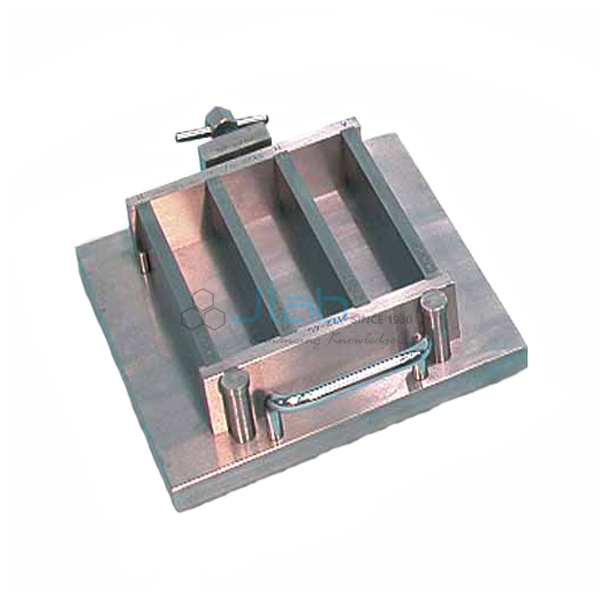
Three cement mortar prisms of 40 x 40 x 160 mm are cast together in this three-gang mould, which comes complete with its base. Every part carries an identification number, so each piece goes back in its right place after cleaning. The mould is checked for dimensional tolerances, hardness, squareness, flatness and roughness.
Specifications
| Prism size | 40 x 40 x 160 mm |
| Compartments | Three (three-gang) |
| Assembly | All parts marked with identification numbers |
| Each mould checked for | Dimensional tolerances, hardness, squareness, flatness and roughness |
| Supplied with | Base |
| Minimum order quantity | 10 units |
| Dispatch time | Usually 4–6 working days |
| Manufacturer | JLab (Jain Laboratory Instruments Pvt Ltd), Ambala, India |
Cement Strength Practicals with Mortar Prisms
Students prepare mortar from cement, standard sand and water in the Cement Mortar Mixer. With the mould clamped to the table of the Jolting Apparatus, they fill the three compartments in two layers and jolt each layer to compact it. The surplus is struck off with a straight edge, and the prisms are taken out of the mould the next day and cured in water.
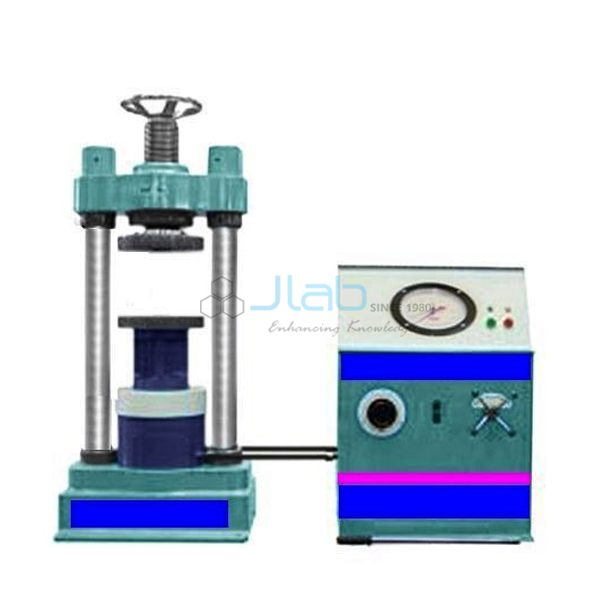
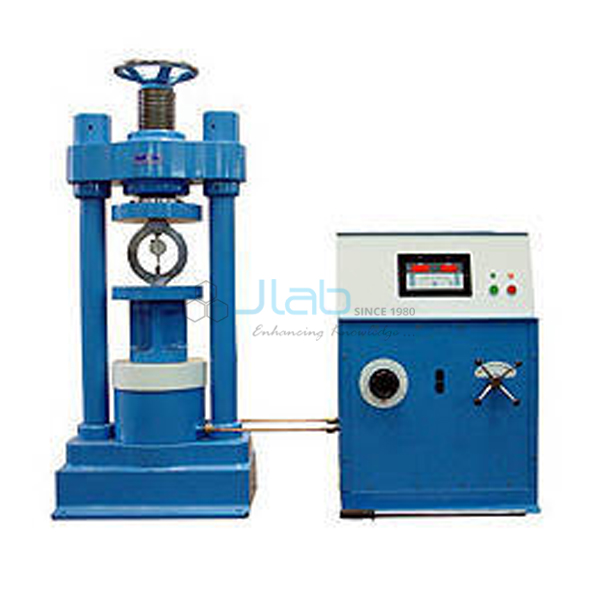
At each test age, a prism is first broken in bending under a load at mid-span. The two halves are then crushed on the Compression Testing Machine, so one prism gives a flexural result and two compressive results. Plotting strength against age shows how a cement gains strength over its first weeks.
Frequently Asked Questions
What size are the prisms cast in this mould?
Each compartment forms a prism of 40 x 40 x 160 mm, and the three-gang mould casts three at one filling. This is the prism size of the common cement strength method, in which the same specimen is tested in bending and then in compression.
Why test cement on prisms rather than cubes?
One prism gives a flexural strength from the bending test and two compressive strengths from its broken halves, while a cube gives compression only.
How do I assemble the mould correctly?
Match the identification numbers on the parts, so every piece returns to the position it was fitted in. Clean the faces, apply a thin film of oil inside, tighten the parts and set the mould square on its base. Tight, clean joints stop mortar leaking during jolting.
How is the mortar compacted in the mould?
The mould is clamped to the table of the Jolting Apparatus with the hopper on top. Each of the two layers is jolted by the cam-driven table while the stroke counter keeps count. After the second layer, the hopper is lifted off and the surface is struck off level.
Other Mortar and Cement Moulds
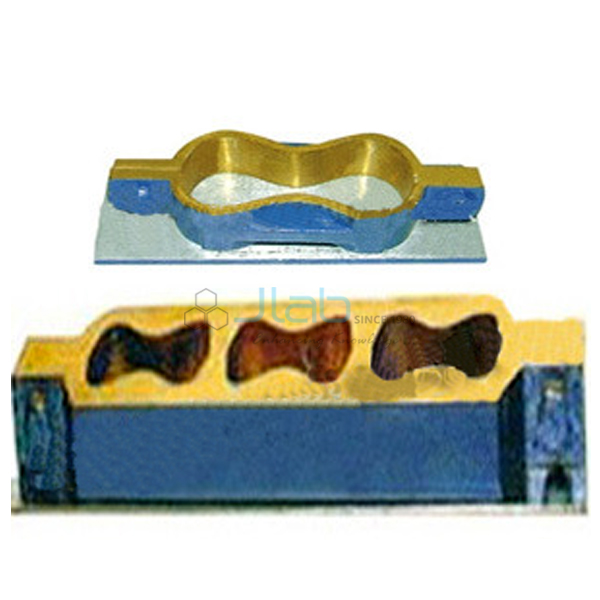
- Briquette Mould (split gun metal mould for tensile briquettes)
- Shrinkage Bar Mould (bars for alkali reactivity tests)
- Cube Moulds (moulds for mortar and concrete cubes)
- Mortar Cube Vibrating Machine (vibration compaction of mortar cubes)
For a quote, use Add To Cart or send us a message through the contact page.
Last updated: 6 November 2026