Leclanche Cell (Standard Size) Manufacturer,Supplier and Exporter in India
Product Code : EL-SLE-4621
Jlab Export is a leading Leclanche Cell (Standard Size) Manufacturer,and suppliers in India
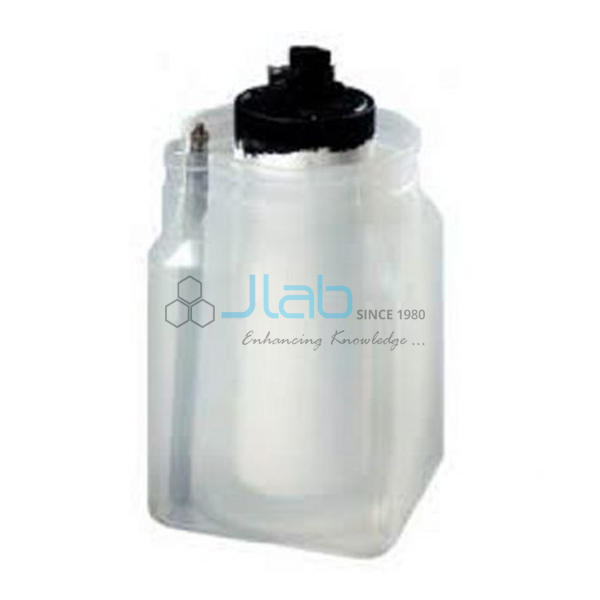
Leclanche Cell (Standard Size) (code EL-SLE-4621) is a complete Leclanché cell — a plastic container, a filled porous pot holding the carbon electrode and depolarizer, and a zinc rod, with brass terminals — used to show how a primary cell produces current in school and college physics and chemistry labs. It delivers a stronger current for a short period than a Daniell cell. It is made by Jain Laboratory Instruments Pvt Ltd (JLab) at its works in Ambala, India.
Specifications
| Parameter | Detail |
|---|---|
| Type | Complete Leclanché cell, standard size |
| Container | Plastic, 95 x 95 x 150 mm (length x width x height) |
| Container rim | Shaped to hold the zinc rod |
| Negative electrode | Zinc rod with terminal |
| Positive electrode | Carbon rod with terminal, sealed in the filled porous pot that contains the depolarizer |
| Terminals | Brass |
| Output | Delivers a stronger current for a short period than a Daniell cell |
| Supplied with | Plastic container, filled porous pot and zinc rod |
| Quality check | Each cell is visually inspected before dispatch |
| Pack quantity | Each (sold individually) |
| Minimum order quantity | 10 units |
| Dispatch time | Usually 7–10 working days |
| Product code | EL-SLE-4621 |
| Manufacturer | Jain Laboratory Instruments Pvt Ltd (JLab) — OEM |
| Country of origin | India (made in Ambala, Haryana) |
How Does It Compare with Other JLab Leclanché Cells?
| Model | Container and pot | Electrodes | Other listed details |
|---|---|---|---|
| This cell (EL-SLE-4621) | Plastic container 95 x 95 x 150 mm; filled porous pot | Zinc rod with terminal; carbon rod with terminal sealed in the pot | Brass terminals; depolarizer in the porous pot; stronger short-term current than a Daniell cell |
| Leclanche Cell (zinc rod and charged pot) | Charged porous pot 150 x 60 mm (height x diameter) | Zinc rod, 12.5 mm diameter | Terminals; EMF of about 1.4 V |
| Leclanche Cell (described by chemistry) | Not stated in its listing | Zinc anode; carbon cathode | Ammonium chloride electrolyte and manganese dioxide depolarizer described |
Choose this standard-size model when you want the outer plastic container supplied with the porous pot and zinc rod, so each group receives a complete cell ready for electrolyte. The zinc-rod-and-charged-pot model lists its own pot and rod sizes and an EMF figure; ask JLab which of the two suits your existing containers.
What Is the Leclanché Cell Used For?
The Leclanché cell is the original wet form of the zinc–carbon cell. Zinc at the negative electrode dissolves and releases electrons, while the depolarizer packed round the carbon rod in the porous pot — manganese dioxide in the classic design — removes the hydrogen that would otherwise build up on the positive electrode. Students use it to study primary cells, measure a cell’s voltage, and compare it with a Daniell cell: the Leclanché cell gives a stronger current for a short time, but under a heavy continuous load it polarises and its voltage falls, recovering when rested, which is why it was used for intermittent work such as electric bells. It fits electricity practicals in school physics and the electrochemistry topic of class 12 chemistry, where the ordinary dry cell is taught as the sealed, paste form of the Leclanché cell, and is a useful part of an electrochemical cell kit for school or college labs.
To set it up, stand the porous pot in the plastic container, seat the zinc rod in the shaped rim, and fill the container with the electrolyte — ammonium chloride solution in the classic cell — to below the top of the pot. Connect the brass terminals to a voltmeter or a small circuit. Between lessons lift the zinc rod out and rinse it, because zinc left standing in the electrolyte is slowly eaten away; rinse the container, and handle the porous pot carefully because it is brittle.
What to Specify When Ordering
- Quantity — the minimum order is 10 cells; many labs plan one per student group.
- Electrolyte — electrolyte is not listed with the cell, so say whether you need it; ammonium chloride is available as a separate catalogue item.
- Spare pots — the Leclanché cell pot is listed separately for building or rebuilding cells.
- Meters and comparison cells — add a laboratory voltmeter or a Daniell cell to the same enquiry if your practical compares cell outputs.
Frequently Asked Questions
What is supplied with this Leclanché cell?
The plastic container, the filled porous pot and the zinc rod. The carbon rod with its terminal is sealed in the porous pot together with the depolarizer, and the cell has brass terminals.
What size is the container?
95 x 95 x 150 mm (length x width x height). The rim is shaped to hold the zinc rod, so the rod stays in position beside the porous pot.
Which terminal is positive?
The carbon rod in the porous pot is the positive electrode and the zinc rod is the negative electrode. Zinc is the electrode that dissolves as the cell delivers current.
Is the electrolyte included?
It is not listed in the supply, which names the container, filled porous pot and zinc rod. The classic Leclanché electrolyte is ammonium chloride solution; ask JLab to confirm, or add ammonium chloride to your order.
How does it compare with a Daniell cell?
It delivers a stronger current for a short period. A Daniell cell gives a steadier current over a longer run, while a Leclanché cell polarises under continuous load and recovers when rested, so the two make a useful side-by-side practical.
What details does an export quotation need?
The quantity, the destination country and port or city, your preferred delivery terms such as FOB or CIF, any packing or labelling instructions, and the tender reference if you are buying against a tender.
Who manufactures this cell?
Jain Laboratory Instruments Pvt Ltd, trading as JLab, makes it at its works in Ambala, Haryana, India, and supplies it directly as the manufacturer.
OEM Manufacturer
JLab is the trading name of Jain Laboratory Instruments Pvt Ltd, an Indian manufacturer of physics, chemistry and general science laboratory equipment, incorporated in 2017 with its base on Hargolal Road, Ambala, Haryana. This Leclanché cell is assembled at JLab’s own works instead of being bought from a trader, so schools, colleges, dealers and importers deal directly with the maker; each cell is checked by eye before it is packed, and repeat orders and replacement parts come from the same works. JLab exports worldwide and can reach buyers in every region, for instance Uzbekistan in Central Asia, Sweden in Northern Europe, Hungary in Eastern Europe, Botswana in Southern Africa and Mauritius in East Africa. Institutions buying through tenders can use the JLab lab tenders page.
Cells, Electrodes and Measuring Equipment
- Daniel Cell — a Daniell cell with a copper outer vessel, porous pot and amalgamated zinc rod, for comparing a steady cell with this one.
- Leclanche Cell Pot — a polypropylene pot listed for making Leclanché cells.
- Ammonium Chloride — analytical reagent grade salt for preparing the classic electrolyte.
- Voltmeter Laboratory Type — an AC/DC laboratory voltmeter for reading the cell’s voltage.
- Zinc Electrode Rod — a solid zinc rod with terminal for other electrochemistry practicals.
Browse further electricity and chemistry apparatus in the School Lab Equipment range.
Request a Quote
Quotes come direct from the manufacturer. Use the Add To Cart enquiry button on this page, or send the quantity (minimum 10 units), whether you need electrolyte or spare pots, any meters or comparison cells to add, and your delivery location through the contact page.
Last updated: 4 October 2026