Light Sensor Manufacturer,Supplier and Exporter in India
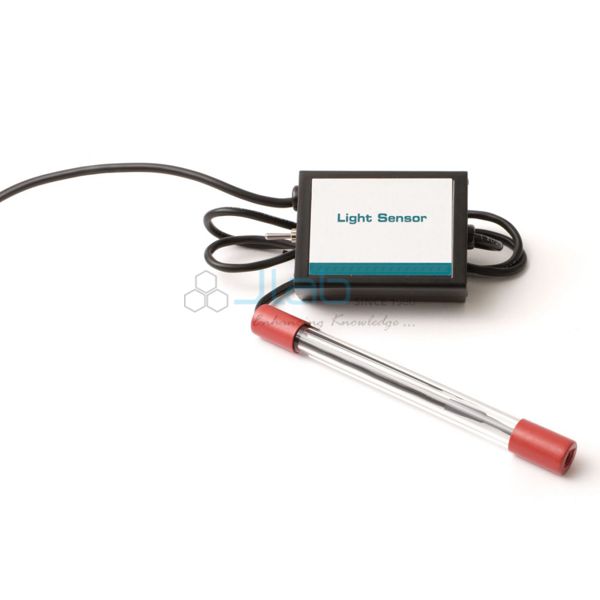
Product Code : EL-TWL-9201
Jlab Export is a leading Light Sensor Manufacturer,and suppliers in India
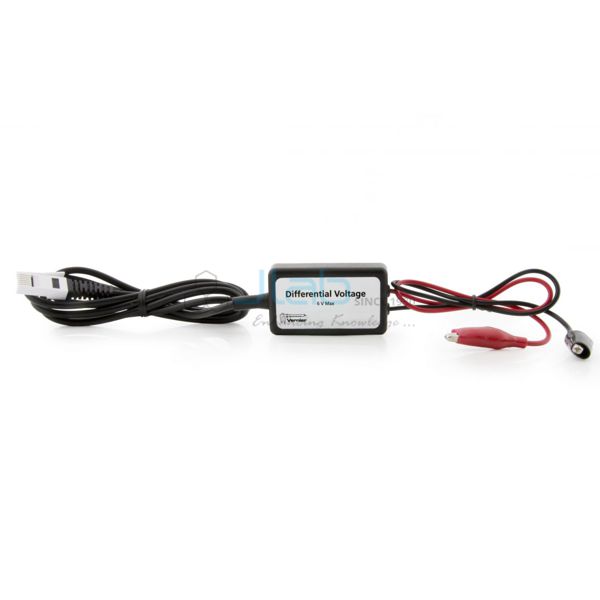
This light sensor measures illuminance in lux, and its spectral response is close to that of the human eye, so a reading follows how bright a surface looks. It has three ranges: 0–600 lux at 0.2 lux resolution, 0–6000 lux at 2 lux, and 0–150,000 lux at 50 lux for outdoor light.
Technical Details
| Measures | Illuminance in lux |
| Spectral response | Close to that of the human eye |
| Range 1 | 0–600 lux, resolution 0.2 lux |
| Range 2 | 0–6000 lux, resolution 2 lux |
| Range 3 | 0–150,000 lux, resolution 50 lux |
| Typical uses | Inverse square law, polarizers, reflectivity, solar energy |
| Minimum order quantity | 5 units |
| Dispatch time | Usually 7–10 working days |
| Manufacturer | JLab (Jain Laboratory Instruments Pvt Ltd), Ambala, India |
Light Experiments for Students and Teachers
For the inverse square law, fix a small lamp at one end of an Optical Bench with 3 Stands. Then move the sensor along the scale in equal steps. Students plot lux against 1/d² and get a straight line once the lamp is far enough away to act as a point source. A low-voltage bulb from the Group of Miniature Bulbs on the Holder with Clips makes a small source.
With two Polarizing Filters between the lamp and the sensor, turning one filter makes the reading fall to a minimum when the axes are crossed. The class can test Malus’s law, I = I0 cos² θ, from the same readings. For reflectivity, aim the sensor at white, grey and black card under one lamp. Outdoors, the top range follows sunlight through the day, and the readings can be set beside the output of a Solar Cell Mounted facing the same sky.
Frequently Asked Questions
Which of the three ranges should I use?
Pick the lowest range that does not go over scale. Bench work under a lamp usually fits 0–600 lux, where the step is 0.2 lux. A bright lamp close to the sensor may need 0–6000 lux, and daylight outdoors needs the 0–150,000 lux range.
What does a spectral response like the human eye mean?
The sensor is most sensitive to green and yellow light and less to deep red and violet, as the eye is. Lux is defined on that same curve, so the reading matches how bright a scene looks. Infrared from a hot lamp adds little to it.
Why do my inverse square law results go wrong close to the lamp?
Near the lamp the bulb is no longer a point source, and the sensor face has a size of its own, so the law does not hold. Keep the sensor well away from the bulb, darken the room and subtract the reading taken with the lamp off.
How do I look after the sensor window?
Keep the window clean and dry and wipe it only with a soft cloth. Dust or a fingerprint on it lowers every reading. After the lesson, store the sensor in a dry place away from heat.
Other Light and Data Logging Items
- Digital Lux Meter (handheld meter with its own display)
- Solar Radiation Sensor
- Datalogger (built-in luminosity sensor)
For a quote, use Add To Cart or send us a message through the contact page.
Last updated: 6 November 2026