Solar Radiation Sensor Manufacturer,Supplier and Exporter in India
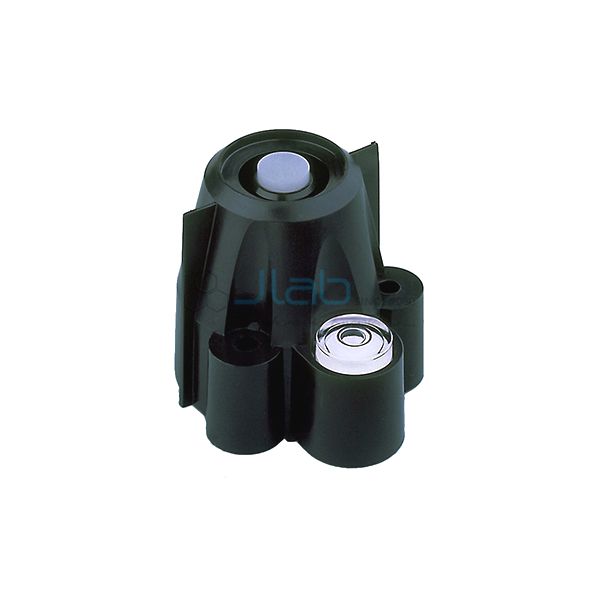
Product Code : EL-TWL-9203
Jlab Export is a leading Solar Radiation Sensor Manufacturer,and suppliers in India
This solar radiation sensor is a pyranometer. It measures global radiation, the direct sunbeam plus the diffuse light from the sky, at the point where it is mounted. A hermetically sealed silicon photodiode under a welded diffuser does the sensing, and the built-in amplifier turns its current into 0 to +2.5 V DC.
Specifications
| Measures | Global solar radiation (direct plus diffuse) |
| Transducer | Hermetically sealed silicon photodiode |
| Spectral response (10% points) | 400–1100 nm |
| Output | 0 to +2.5 V DC from the built-in amplifier |
| Cosine response | ±3% of reading (0° to ±70° incident angle), ±10% (±70° to ±85°) |
| Levelling | Level indicator and spring-loaded mounting screws |
| Operating temperature | −40 to +65 °C (−40 to +150 °F) |
| Storage temperature | −45 to +70 °C (−50 to +158 °F) |
| Cable | 4-conductor, 26 AWG, 0.9 m (3 ft) supplied |
| Minimum order quantity | 5 units |
| Dispatch time | Usually 7–10 working days |
| Manufacturer | JLab (Jain Laboratory Instruments Pvt Ltd), Ambala, India |
How It Copes with Outdoor Weather
A cutoff ring around the diffuser gives the sensor its cosine response. Light arriving at a low angle then counts for less, as it does on a flat surface. The outer shell shades the body from heat radiation and leaves an air path for convection cooling. The gap between shell and body also lets rain or irrigation water run off instead of standing on the sensor. Fins help line the sensor up with the sun’s rays during mounting.
Solar Energy Experiments for Students
On a clear day, students level the sensor on a roof or open ground and record its output every few minutes with a Datalogger. The plot rises to a peak near solar noon and falls again, while passing clouds show as sharp dips. Repeating the run on a hazy day shows how much of the light is diffuse.
For a solar cell practical, set a Solar Cell Mounted beside the sensor at the same tilt and record the cell output against the radiation reading. Placing a Light Sensor next to it lets the class compare lux with solar radiation through the same day.
Frequently Asked Questions
What is global radiation?
Global radiation is all the sunlight falling on a level surface: the direct beam from the sun plus the diffuse light scattered by the sky and clouds. This sensor reads that sum, so it stays fixed and does not need to track the sun.
How do I mount and level the sensor?
Choose a place that walls, trees or masts do not shade at any time of day. Tighten the spring-loaded mounting screws a little at a time until the level indicator shows the sensor is level. A sensor that tilts reads high on one side of noon and low on the other.
How is the output turned into W/m²?
The amplifier gives 0 to +2.5 V DC, rising with radiation. The console or logger applies the sensor’s scale factor to show solar radiance. It can also add the values over a set period to give the total energy received.
What does a spectral response of 400 to 1100 nm mean?
The silicon photodiode responds to light from violet at about 400 nm through the visible band into the near infrared at about 1100 nm. These are the 10% points, where the response falls to one tenth of its peak.
Can the sensor stay outdoors in rain and heat?
Yes. The photodiode is hermetically sealed, the diffuser is welded to the body for a weather-tight seal, and water drains through the gap under the shell. It works from −40 to +65 °C.
How is it different from a light sensor?
A light sensor reads illuminance in lux, weighted to the human eye. This sensor reads solar radiation as power falling on each square metre. Its band runs further into the near infrared, so it suits solar energy and weather work.
Other Solar Energy Lab Items
For a quote, use Add To Cart or send us a message through the contact page.
Last updated: 6 November 2026