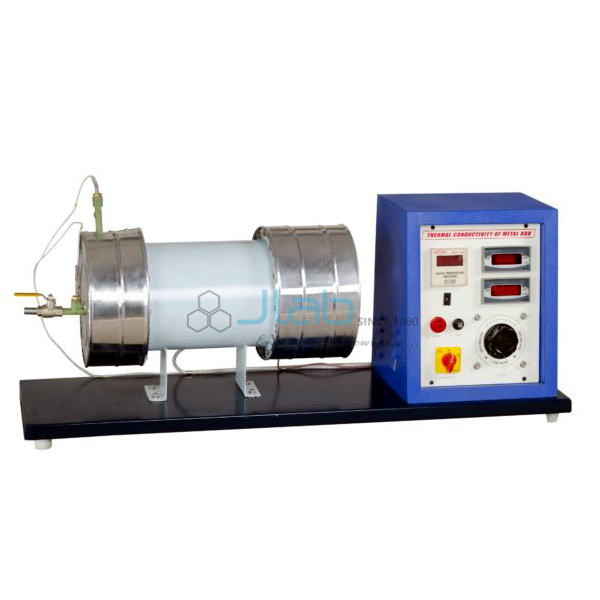
Temperature Sensor Manufacturer,Supplier and Exporter in India

Product Code : EL-TWL-9199
Jlab Export is a leading Temperature Sensor Manufacturer,and suppliers in India
This temperature sensor gives an analog voltage that rises by 10 mV for each degree Celsius, so its output follows the surrounding temperature in a straight line. It works from −40 °C to +125 °C on a 2.7 V to 5.5 V DC supply. That span covers ice baths, hot water, cooling curves and room or weather readings.
Specifications
| Output | Analog voltage, linearly proportional to Celsius temperature |
| Scale factor | 10 mV/°C |
| Operating range | −40 °C to +125 °C |
| Voltage input | 2.7 V to 5.5 V DC |
| Linearity | ±0.5 °C |
| Accuracy over temperature | ±2 °C |
| Minimum order quantity | 5 units |
| Dispatch time | Usually 7–10 working days |
| Manufacturer | JLab (Jain Laboratory Instruments Pvt Ltd), Ambala, India |
Heat Experiments for School and College Labs
Students often begin by logging a cooling curve. They fill a Beaker with hot water, put the sensor in it inside a thin sealed sleeve and log the temperature every few seconds as it cools. The curve falls fast at first and then more slowly, which leads into Newton’s law of cooling. The Apparatus for Newton’s Cooling Law gives a more controlled version of the same test.
Heated on a Magnetic Stirrer with Hot Plate, a beaker of crushed ice shows a flat stretch at 0 °C while the ice melts. The temperature then rises until the water boils. Wrapping several beakers in different materials and logging them side by side compares how well each one insulates.
Frequently Asked Questions
How do I turn the output voltage into a temperature?
The output changes by 10 mV for every degree Celsius. Note the output at a known temperature, such as melting ice, to fix the starting point. Then divide any later change in millivolts by 10 to get the change in degrees.
What temperatures can it measure?
From −40 °C to +125 °C. That covers freezing mixtures, boiling water and air temperature. For flames, furnaces or molten metals, use a thermocouple instead.
What supply voltage does it need?
Any DC supply from 2.7 V to 5.5 V. The 5 V rail of a microcontroller board or logger works, and so does a lower supply inside that band.
Can it go into water?
Keep its electrical connections dry. For liquids, put the sensor inside a thin sealed tube or sleeve with a little heat-conducting paste, and allow a moment longer for the reading to settle.
Other Temperature Measuring Equipment
- Type K Thermocouple (for furnace temperatures)
- Temperature Sensor Trainer (compares four types of temperature transducer)
- Datalogger
For a quote, use Add To Cart or send us a message through the contact page.
Last updated: 6 November 2026