Chemical Reactor Training Equipment Manufacturer,Supplier and Exporter in India

Product Code : EL-TWL-9080
Jlab Export is a leading Chemical Reactor Training Equipment Manufacturer,and suppliers in India
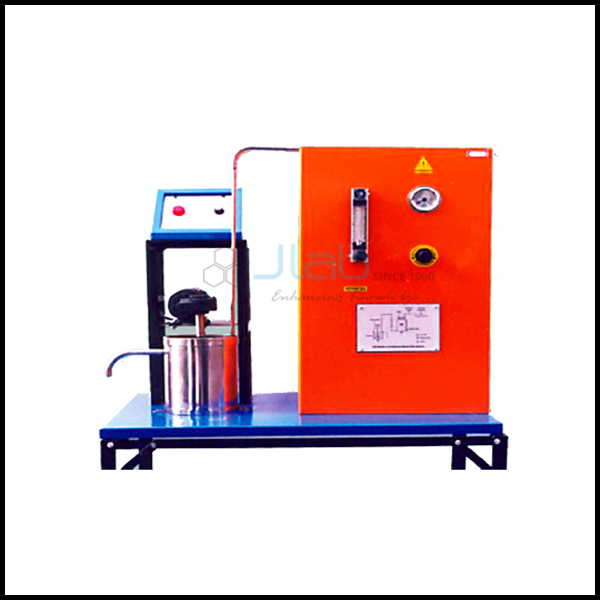
One base unit serves several reactor types in this chemical reactor trainer. Two variable speed diaphragm pumps feed reactants from two supply tanks into the fitted reactor, and a controlled hot water circuit sets the reaction temperature. A combined conductivity and temperature unit follows the conversion, so the effect of contact time and temperature can be read directly.
Specifications
| Supply tanks | Two, for the liquid reactants |
| Pumps | Two variable speed diaphragm pumps |
| Temperature control | Controlled hot water circuit |
| Measurement | Combined conductivity and temperature unit for conversion and reaction temperature |
| Variables | Contact time and reaction temperature |
| Reactors | Available as accessories |
| Product collection | Stainless steel tray |
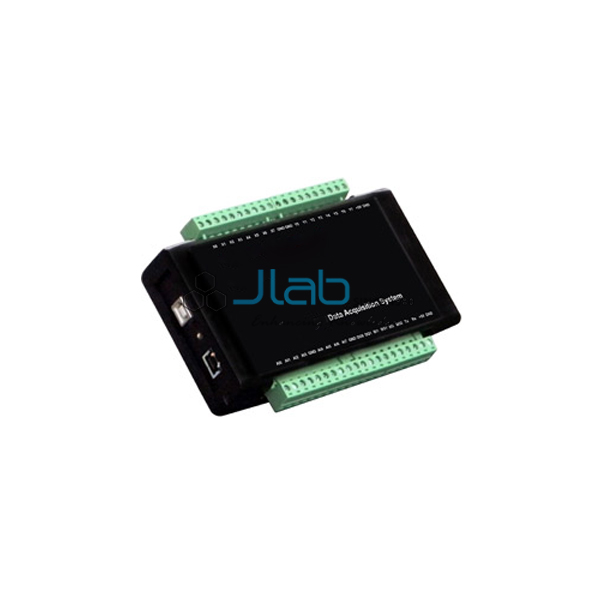
| Data | PC data acquisition possible |
| Minimum order quantity | 1 unit |
| Dispatch time | Usually 14–18 working days |
| Manufacturer | JLab (Jain Laboratory Instruments Pvt Ltd), Ambala, India |
Kinetics Experiments on the Trainer
A standard reaction for this kind of trainer is the saponification of ethyl acetate with sodium hydroxide, since conductivity drops as hydroxide ions are used up. Students set the pump speeds to fix the residence time, let the reactor reach steady state and note the conductivity. Standards made up in a Volumetric Flask and checked on a Digital Conductivity Meter give the calibration line that turns each reading into conversion.
Repeating the run at several flows gives conversion against residence time. For a CSTR, the design equation τ = CA0 X / (−rA) then gives the rate at each point and, from it, the rate constant. Runs at two or three hot water temperatures give the activation energy from an Arrhenius plot of ln k against 1/T. Changing the reactor on the same base lets the class compare reactor types at equal residence time.
Frequently Asked Questions
Are the reactors part of the base unit?
The reactors are offered as accessories, so the base is ordered with the reactor types a course needs. The base carries the supply tanks, the two diaphragm pumps, the hot water circuit, the measuring unit and the product tray.
How is conversion measured without titration?
A combined conductivity and temperature measuring unit reads the reacting mixture continuously. In an ionic reaction such as ethyl acetate saponification, conductivity falls as hydroxide is used up, and a calibration line converts each reading into conversion.
How is the contact time changed?
The two variable speed pumps set the flow of each reactant. Residence time is the reactor volume divided by the total flow, so slowing both pumps lengthens the contact time and raises the conversion.
Can results be logged on a computer?
PC data acquisition can be used with the trainer, so conductivity and temperature are recorded through a run. Without it, students note the readings from the measuring unit at set times. The reaction product collects in a stainless steel tray in the unit.
Other Stand-Alone Reactor Set-Ups
For a quote, use Add To Cart or send us a message through the contact page.
Last updated: 6 November 2026