UV Photo Reactor Manufacturer,Supplier and Exporter in India
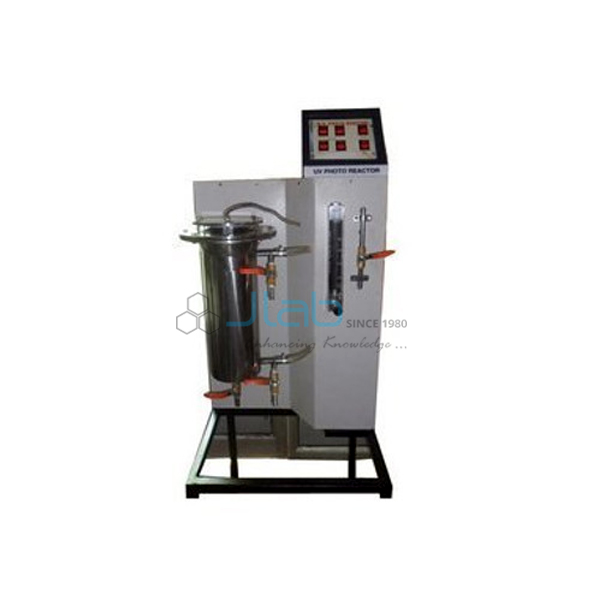
Product Code : EL-TWL-9139
Jlab Export is a leading UV Photo Reactor Manufacturer,and suppliers in India
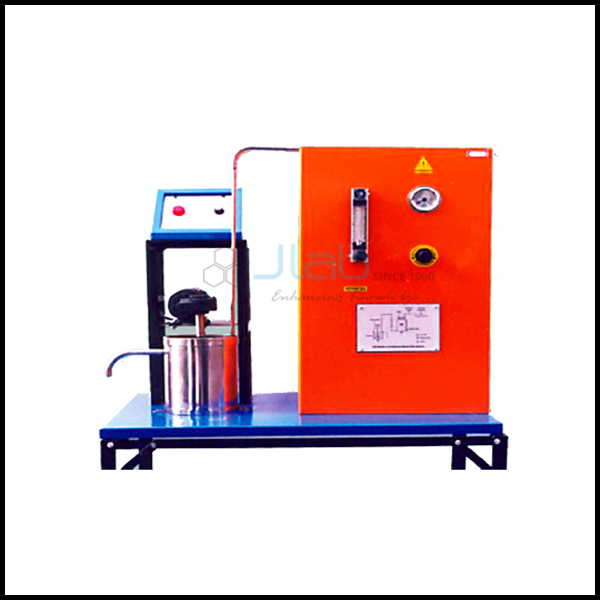
A UV photo reactor exposes a solution to ultraviolet light, so that the light starts the reaction instead of heat alone. Chemical engineering labs use it for photochemical and photocatalytic reactions, such as breaking down a dye in water. This unit runs on 220 V, 50 Hz AC, has a 1600 W heater and carries a manometer.
Specifications
| Light source | Ultraviolet |
| Power supply | 220 V, 50 Hz AC |
| Heating power | 1600 W |
| Manometer accuracy | ±0.4 |
| Minimum order quantity | 1 unit |
| Dispatch time | Usually 14–18 working days |
| Manufacturer | JLab (Jain Laboratory Instruments Pvt Ltd), Ambala, India |
Photoreaction Experiments
A common practical follows the fading of a dilute dye solution under UV light. Students take samples at set times and read the absorbance at the dye peak on a UV Spectrophotometer or a Digital Photo Colorimeter. A first run with the light off shows how much colour is lost without irradiation.
A plot of ln(C0/C) against irradiation time is usually a straight line, so the decay is treated as pseudo-first order with rate constant k. Students then repeat the run with a little Hydrogen Peroxide added, or with a photocatalyst powder. A run at a higher temperature on the heater gives a third value of k to compare.
Frequently Asked Questions
What reactions can be studied in a UV photo reactor?
Any reaction started by ultraviolet light: photolysis of a compound, photo-oxidation with hydrogen peroxide, or photocatalytic breakdown of dyes and other pollutants on a semiconductor catalyst. Teaching labs most often use dye breakdown, because the colour change is easy to follow.
How is the reaction rate measured?
Take samples at fixed irradiation times and measure the concentration left, usually by absorbance. In dilute solution absorbance is proportional to concentration, so ln(A0/A) against time gives the pseudo-first-order rate constant directly.
Why run a dark control?
Some dye can stick to a catalyst or break down slowly without light. A run with the light off, under the same conditions, measures this loss. Taking it away from the irradiated result leaves the change caused by UV light.
Is UV light a hazard in the lab?
Yes. Ultraviolet light harms the eyes and skin. Keep the reactor closed or shielded while the light is on, switch it off before opening, and wear UV-blocking eye protection near the unit.
Can ordinary glassware be used in UV work?
Ordinary borosilicate glass absorbs much of the short-wave ultraviolet. A solution held in it receives less light, and a glass cuvette gives false absorbance readings in the UV range. Use quartz vessels and cells for short-wave work. For dye fading read in the visible range, glass cells are fine.
Other Reaction Engineering Units
For a quote, use Add To Cart or send us a message through the contact page.
Last updated: 6 November 2026