Measuring Cylinders Manufacturer,Supplier and Exporter in India
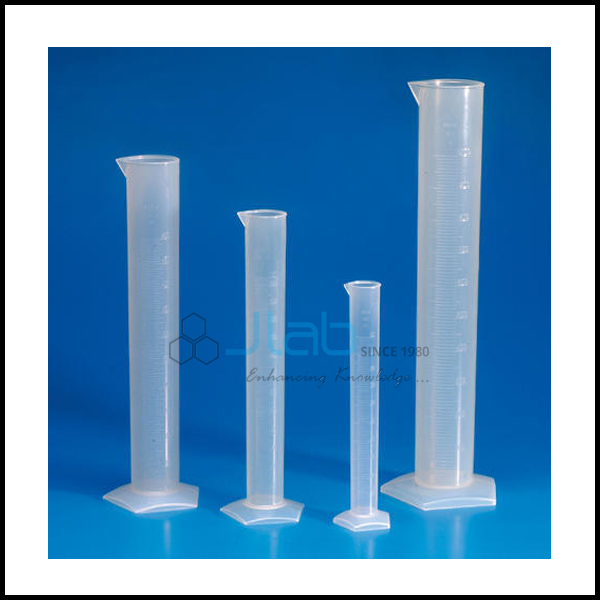
Product Code : EL-VP-127
Jlab Export is a leading Measuring Cylinders Manufacturer,and suppliers in India
Moulded in one piece from polypropylene, these measuring cylinders have raised graduations, a broad base that keeps them steady and walls clear enough to see the liquid. They are autoclavable. The eight sizes run from 10 ml, read to 0.2 ml, up to 2000 ml, read to 20 ml.
Specifications
| Material | Polypropylene, single piece |
| Graduations | Raised, prominent |
| Base | Broad |
| Clarity | Excellent contact clarity |
| Autoclavable | Yes |
| Sizes and least count | 10 ml (0.2 ml), 25 ml (0.5 ml), 50 ml and 100 ml (1 ml), 250 ml (2 ml), 500 ml (5 ml), 1000 ml (10 ml), 2000 ml (20 ml) |
| Minimum order quantity | 10 units |
| Dispatch time | Usually 4–6 working days |
| Manufacturer | JLab (Jain Laboratory Instruments Pvt Ltd), Ambala, India |
Gas Collection and Density Experiments
To follow the rate of a reaction, students add Hydrochloric Acid Dilute to Calcium Carbonate in a flask closed with a stopper and a Delivery Tube Glass. The gas bubbles into a 100 ml cylinder that was filled with water and turned upside down in a Pneumatic Trough (Polypropylene). Students read the gas volume every half minute and plot it against time.
The density of a liquid is found by weighing an empty 50 ml cylinder on the Balance Electronics, filling it to a mark and weighing it again. Dividing the mass of liquid by its volume gives the density, so the class can compare water, salt solution and cooking oil.
Frequently Asked Questions
Do the small divisions have the same value on every size?
No. The step grows with the size. It is 0.2 ml on the 10 ml cylinder, 0.5 ml on the 25 ml and 1 ml on the 50 and 100 ml. The 2000 ml cylinder reads in 20 ml steps. Check it before reading by counting the spaces between two numbered marks.
Which size should I use for a measured volume?
Use the smallest cylinder that holds the whole volume. For 8 ml, the 10 ml cylinder reads to 0.2 ml. The 100 ml cylinder reads only to 1 ml, and the liquid fills a small part of its height.
How do I see raised marks against a dark liquid?
Raised marks are moulded in the same plastic as the wall, so they are easiest to see when light falls across them. Hold a white card behind the cylinder for dark liquids, or a dark card for pale ones, and read at eye level.
Why not dissolve or heat things in the cylinder?
A cylinder is tall and narrow, so a solid is hard to stir in and may stay undissolved at the bottom. Heat can also soften polypropylene and change the shape of the scale. Dissolve or warm in a beaker, then measure the liquid in the cylinder.
Can the cylinders be autoclaved again and again?
Yes, they are autoclavable. Lay tall sizes on their side or stand them on a flat tray so they do not lean while warm, and let them cool before use. Over many cycles polypropylene can turn slightly cloudy.
Other Polypropylene Measuring Ware
- Measuring Cylinders Hexagonal (hexagonal base, tapered spout)
- Conical Measure
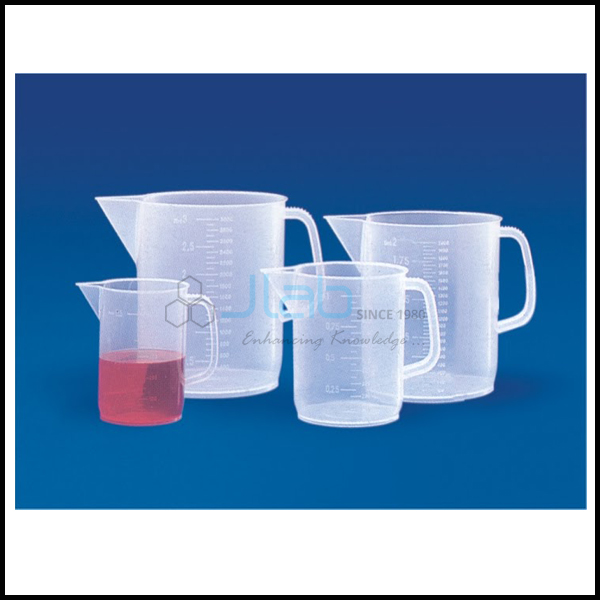
- Measuring Jugs
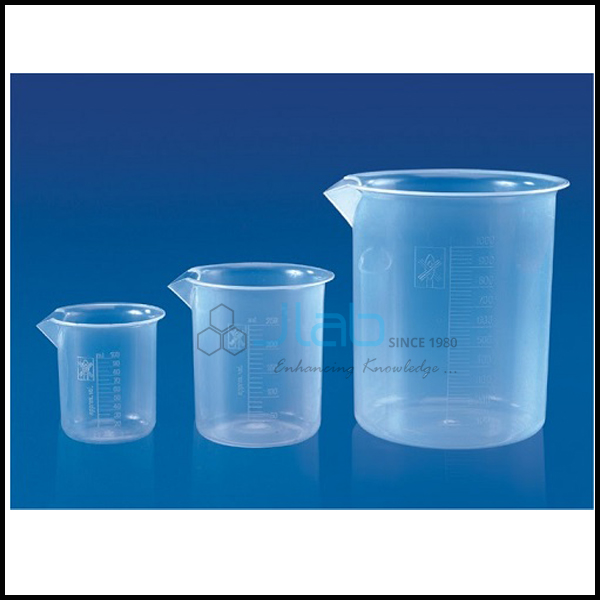
- Beakers (Polypropylene)
For a quote, use Add To Cart or send us a message through the contact page.
Last updated: 14 November 2026