Metabolic Cage Manufacturer,Supplier and Exporter in India

Product Code : EL-PLE-2246
Jlab Export is a leading Metabolic Cage Manufacturer,and suppliers in India
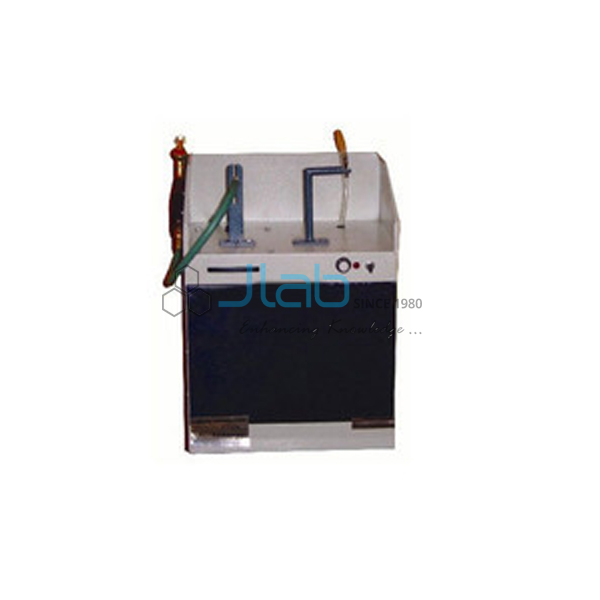
A metabolic cage keeps a single small animal over a funnel and separator, so its urine and faeces are collected apart and can be measured. This cage has a floor area of 200 cm² and a chamber volume of 2600 cm³. Overall it measures 32 cm long, 25 cm wide and 36.5 cm high.
Specifications
| Floor area | 200 cm² (31 in²) |
| Chamber volume | 2600 cm³ (159 in³) |
| Cage dimensions | 32 L x 25 W x 36.5 H cm |
| Minimum order quantity | 10 units |
| Dispatch time | Usually 4–6 working days |
| Manufacturer | JLab (Jain Laboratory Instruments Pvt Ltd), Ambala, India |
Collection Studies in Pharmacology Practicals
The classic teaching use is a diuretic activity study, where the urine volume collected from a test group over a set period is compared with that of a control group. Students read each collected volume in Measuring Cylinders and tabulate the results. Faeces collected separately can be weighed or counted for studies on gut transit.
Between collection periods the animals return to a Small Animal Cage with normal bedding. Institutions run this work under the approval of their animal ethics committee. Many courses also teach renal function with simulations or with human volunteer urine practicals alongside them.
Frequently Asked Questions
How does a metabolic cage keep urine and faeces apart?
The animal stands on a mesh floor. Droppings and urine fall through into a funnel, where a separator lets the urine run down to the collecting tube while the solid pellets are caught and diverted.
Why do urine samples sometimes come out contaminated?
The usual causes are food crumbs and water drips falling into the funnel with the urine, or faeces that break up on the separator. Keep the feeder and drinker outlets away from the funnel and empty the collectors on time.
What do the floor area and chamber volume tell me?
They give the space the animal has: 200 cm² of floor and 2600 cm³ of chamber. Compare these figures with the size of the animal your study uses before choosing the cage.
How are food and water intake measured alongside output?
Weigh the food at the start and end of the period and read the drop in the water level, then subtract any spilled amounts caught below. Set these figures against the urine volume and faeces weight for the same period.
How should the cage be cleaned between runs?
Take the cage apart, wash the floor, funnel, separator and collectors with detergent and warm water, then rinse in distilled water and dry. Residue left on the funnel can carry over into the next samples.
Other Animal Housing Items
For a quote, use Add To Cart or send us a message through the contact page.
Last updated: 20 November 2026