Cannula Borosil Glass Manufacturer,Supplier and Exporter in India
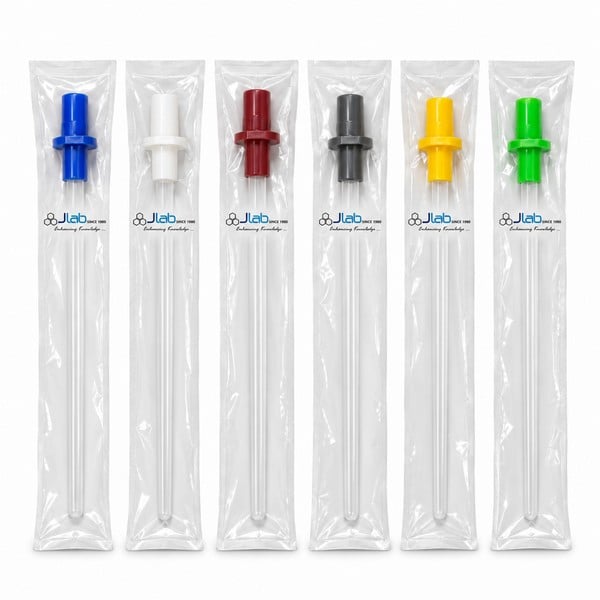
Product Code : EL-PLE-2243
Jlab Export is a leading Cannula Borosil Glass Manufacturer,and suppliers in India
A cannula is a short glass tube that connects a blood vessel or an isolated organ to the recording or perfusion line in a physiology or pharmacology experiment. These cannulae are made of borosilicate glass in five types: arterial, venous, Syme’s, perfusion and T-shaped. Each type is shaped for its own place in the setup.
Specifications
| Material | Borosilicate glass |
| Types | Arterial, venous, Syme’s, perfusion and T-shaped |
| Minimum order quantity | 10 units |
| Dispatch time | Usually 4–6 working days |
| Manufacturer | JLab (Jain Laboratory Instruments Pvt Ltd), Ambala, India |
Experiments in Experimental Pharmacology
The most common use is the isolated frog heart practical, where a Syme’s cannula carries Ringer solution through the heart. A Heart Lever Starling writes each beat on the drum of the Student Electrical Kymographs. Students then measure how acetylcholine slows the rate and lowers the force of the beat, and how adrenaline raises both.
Perfusion cannulae serve the isolated mammalian heart on a Perfusion Langendorff Assembly, where rate and force are compared before and after a blocker. Arterial cannulae link a vessel to a manometer for blood pressure tracings. Institutions run these experiments under the approval of their animal ethics committee, and many courses now teach the same responses with simulations alongside them.
Frequently Asked Questions
Which cannula is used for the isolated frog heart?
The Syme’s cannula is the standard choice. It carries the perfusion fluid into the heart. Its shape lets the heart hang freely so that a heart lever can record each contraction on the kymograph drum.
Why do air bubbles in the cannula spoil a recording?
A bubble that reaches the heart or tissue interrupts the flow of fluid, and the trace turns irregular or stops. Fill the cannula and its tubing completely with solution before connecting it, and tap out any bubble that remains.
What does the arterial cannula connect to?
It links the artery to a pressure line filled with fluid, which leads to a mercury manometer or a pressure transducer. The rise and fall of pressure is then recorded as a blood pressure trace.
What is the side arm of the T-shaped cannula for?
The T shape gives a straight path plus a side arm. The side arm lets a second line join the main channel, so fluid can be added or taken off without disturbing the connection already in place.
How should glass cannulae be cleaned after a practical?
Flush them at once with water, then wash with a mild non-phosphate laboratory detergent and a fine brush kept only for cannulae. Rinse several times in distilled water and dry before storage. Avoid strong acids and alkalis, which can etch the glass.
Other Pharmacology Recording Items
For a quote, use Add To Cart or send us a message through the contact page.
Last updated: 12 November 2026