Conductivity Bridge Manufacturer,Supplier and Exporter in India
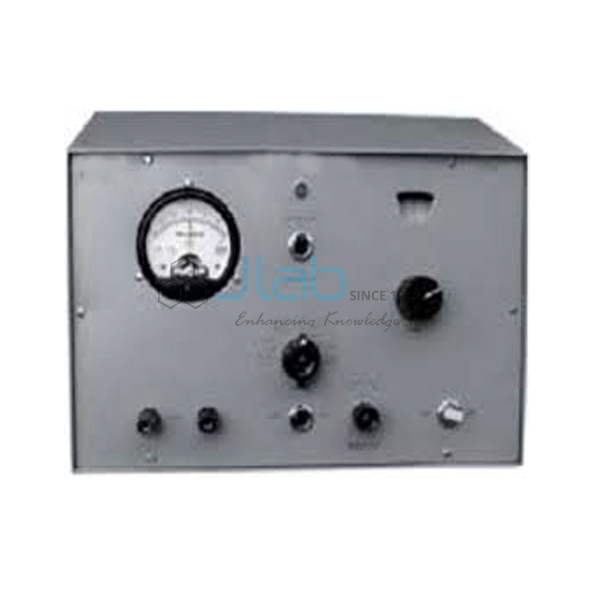
Product Code : EL-TAMI-1025
Jlab Export is a leading Conductivity Bridge Manufacturer,and suppliers in India
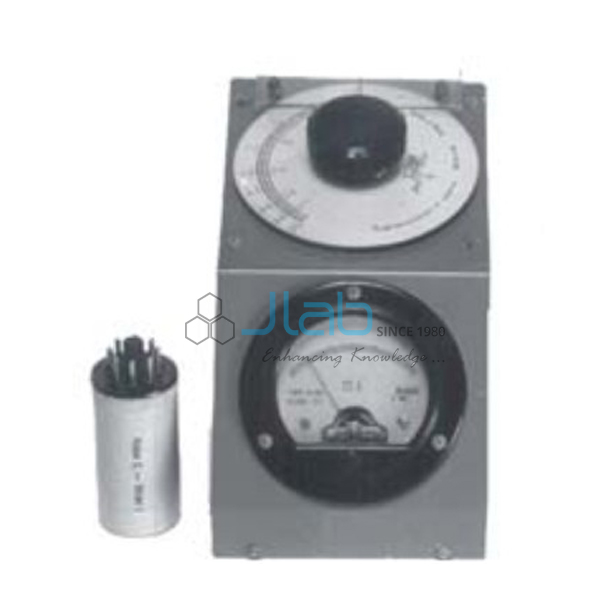
Conductivity Bridge (code EL-TAMI-1025) is an AC bridge that measures the conductance of an electrolyte solution, or its resistance, directly, with null detection on a meter and direct calibration in mho. It works at 50 Hz and 1 kHz, covers 0.1 ohm to 1 megohm, and is used with a conductivity cell in chemistry and physics labs. It is made by Jain Laboratory Instruments Pvt Ltd (JLab) at its works in Ambala, India.
Specifications
| Parameter | Detail |
|---|---|
| Measures | Conductance of electrolyte solutions, or their resistance, directly |
| Working frequencies | 50 Hz and 1 kHz |
| Calibration | Direct, in mho (siemens) |
| Resistance range | 0.1 ohm to 1 megohm |
| Conductance range | 1 mho to 1 micromho (1 S to 1 µS) in seven ranges |
| Accuracy | ±1% at mid-scale; ±3% at both ends of the scale |
| Null detection | On a meter |
| Used with | Conductivity cell (confirm in your enquiry whether a cell is to be included) |
| Quality check | Each bridge is visually inspected before dispatch |
| Pack quantity | Each (sold individually) |
| Minimum order quantity | 10 units |
| Dispatch time | Usually 7–10 working days |
| Product code | EL-TAMI-1025 |
| Manufacturer | Jain Laboratory Instruments Pvt Ltd (JLab) — OEM |
| Country of origin | India (made in Ambala, Haryana) |
What Is the Conductivity Bridge Used For?
A conductivity bridge balances the resistance of a solution held between the electrodes of a conductivity cell against known arms of the bridge; at balance the meter shows a null and the conductance is read directly. Alternating current is used because direct current would electrolyse the solution and polarise the electrodes, giving false readings. Dividing the cell constant by the measured resistance gives the specific conductance (conductivity) of the solution, and dividing that by the concentration gives its molar conductivity.
These measurements are the basis of the classic physical chemistry practicals in B.Sc. and M.Sc. courses: finding a cell constant with a standard potassium chloride solution, following how molar conductivity changes with dilution for strong and weak electrolytes, finding the dissociation constant of a weak acid, measuring the solubility of a sparingly soluble salt, and conductometric titrations of acids, bases and precipitation reactions. Conductance also supports the electrochemistry theory taught in class 12 chemistry. Because conductance rises with temperature, keep the solution at a steady, recorded temperature, rinse the cell with the solution before each reading, and store the electrodes as the cell maker advises.
What to Specify When Ordering
- Conductivity cell — state whether you need a cell with the bridge; a dip-type cell is listed separately.
- Working frequency — the bridge works at 50 Hz and 1 kHz; mention any frequency your method specifies.
- Mains supply — not stated in the listing; give your local supply.
- Quantity — the minimum order is 10 units.
Frequently Asked Questions
What does the conductivity bridge measure?
The conductance of an electrolyte solution, or its resistance, directly. It covers resistance from 0.1 ohm to 1 megohm and conductance from 1 mho to 1 micromho in seven ranges.
Why does it work on AC at 50 Hz and 1 kHz?
Direct current would cause electrolysis and polarisation at the electrodes. An alternating current avoids this build-up, so the reading reflects the solution itself.
How accurate is it?
The listing gives ±1% at mid-scale and ±3% at both ends of the scale, so choose the range that brings the balance near the middle.
Is a conductivity cell included?
The bridge is used with a conductivity cell for null detection, but the listing does not say whether one is supplied. State in your enquiry if you need a cell; the dip-type cell linked below is a separate item.
How is it different from a digital conductivity meter?
The bridge finds conductance by balancing to a null, which shows students the measurement principle. The JLab Digital Conductivity Meter is a microcontroller-based instrument with auto ranging and a digital display, suited to quick routine readings.
Who manufactures this conductivity bridge?
Jain Laboratory Instruments Pvt Ltd, trading as JLab, makes it at its works in Ambala, Haryana, and quotes for it directly.
OEM Manufacturer
JLab is the trading name of Jain Laboratory Instruments Pvt Ltd, a maker of chemistry lab instruments and physics apparatus in India, incorporated in 2017 and based on Hargolal Road, Ambala, Haryana. The bridge is produced in JLab’s own works rather than bought in, so universities, colleges, dealers and importers are dealing with the manufacturer itself; each unit is visually inspected before dispatch, and repeat orders are handled by the same works. JLab exports worldwide and ships to buyers in every region — for example Nepal in South Asia, Togo in West Africa, France in Western Europe, Malta in Southern Europe and Belize in Central America and the Caribbean. Tender buyers can consult the JLab lab tenders page.
Related Conductivity Equipment
- Conductivity bridge Dip Type — a dip-type cell with a platinum electrode for use with a conductivity bridge.
- Digital Conductivity Meter — a microcontroller-based meter with auto ranging and cell-constant adjustment.
- L.C.R. Bridge — a solid-state bridge for resistance, capacitance and inductance.
- Conductivity of Solutions Apparatus JLab — a simple lamp-and-electrode demonstration of conducting liquids for schools.
See the full Test and Measuring Instruments range or all Scientific Instrument products.
Request a Quote
Quotes come straight from the manufacturer. Use the Add To Cart enquiry button on this page, or send the quantity (minimum 10 units), whether you need a conductivity cell, your mains supply and the delivery location through the contact page.
Last updated: 9 October 2026