

Epicyclic Gear Apparatus Manufacturer,Supplier and Exporter in India
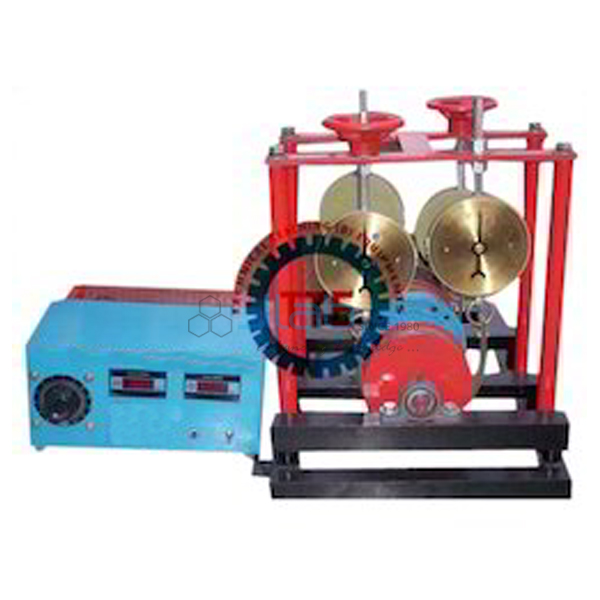
Product Code : EL-DOMLE-9132
Jlab Export is a leading Epicyclic Gear Apparatus Manufacturer,and suppliers in India
The epicyclic gear apparatus is used to measure input, output and holding torque on an epicyclic gear train, and the gear ratios between its shafts. It carries an external type train with a holding drum and handle, and a compact internal type industrial train. A 1 HP variable speed DC shunt motor drives the input, and a rope brake arrangement measures output and holding torque.
Specifications
| Torque measurements | Input, output and holding torque |
| Gear ratios measured | Input shaft to output shaft, input shaft to holding drum |
| External type train | Gear train with holding drum and handle, input and output shaft bearing blocks on a base frame |
| Internal type train | Compact industrial gear train |
| Motor | Variable speed DC shunt motor, 1 HP, 1500 rpm, 230 V |
| Torque loading | Rope brake arrangement for output and holding torque |
| Control panel | Digital ammeter and voltmeter, rpm indicator, on/off switch |
| Minimum order quantity | 1 unit |
| Dispatch time | Usually 14–18 working days |
| Manufacturer | JLab (Jain Laboratory Instruments Pvt Ltd), Ambala, India |
Torque Balance in an Epicyclic Train
In steady running the three torques on an epicyclic train add up to zero, with directions taken into account. Input torque plus output torque plus holding torque equals zero, so measuring two of them lets students calculate the third. The holding torque is the torque the drum needs to stay still, and the rope brake reading checks the calculated value.
Experiments on the Epicyclic Gear Train
Students first find the gear ratio by the tabular method. With the arm locked, one gear is given a turn and the turns of the others are written down. A whole-train turn is then added so that the held member ends at zero. They then check the result in a slow run by counting input and output turns.
In the torque test, the motor runs the train at a set speed and the rope brake loads the output. The holding torque on the drum is measured at the same time. Input torque comes from the motor power on the control panel meters divided by the input speed, allowing for motor losses. Beforehand, students can build a simple epicyclic train on the rotating arm of the Gear Trains Apparatus and compare it with ordinary trains on the Spur Gear Set.
Frequently Asked Questions
What is holding torque in an epicyclic gear train?
It is the torque needed to stop the fixed member, here the holding drum, from turning. It makes up the difference between input and output torque, since the three torques on the train add to zero in steady running.
How is the gear ratio found by the tabular method?
Imagine the arm locked and give one gear a turn, then write down how far each other gear turns. Add the same number of turns to every member so that the held member ends at zero. The ratio is read from the last row of the table.
Why does the apparatus have two gear trains?
It has an external type train with a holding drum and handle, and a compact internal type industrial train. Testing both shows that the same torque balance and ratio rules apply to quite different layouts.
How is output torque measured with the rope brake?
The rope is wrapped round the brake drum and loaded at its ends. Torque equals the difference between the tensions at the two ends of the rope multiplied by the effective radius of the drum.
What motor drives the apparatus?
A variable speed DC shunt motor rated 1 HP at 1500 rpm and 230 V. The control panel shows its current, voltage and speed, and has an on/off switch.
Other Gear Trains and Gear Models
- Epicyclic Gear Train Holding Torque Apparatus
- Epicyclic Gear Train Apparatus
- Three Stage Spur Gear
- Herringbone Gear
For a quote, use Add To Cart or send us a message through the contact page.
Last updated: 5 November 2026


