Epicyclic Gear Train Apparatus Manufacturer,Supplier and Exporter in India

Product Code : EL-DSO-10357
Jlab Export is a leading Epicyclic Gear Train Apparatus Manufacturer,and suppliers in India
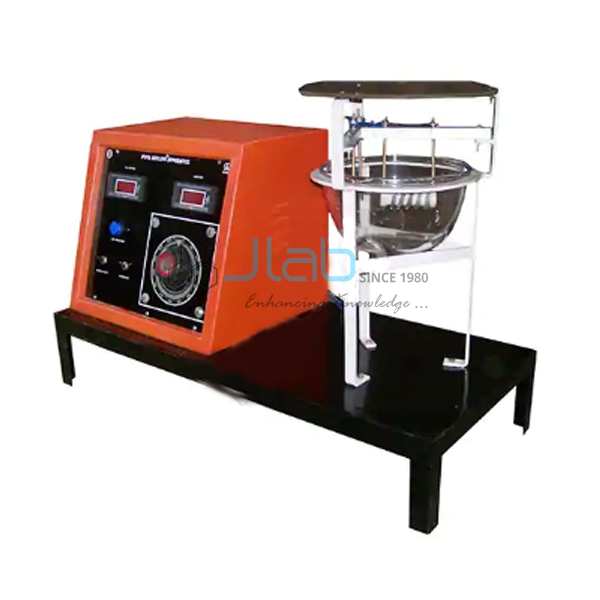
Epicyclic Gear Train Apparatus (code EL-DSO-10357) is a motor-driven apparatus for theory of machines practicals in engineering laboratories, built around an internal-type epicyclic gear train. A belt or rope with a spring balance measures both the output torque and the holding torque of the train. It is made by Jain Laboratory Instruments Pvt Ltd (JLab) at its works in Ambala, India.
Specifications
| Parameter | Detail |
|---|---|
| Gear train | Epicyclic gear train, internal type |
| Torque measurement | Belt / rope and spring balance arrangement to measure output torque and holding torque |
| Motor | PM DC motor, 1 HP, 1500 rpm, 220 V, 4 A |
| DC drive | Thyristor controlled |
| Speed measurement | Digital RPM meter with proximity sensor |
| Electrical meters | Digital voltmeter and ammeter |
| Switch | ON/OFF switch |
| Teeth on the input wheels | Sun wheel 19; planet wheel 22; ring wheel (internal gear) 62 |
| Teeth on the output wheels | Sun wheel 10; planet wheel 26; ring wheel (internal gear) 62 |
| Floor area | 1 x 2 m |
| Quality check | Each apparatus is visually inspected before dispatch |
| Pack quantity | Each (sold individually) |
| Minimum order quantity | 10 units |
| Dispatch time | Usually 7–10 working days |
| Product code | EL-DSO-10357 |
| Manufacturer | Jain Laboratory Instruments Pvt Ltd (JLab) — OEM |
| Country of origin | India (made in Ambala, Haryana) |
How Does It Compare with Other JLab Epicyclic Gear Apparatus?
| Model | Gear trains | Motor | Torque measurement |
|---|---|---|---|
| This apparatus (EL-DSO-10357) | Internal type | PM DC motor, 1 HP, 1500 rpm, 220 V, 4 A, on a thyristor-controlled drive | Belt / rope and spring balance, for output and holding torque |
| Epicyclic Gear Train Holding Torque Apparatus | External type and internal type | Variable speed DC motor | Rope brake, for output and holding torque |
| Epicyclic Gear Apparatus | External type and internal type | Variable speed DC shunt motor, 1 HP, 1500 rpm, 230 V | Rope brake, for output and holding torque |
Both other models have an external-type train with a holding drum and handle in addition to an internal-type train, and take their torque readings with a rope brake arrangement.
What Is the Epicyclic Gear Train Apparatus Used For?
It lets students study how an epicyclic, or planetary, gear train transmits speed and torque. In such a train the planet wheels mesh with both the sun wheel and the internal ring gear and travel around the sun wheel as they turn, so holding one member still sets the speed ratio between the other two. With the tooth numbers in the specification, students can work out the expected speed ratio and set it against the speeds they measure, then read the output and holding torques on the spring balance. The digital voltmeter and ammeter show the electrical input to the motor, so torque and speed readings can be related to the power supplied.
What to Specify When Ordering
- Model — this internal-type apparatus, or one of the epicyclic models with both external and internal trains shown above.
- Quantity — the number of apparatus needed for your laboratory.
- Other gear apparatus — add the gear trains or involute tooth profile items listed below to the same enquiry if you are equipping a full theory of machines laboratory.
Frequently Asked Questions
What is an epicyclic gear train?
It is a gear train in which planet wheels mesh with a central sun wheel and with an internal ring gear while revolving around the sun wheel. Fixing one member and driving another gives a set speed ratio at the third, which is why epicyclic trains give large speed reductions in a compact, coaxial layout.
What is holding torque and why is it measured?
Holding torque is the torque needed to keep the fixed member of the train from turning. At steady speed the input, output and holding torques acting on the train add up to zero, so measuring the output and holding torques lets students find the input torque and check the torque balance.
How is the motor speed controlled and read?
A thyristor-controlled DC drive runs the PM DC motor, and a digital RPM meter with a proximity sensor displays the speed.
How much floor space does the apparatus need?
A floor area of 1 x 2 m.
What information is needed for an export quotation?
Send the number of units, the destination country and port or city, your preferred delivery terms (for example FOB or CIF), any packing or labelling needs, and the tender reference if the order is for a tender.
Who manufactures this apparatus?
Jain Laboratory Instruments Pvt Ltd, trading as JLab, builds it at its works in Ambala, Haryana, India, and quotes for it directly.
OEM Manufacturer
JLab is the trading name of Jain Laboratory Instruments Pvt Ltd, a manufacturer of engineering lab equipment and mechanical laboratory apparatus in India, incorporated in 2017 and based on Hargolal Road, Ambala, Haryana. The epicyclic gear train apparatus is built at JLab’s own works rather than sourced from a trader, so engineering colleges, polytechnics, dealers and importers buy it factory-direct, every unit is visually inspected before it leaves, and repeat orders and spare parts are handled by the manufacturer itself. JLab exports worldwide and ships to buyers in every region — for example Morocco in North Africa, Cambodia in Southeast Asia, the Czech Republic in Eastern Europe, Tajikistan in Central Asia and Samoa in Oceania. Tender buyers can find details on the JLab lab tenders page.
Related Gear and Theory of Machines Apparatus
- Epicyclic Gear Train Holding Torque Apparatus — a motorised unit with external-type and internal-type epicyclic trains and a rope brake for output and holding torque.
- Epicyclic Gear Apparatus — external-type and internal-type trains driven by a variable speed DC shunt motor.
- Gear Trains Apparatus — a self-contained bench-mounted unit with gears of four different tooth counts and an additional rotating arm for simple epicyclic gearing.
- Generation of Involute Gear Tooth Profile — a board that shows how involute gear teeth are cut with a rack-type cutter.
Browse the Theory of Machine Lab Equipments and Dynamics of Machine Lab Equipments ranges, or the full Mechanical Engineering Lab Equipment range.
Request a Quote
Use the Add To Cart enquiry button to add the apparatus to your enquiry, or write to JLab through the contact page with the number of units, the delivery destination and any other gear apparatus you want quoted together.
Last updated: 22 October 2026