Food Habits of Birds Chart Manufacturer,Supplier and Exporter in India
Product Code : EL-ZC-9334
Jlab Export is a leading Food Habits of Birds Chart Manufacturer,and suppliers in India
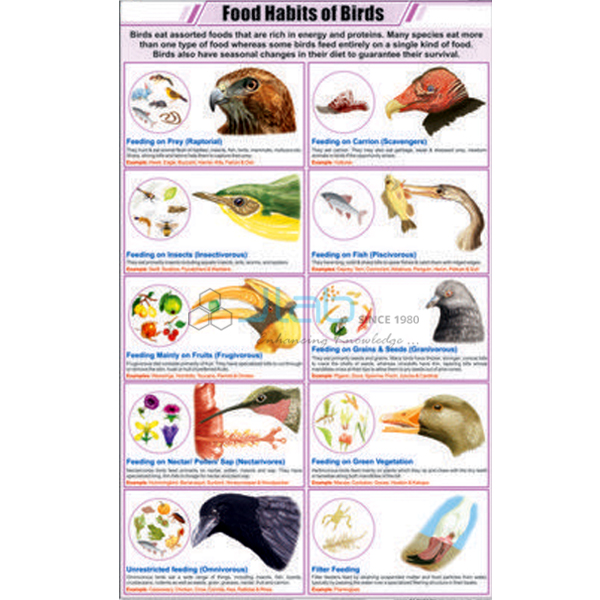
Food Habits of Birds Chart (code EL-ZC-9334) is a 58 x 90 cm wall chart on the food habits of birds, used to teach how a bird’s beak and way of feeding are adapted to its diet in school science and college zoology. It is printed in full colour on art paper, laminated on both sides and fitted with plastic rollers, in English only. JLab (Jain Laboratory Instruments Pvt Ltd, Ambala, India) supplies it to schools, colleges and dealers.
Specifications
| Parameter | Detail |
|---|---|
| Chart topic | Food habits of birds |
| Size | 58 x 90 cm (about 22.8 x 35.4 in) |
| Printing | Full colour on art paper |
| Lamination | Both sides, thick plastic film |
| Fittings | Plastic rollers |
| Language | English only |
| Quality check | Each chart is visually inspected before dispatch |
| Pack quantity | Each (sold individually) |
| Minimum order quantity | 10 units |
| Dispatch time | Usually 7–10 working days |
| Product code | EL-ZC-9334 |
| Supplied by | Jain Laboratory Instruments Pvt Ltd (JLab), Ambala, India |
What Is the Food Habits of Birds Chart Used For?
Birds have no teeth, so the shape of the beak, together with the feet, is the clearest clue to what a bird eats. Birds of prey such as eagles, hawks and owls have hooked beaks for tearing flesh and sharp talons for gripping, and vultures, which feed on carrion, also have strong hooked beaks. Insect-eaters such as swallows and warblers have thin, pointed beaks, while seed-eaters such as sparrows and finches crack grain with short, stout, cone-shaped beaks. Kingfishers and herons spear or seize fish; sunbirds and hummingbirds probe flowers for nectar with long, slender beaks; parrots and hornbills take fruit; ducks and flamingos strain food from water; and crows are omnivores that eat almost anything.
Matching beaks to food is a favourite activity in primary and middle-school lessons on adaptation. In class 11 biology, birds (class Aves) are described by their feathers, beak, forelimbs modified into wings and scaly hind limbs adapted for walking, swimming or perching, and in class 12 evolution Darwin’s finches show how beaks diversified with diet — adaptive radiation. Students can follow up by watching birds at a school feeder and noting each visitor’s beak type. The laminated surface wipes clean. The listing does not describe the artwork, so ask JLab for a larger image to see which birds and food groups are drawn.
What to Specify When Ordering
- Quantity — minimum 10 units, supplied as single charts.
- More bird charts — the Birth of a Bird's Chick Chart from this series and the Birds Chart, which has photographs of birds with their names for identification.
- Bird models — the pigeon and domestic hen dissection models show the internal organs and are separate items.
- Delivery — city and country, and for export the port and delivery terms (for example FOB or CIF).
Frequently Asked Questions
What does the Food Habits of Birds Chart cover?
What birds eat and how they are adapted to it. The listing does not describe the panels; the product photograph shows the chart, and JLab can send a larger image before you order.
What size and material is it?
It is 58 x 90 cm (about 22.8 x 35.4 inches), printed in full colour on art paper, laminated with thick plastic film on both sides and fitted with plastic rollers; text is in English only.
How does a bird’s beak show what it eats?
Its shape fits the food: hooked for tearing meat, short and conical for cracking seeds, thin and pointed for picking insects, long and slender for reaching nectar, and broad and flat for straining food from water.
What are the main feeding groups of birds?
Birds of prey, carrion feeders, insect-eaters, fish-eaters, fruit-eaters, seed-eaters, nectar feeders, filter feeders and omnivores. Many species fall into more than one group.
Which classes use this chart?
Primary and middle-school science for adaptation, class 11 biology for the features of Aves, class 12 for adaptive radiation in Darwin’s finches, and college zoology.
Who supplies this chart?
JLab, the trading name of Jain Laboratory Instruments Pvt Ltd in Ambala, Haryana, India, supplies the Food Habits of Birds Chart and quotes for it directly.
Supplier
JLab is the trading name of Jain Laboratory Instruments Pvt Ltd, incorporated in 2017 and located on Hargolal Road, Ambala, Haryana. In addition to the laboratory equipment it produces, the company supplies printed zoology charts such as this one to schools, colleges, dealers and importers, checks each chart by eye before dispatch and manages repeat orders itself. JLab exports worldwide and ships to buyers in every region — Angola in Central Africa, Nepal in South Asia, Kyrgyzstan in Central Asia, Taiwan in East Asia and Vanuatu in Oceania, for instance. Tender buyers will find details on the JLab lab tenders page.
Bird Charts and Models
- Birth of a Bird's Chick Chart — how a chick develops inside the egg, from the same series.
- Birds Chart — a fully laminated chart of bird photographs, each with its name.
- Bird Dissection- Pigeon — a natural-size dissection of a pigeon showing the internal organs, on a base with a numbered English key card.
- Bird Dissection-Domestic Hen — a natural-size hen with feathers on one side and the internal organs on the other, mounted on a base.
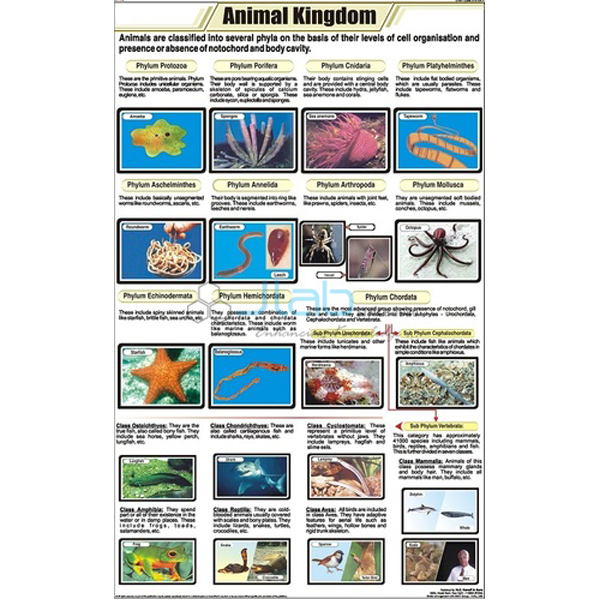
- Animal Kingdom Classification Chart — where birds sit among the animal groups, from the same series.
Browse the Zoology Chart series or all Charts.
Request a Quote
Use the Add To Cart enquiry button on this page for a quotation, or send the number of charts (minimum 10 units), any bird charts or models to add, and your delivery city and country through the contact page.
Last updated: 3 October 2026