Manual Metal Arc Welding Machine Manufacturer,Supplier and Exporter in India
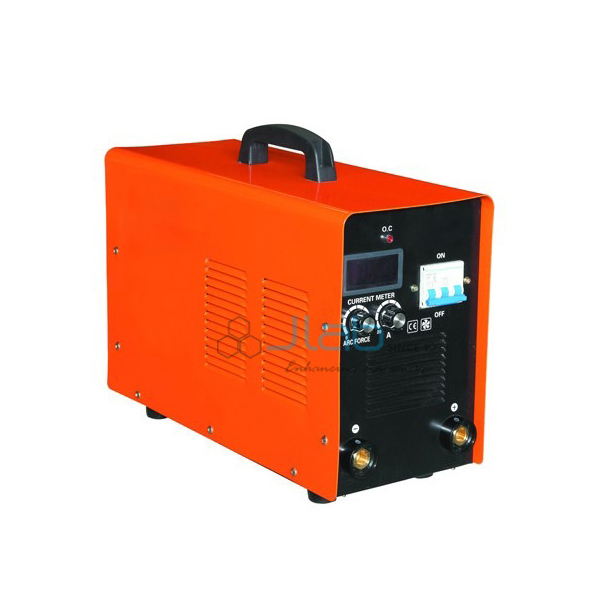
Product Code : EL-MMTM-8965
Jlab Export is a leading Manual Metal Arc Welding Machine Manufacturer,and suppliers in India
This manual metal arc welder is a MOSFET inverter set that runs on 230 V and gives 20–120 A for electrodes of 1.6–3.2 mm. It is meant for low carbon, medium carbon and alloy steels. Weighing 5.5 kg, with a carrying strap and handle, it moves easily between booths. An electrode holder, earth clamp, face mask and welding brush come with it.
Specifications
| Machine type | MOSFET inverter, fan cooled |
| Input | 230 V, 50/60 Hz, 3.4 kW |
| Welding current | 20–120 A |
| Rated duty cycle | 60% |
| No-load voltage | 68 V |
| Electrode diameter | 1.6–3.2 mm |
| Controls and protection | Hot start, arc force, anti-stick, thermostatic and overload protection |
| Insulation and case | Class H insulation, IP21 case, 20 A fuse |
| Weight and size | 5.5 kg, 36 x 23.5 x 30.5 cm |
| Supplied with | Electrode holder, earth clamp, face mask, welding brush, carton box |
| Minimum order quantity | 1 unit |
| Dispatch time | Usually 14–18 working days |
| Manufacturer | JLab (Jain Laboratory Instruments Pvt Ltd), Ambala, India |
How the Arc and Flux Work
In stick welding an arc is struck between a flux-coated electrode and the work. Its heat melts the rod tip and the joint edges into one weld pool. The burning flux gives off gas that shields the molten metal from the air, then sets as slag over the bead and is chipped off once cool. On this set, hot start lifts the current for a moment at the strike. Arc force adds current when the arc gets too short, so it does not die.
First Welding Practicals for Trainees
In an ITI welder lab, trainees first strike an arc on scrap plate. They either scratch the rod like a match or tap it, then try to hold a short, steady arc. Next they run straight beads side by side. The slag comes off each bead with a Chipping Hammer, and a Wire Brush cleans it before the next bead goes down.
Butt joints follow, with two plates tacked at both ends and then welded along the seam. Trainees work behind a Welding Shield and wear Welding Leather Gloves. The 2 mm and 3 mm rods in the Electrode packs fall inside this set’s 1.6–3.2 mm range. Teachers can use both to show how rod size and current change the bead.
Frequently Asked Questions
What causes spatter and a rough, uneven bead?
Most often the arc is held too long, the current is too high for the rod, or the hand moves at an uneven speed. Keep a short arc, about as long as the core of the rod is thick, and travel steadily. Chip and brush off the slag before the next bead goes over it.
Why does the rod stick to the plate when I strike an arc?
Usually the current is set too low, or the rod is pushed in and held still instead of being lifted back quickly. The anti-stick circuit cuts the power when the rod freezes, so the rod can be broken away without overheating.
Which rod size should a beginner start with?
The set takes 1.6–3.2 mm electrodes. Thin rods need little current and suit thin sheet, while the 3.2 mm size needs more current and suits thicker plate. Each electrode packet gives a current band, so set the machine inside it and fine-tune by the sound and look of the arc.
Will it keep welding when the mains voltage drops?
It is built to tolerate voltage fluctuation and to hold a steady welding current while the supply moves up and down. That makes it a sensible choice for workshops where the power supply is weak or unsteady.
Other Arc and Stick Welding Sets
- Shielded Metal Arc Welding Machine (runs on a three-phase supply)
- Arc Welding Machine
- Portable Arc Welding Machine (DC inverter with quick plugs)
- Arc Welding Transformer
For a quote, use Add To Cart or send us a message through the contact page.
Last updated: 6 November 2026