Maxwells Pendulum Manufacturer,Supplier and Exporter in India

Product Code : EL-TWL-9176
Jlab Export is a leading Maxwells Pendulum Manufacturer,and suppliers in India
Maxwell’s pendulum is a wheel hung on two wires wound round its axle. Released, it falls slowly while spinning fast, then winds itself back up and rises again, several times over. Students use it to follow the exchange between gravitational energy and the kinetic energy of translation and rotation.
Specifications
| Construction | Wheel hung on two wires wound the same way on its axle |
| Axle | Passes through the centre of gravity of the wheel |
| Motion | Falls and rises several times |
| Period depends on | Drop height, g and the wheel to axle radius ratio |
| Energy forms studied | Gravitational, translational and rotational |
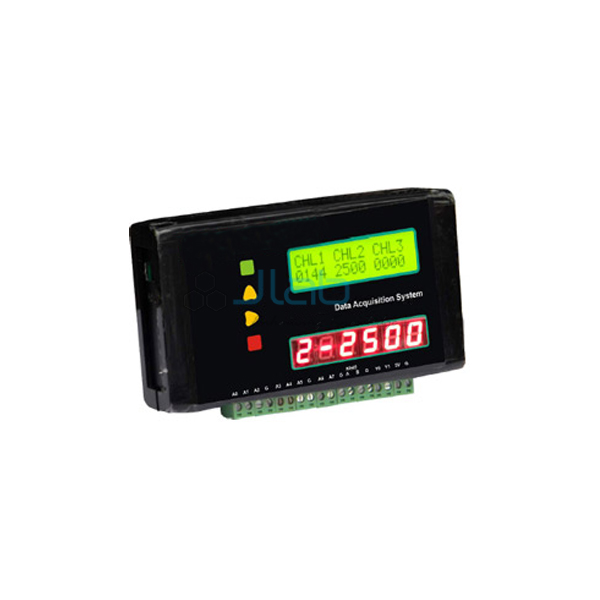
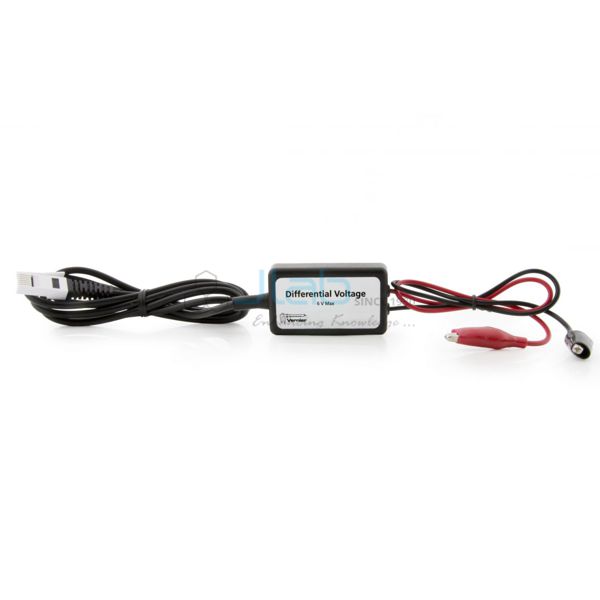
| Speed measurement | With a position sensor at the end of the fall |
| Minimum order quantity | 10 units |
| Dispatch time | Usually 4–6 working days |
| Manufacturer | JLab (Jain Laboratory Instruments Pvt Ltd), Ambala, India |
Energy Experiments with Maxwell’s Pendulum
In the standard practical, students wind the wires, release the wheel from a height h and time the fall with a Digital Stopwatch. From h = ½ a t² they get the acceleration. For a wheel of mass m and axle radius r, a = g / (1 + I / (m r²)), so the result gives the moment of inertia I. The axle radius is measured with a Vernier Caliper and the drop with a Measuring Tape.
The energy check follows. At the bottom, m g h should equal ½ m v² + ½ I ω², with v = ω r. Students compare the two sides and find that most of the energy has gone into rotation. The wheel climbs a little lower each time, so the loss per cycle shows friction at work.
Frequently Asked Questions
Why does the wheel fall so slowly?
The wires unwind from a small axle, so most of the falling energy goes into spinning the wheel. Only a small part becomes downward speed. The ratio of the wheel radius to the axle radius sets how slow the fall is.
Why does it climb back up?
When the wires are fully unwound the wheel is still spinning. It carries on turning, winds the wires back onto the axle and rises. Without friction it would reach its starting height, but each cycle loses a little energy.
What sets the time for one fall and rise?
The period depends on the starting height difference h, the acceleration due to gravity g and the ratio between the wheel and axle radii. A larger drop height gives a longer period.
How is the speed at the bottom found?
A position sensor at the end of the run gives the speed the wheel reaches there. Without a sensor, students can work it out from the fall time, as v = 2h / t for uniform acceleration from rest.
Why must both wires be wound the same way?
Both wires then unwind together and the axle stays level as the wheel drops. If one wire is wound more than the other, the wheel tilts and rubs, and the energy loss grows.
Other Pendulums and Rotation Apparatus
- Pendulum Set
- Pendulum Lab (two cylindrical bobs and a centimetre grid board)
- Precision Gyroscope
For a quote, use Add To Cart or send us a message through the contact page.
Last updated: 6 November 2026