Reverse Osmosis Ultrafiltration Unit Manufacturer,Supplier and Exporter in India

Product Code : EL-TWL-9119
Jlab Export is a leading Reverse Osmosis Ultrafiltration Unit Manufacturer,and suppliers in India
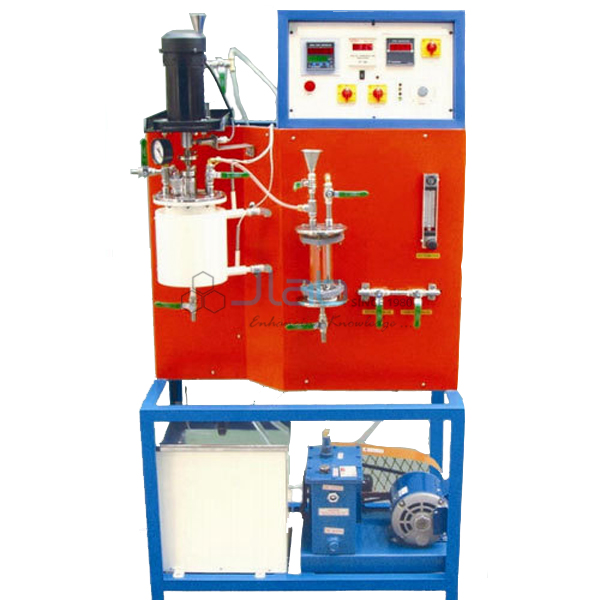
This membrane unit runs reverse osmosis or ultrafiltration on small volumes of process liquid, so operating conditions can be worked out before a full-scale plant is built. The membrane module, feed and permeate tanks, a plate heat exchanger and positive displacement pumps sit in one mobile cabinet. It needs only a cooling water connection and a suitable electrical supply.
Specifications
| Processes | Reverse osmosis and ultrafiltration, packs of both membrane types supplied |
| Flow rates | 30, 18, 15 and 9 l/min |
| Pressure | Variable up to 55 bar |
| Membrane tube | 1.25 cm diameter, area 0.024 m², tube-side volume 75 ml |
| Typical permeate flow | 5–50 ml/min |
| Feed tank | 15 litres |
| Permeate tank | 15 litres |
| Wetted parts | Stainless steel, PTFE and silicone rubber |
| Cabinet | Mobile, with plate heat exchanger, positive displacement pumps and digital temperature and pressure meters |
| Cleaning | Clean-in-place facility |
| Minimum order quantity | 1 unit |
| Dispatch time | Usually 14–18 working days |
| Manufacturer | JLab (Jain Laboratory Instruments Pvt Ltd), Ambala, India |
Membrane Experiments for Students
With a salt solution as feed, students raise the pressure in steps and time the permeate into a Measuring Cylinder. Flux is permeate volume per unit time divided by the 0.024 m² membrane area. A Digital Conductivity Meter reads the feed and the permeate, and the rejection R = 1 - Cp/Cf shows how much salt the RO membrane holds back.
With the UF membranes fitted, a protein solution or skim milk is filtered and the fall in flux followed as a layer builds on the membrane. Turbidity of feed and permeate, read on a Digital Turbidity Meter, shows what UF removes. A clean-in-place cycle and a repeat water flux test then show how much of the flux comes back.
Frequently Asked Questions
What is the difference between the RO and UF membranes?
RO membranes are dense and hold back dissolved salts, so they need high pressure. UF membranes have fine pores that stop proteins, colloids and other large molecules while salts pass, and they work at lower pressure. Both types fit the same module and can be changed quickly.
Why does the permeate flux fall during a run?
Rejected material gathers at the membrane surface, raising the local concentration and, with time, forming a fouling layer. Higher cross-flow, set by the 30, 18, 15 and 9 l/min flow rates, sweeps more of it away. The plate heat exchanger holds the temperature steady, since flux rises with temperature.
Will the results carry over to a full-size plant?
The membranes differ only in length and number from those in the full-scale plant. Flux and rejection measured per unit area on this unit can therefore be used to size a larger plant for the same liquid.
How is the unit cleaned?
It has a clean-in-place facility, so cleaning solutions are pumped round the circuit without taking it apart. For servicing, the unit dismantles easily, and the parts in contact with the liquid are stainless steel, PTFE and silicone rubber.
Other Water and Effluent Treatment Units
For a quote, use Add To Cart or send us a message through the contact page.
Last updated: 6 November 2026