Photodiode Characteristics Apparatus Manufacturer,Supplier and Exporter in India

Product Code : EL-OED-1057
Jlab Export is a leading Photodiode Characteristics Apparatus Manufacturer,and suppliers in India
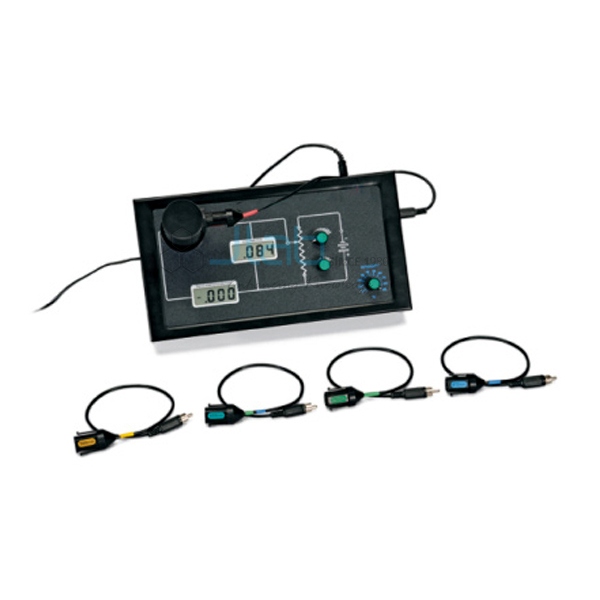
Photodiode Characteristics Apparatus (code EL-OED-1057) is a bench unit for plotting the current of a photodiode against light intensity at different voltages, a core experiment in opto-electronics practicals. A photodiode mounted on the panel works with a 0–10 V DC, 50 mA regulated power supply, two round meters and a light source, with connections brought out to terminals. It is made by Jain Laboratory Instruments Pvt Ltd (JLab) at its works in Ambala, India.
Specifications
| Parameter | Detail |
|---|---|
| Experiment | To plot current versus intensity of light at different values of voltage |
| Power supply | DC regulated, 0–10 V DC / 50 mA |
| Meters | Two round meters, for voltage and current measurement |
| Device under test | Photodiode mounted on the panel |
| Light source | Included |
| Connections | Supply and photodiode connections brought out to terminals |
| Dimensions | 15 x 8 x 4 in (about 38 x 20 x 10 cm) |
| Quality check | Each apparatus is visually inspected before dispatch |
| Pack quantity | Each (sold individually) |
| Minimum order quantity | 10 units |
| Dispatch time | Usually 7–10 working days |
| Product code | EL-OED-1057 |
| Manufacturer | Jain Laboratory Instruments Pvt Ltd (JLab) — OEM |
| Country of origin | India (made in Ambala, Haryana) |
What Is the Photodiode Characteristics Apparatus Used For?
A photodiode is a p–n junction built so that light can reach it. When it is reverse-biased, only a tiny dark current flows in the dark; light falling on the junction creates electron–hole pairs that the field sweeps across, adding a photocurrent that grows almost in proportion to the light intensity. With this unit students set a reverse voltage on the regulated supply, vary the light from the light source and read the current at each level, then repeat at other voltages. The curves show that the photocurrent depends strongly on light but only weakly on voltage, which is exactly why photodiodes are used as light meters and optical receivers.
The experiment appears in B.Sc. physics and electronics practicals, engineering courses on optoelectronic devices and polytechnic and ITI electronics labs, and it links class 12 work on special-purpose diodes to real sensors such as remote-control receivers, smoke detectors and barcode readers. Shield the photodiode from changing room light while recording, note the dark current before each set of readings, and bring the voltage back to zero before rewiring the terminals.
What to Specify When Ordering
- Quantity — the minimum order is 10 units; it is often ordered alongside the phototransistor and LED units.
- Light source arrangement — the listing does not say how the light level is varied or measured, so ask for it to be confirmed in the quotation.
- Mains supply — give your voltage and plug type so the power supply can be confirmed.
- Leads and spare photodiodes — add them to the same enquiry if your benches need them.
Frequently Asked Questions
What does the photodiode apparatus measure?
The current through a photodiode as the light intensity changes, at several applied voltages. Plotting these readings gives the photodiode’s characteristic curves.
What supply and meters are built in?
A DC regulated power supply of 0–10 V DC at 50 mA and two round meters, one for voltage and one for current. A light source is included and the connections are brought out to terminals.
Why is a photodiode reverse-biased in this experiment?
In reverse bias the normal diode current is blocked, so the current that flows is almost entirely produced by light. That makes the reading a clean measure of light intensity, with only a small dark current to subtract.
How does a photodiode differ from a phototransistor?
A phototransistor amplifies its own photocurrent, so it gives more current for the same light but responds more slowly. A photodiode gives a smaller, more linear current and a faster response; JLab lists a separate phototransistor characteristics apparatus.
What should an export enquiry include?
The quantity, the destination country and port or city, delivery terms such as FOB or CIF, packing or labelling needs, and a tender reference if one applies.
Who manufactures this apparatus?
JLab — Jain Laboratory Instruments Pvt Ltd — builds it at its works in Ambala, Haryana, India, and supplies it directly as the manufacturer.
OEM Manufacturer
JLab is the trading name of Jain Laboratory Instruments Pvt Ltd, an opto-electronics and physics lab equipment manufacturer in India, incorporated in 2017 and based on Hargolal Road, Ambala, Haryana. The panel, regulated supply and meters of this apparatus are assembled at JLab’s own works and not bought in from a trader, so colleges, polytechnics, dealers and importers order directly from the maker, each unit is visually inspected before it ships, and repeat orders and service questions return to the same team. JLab exports worldwide and ships to buyers in every region — for example Romania in Eastern Europe, Hong Kong in East Asia, Lesotho in Southern Africa, the USA in North America and Laos in Southeast Asia. Tender buyers can refer to the JLab lab tenders page.
Related Light-Detector Apparatus
- Photo Transistor Characteristics Apparatus — the same current-versus-light study for a phototransistor.
- Characteristics of Opto Electronic Devices Kit — photodiode, phototransistor and LED on one panel.
- LDR Characteristics Apparatus — a photoconductive sensor for comparison with the junction photodiode.
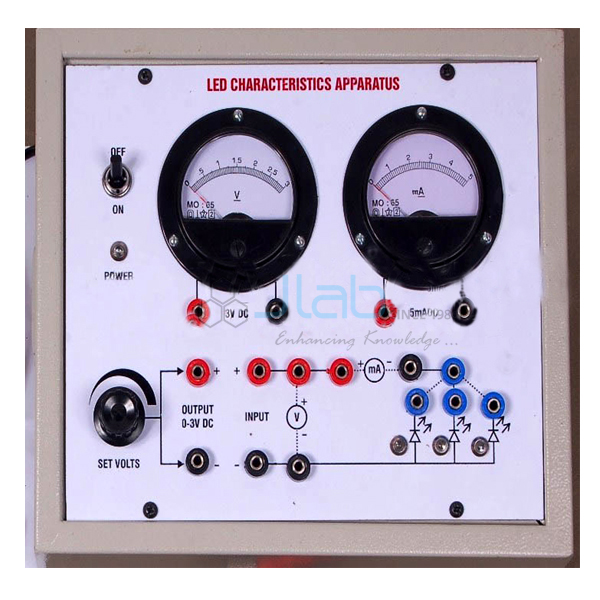
- LED Characteristics Apparatus — the light-emitting counterpart, studied by its V–I curve.
See every unit in the OPTO Electronic Devices range or the wider Scientific Instrument range.
Request a Quote
Quotes come direct from the manufacturer. Use the Add To Cart enquiry button on this page, or send the quantity (minimum 10 units), your mains voltage, any leads or spare photodiodes and the delivery location through the contact page.
Last updated: 9 October 2026