Photo Cell Mounted on Base Manufacturer,Supplier and Exporter in India
Product Code : EL-OED-1050
Jlab Export is a leading Photo Cell Mounted on Base Manufacturer,and suppliers in India
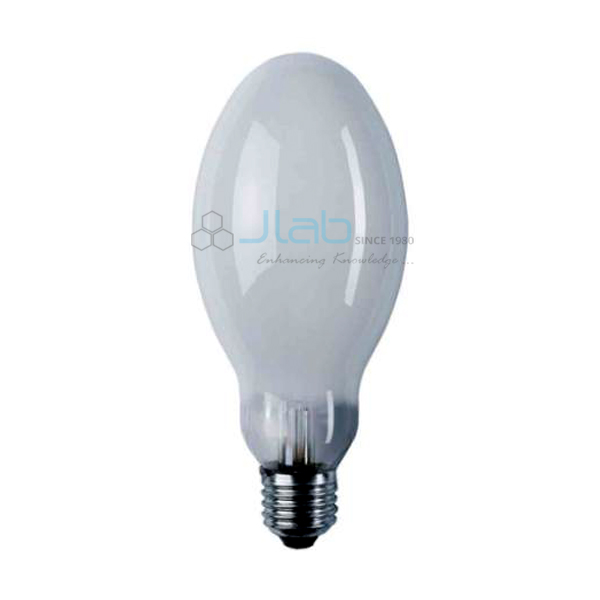
Photo Cell Mounted on Base (code EL-OED-1050) is a vacuum-type photo cell, the valve version, fitted in a housing on a base for photoelectric experiments in physics labs. It is listed as useful for the Planck’s constant apparatus, so labs can keep it as a spare detector or build their own stopping-potential set-up around it. It is made by Jain Laboratory Instruments Pvt Ltd (JLab) at its works in Ambala, India.
Specifications
| Parameter | Detail |
|---|---|
| Type | Photo cell, valve version (vacuum type) |
| Mounting | Fitted in a housing, mounted on a base |
| Suitable for | Planck’s constant apparatus |
| Quality check | Each photo cell is visually inspected before dispatch |
| Pack quantity | Each (sold individually) |
| Minimum order quantity | 10 units |
| Dispatch time | Usually 7–10 working days |
| Product code | EL-OED-1050 |
| Manufacturer | Jain Laboratory Instruments Pvt Ltd (JLab) — OEM |
| Country of origin | India (made in Ambala, Haryana) |
What Is the Mounted Photo Cell Used For?
A vacuum photo cell is a glass tube holding a light-sensitive cathode and a collecting anode. Light falling on the cathode releases electrons by the photoelectric effect, and a voltage between the electrodes collects them as a small current; reversing that voltage and finding where the current stops gives the stopping potential used to measure Planck’s constant. The housing keeps stray light off the tube and protects the glass, and the base lets the cell stand on the bench or optical bench in line with a light source. Handle it by the housing, keep it covered when not in use, and connect it only to the low-voltage supply your experiment calls for.
What to Specify When Ordering
- Quantity — the minimum order is 10 units, useful for stocking spares across several practical sets.
- Apparatus it will serve — mention the Planck’s constant set or other set-up it is for, so the fit can be confirmed.
- Delivery details — destination country, port or city and delivery terms for export orders.
Frequently Asked Questions
What type of photo cell is this?
A vacuum-type photo cell in its valve version, fitted in a housing and mounted on a base.
Which apparatus is it used with?
It is listed as useful for the Planck’s constant apparatus. That set, listed separately, comes with its own vacuum photo cell, colour filter set, lamp house, optical bench and power supply, so this item suits spares or a lab-built set-up.
What should an export enquiry include?
The quantity, destination country and port or city, preferred delivery terms such as FOB or CIF, and any packing or labelling instructions.
Who manufactures this photo cell?
Jain Laboratory Instruments Pvt Ltd (JLab) mounts it at its works in Ambala, Haryana, India, and quotes for it directly.
OEM Manufacturer
JLab is the trading name of Jain Laboratory Instruments Pvt Ltd, a physics lab equipment manufacturer in India, incorporated in 2017 and based on Hargolal Road, Ambala, Haryana. The cell is housed and mounted at JLab’s own works, so colleges, dealers and importers buy it factory-direct alongside the apparatus it serves, each unit is visually inspected before dispatch, and repeat orders go back to the same maker. JLab exports worldwide and ships to buyers in every region — for example Kazakhstan in Central Asia, Afghanistan in South Asia, the Netherlands in Western Europe, South Africa in Southern Africa and Vanuatu in Oceania.
Related Photoelectric Apparatus
- Planck’s Constant Apparatus — the complete stopping-potential set this photo cell is listed for.
- Photo Multiplier Tube 931 with Housing — a far more sensitive photoemissive detector for very weak light.
- Photodiode Characteristics Apparatus — a semiconductor light detector studied at different light intensities and voltages.
See the OPTO Electronic Devices range or all Scientific Instrument products.
Request a Quote
Quotes come direct from the manufacturer. Use the Add To Cart enquiry button on this page, or send the quantity (minimum 10 units), the apparatus the cell is for and the delivery location through the contact page.
Last updated: 9 October 2026