Planck's Constant Apparatus Manufacturer,Supplier and Exporter in India
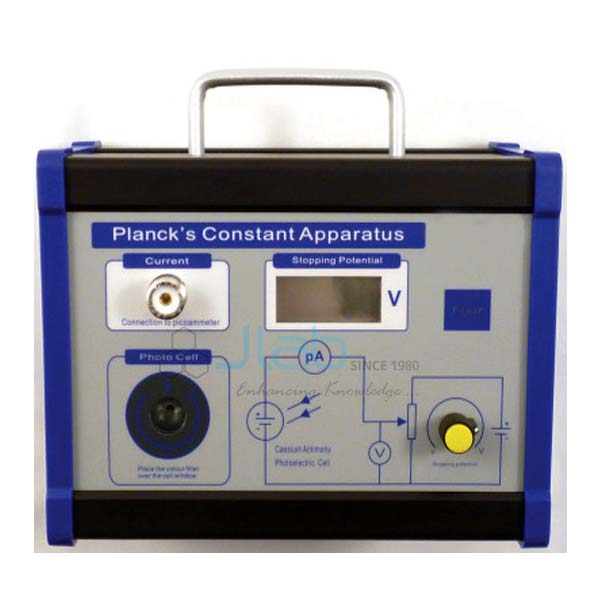
Product Code : EL-OED-1051
Jlab Export is a leading Planck's Constant Apparatus Manufacturer,and suppliers in India
Planck’s Constant Apparatus (code EL-OED-1051) is a photoelectric-effect set for determining Planck’s constant, h, from the stopping potential of a vacuum-type photo cell. It brings together the photo cell in its housing, a colour filter set, a lamp house, a double-rod optical bench, connection leads and a stabilised low-voltage power supply with moving coil meters. It is made by Jain Laboratory Instruments Pvt Ltd (JLab) at its works in Ambala, India.
Specifications
| Parameter | Detail |
|---|---|
| Experiment | To determine the stopping potential of a vacuum-type photo cell and from it Planck’s constant, h |
| Photo cell | Vacuum type, mounted in a housing |
| Filters | Colour filter set |
| Light source | Lamp house |
| Optical bench | Double-rod optical bench |
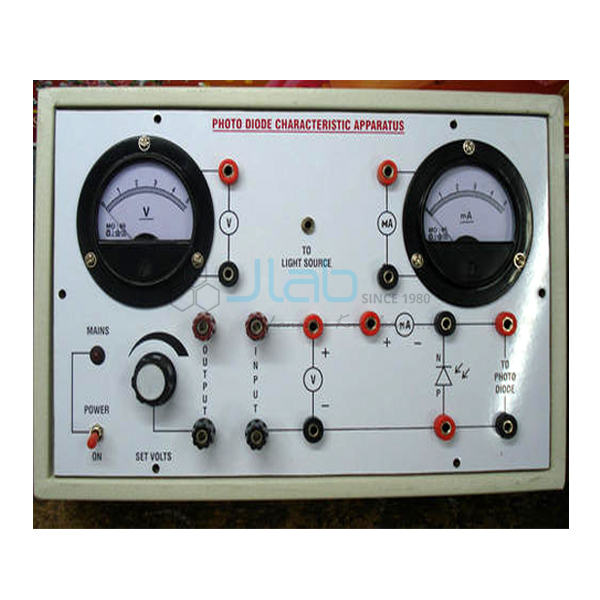
| Power supply | Stabilised low-voltage power supply with moving coil meters |
| Connections | Connection leads included |
| Quality check | Each apparatus is visually inspected before dispatch |
| Pack quantity | Each (one set as listed) |
| Minimum order quantity | 10 units |
| Dispatch time | Usually 7–10 working days |
| Product code | EL-OED-1051 |
| Manufacturer | Jain Laboratory Instruments Pvt Ltd (JLab) — OEM |
| Country of origin | India (made in Ambala, Haryana) |
What Is the Planck’s Constant Apparatus Used For?
It turns the photoelectric effect into a measurement. Light from the lamp house passes through one colour filter at a time and falls on the cathode of the vacuum photo cell, releasing photoelectrons. A retarding voltage from the stabilised supply is applied across the cell and raised until the photocurrent on the meter just falls to zero; that voltage is the stopping potential, and it measures the maximum kinetic energy of the emitted electrons. Repeating the reading with each filter and plotting stopping potential against the frequency of the light gives a straight line whose slope is h/e, so multiplying the slope by the electronic charge gives Planck’s constant. Where the line meets the frequency axis gives the threshold frequency, and from it the work function of the cathode.
The experiment is a standard modern-physics practical in B.Sc. and engineering physics labs and a strong demonstration of the photoelectric equation that class 12 physics teaches in theory. Mounting the lamp house and photo cell on the double-rod optical bench keeps them aligned and lets students set a fixed distance between them. Work in a dimmed room so stray light does not add to the photocurrent, let the lamp stabilise before taking readings, and handle the photo cell by its housing, as it is a glass vacuum tube.
What to Specify When Ordering
- Quantity — the minimum order is 10 sets; most labs plan one set per student group.
- Filter data — the listing does not give the colours or wavelengths of the filters, so ask for the values students will use to work out the frequency of each colour.
- Spare photo cells — the vacuum photo cell in its housing is also listed on its own as a replacement.
- Mains supply — state your voltage and plug type so the power supply and lamp house can be confirmed.
Frequently Asked Questions
How does this apparatus measure Planck’s constant?
Through the stopping potential of a photo cell. Students measure it for light of several colours, plot it against frequency and find h from the slope of the straight line, which equals h/e.
What is included in the set?
A photo cell (vacuum type) mounted in a housing, a colour filter set, a lamp house, a double-rod optical bench, connection leads and a stabilised low-voltage power supply with moving coil meters.
What value of h should students compare with?
The accepted value of Planck’s constant is about 6.626 × 10⁻³⁴ joule-second. Careful zero-current readings and accurate filter frequencies bring class results closer to it.
Why does the photo cell need to be vacuum type?
In a vacuum cell the emitted electrons reach the anode without colliding with gas molecules, so the photocurrent and the stopping potential depend only on the light and the cathode. A gas-filled cell would add ionisation current and distort the reading.
What should an export quotation request include?
The quantity, the destination country and port or city, preferred delivery terms such as FOB or CIF, any packing or labelling requirements, and the tender reference if one applies.
Who manufactures the Planck’s constant apparatus?
Jain Laboratory Instruments Pvt Ltd (JLab) builds the set at its works in Ambala, Haryana, India, and quotes for it directly.
OEM Manufacturer
JLab is the trading name of Jain Laboratory Instruments Pvt Ltd, a physics and opto-electronics lab equipment manufacturer in India, incorporated in 2017 and based on Hargolal Road, Ambala, Haryana. The optical bench, lamp house, photo cell housing and power supply of this set are made at JLab’s own works rather than bought from a trader, so universities, colleges, dealers and importers order factory-direct, every set is visually inspected before dispatch, and spare photo cells and repeat orders come from the same maker. JLab exports worldwide and ships to buyers in every region — for example Kenya in East Africa, Peru in South America, Lebanon in the Middle East, Papua New Guinea in Oceania and Guinea in West Africa. Institutions buying by tender can see the JLab lab tenders page.
Related Photoelectric and Opto-Electronic Apparatus
- Photo Cell Mounted on Base — the vacuum-type photo cell in its housing, as a spare for this apparatus.
- App. to determine Inverse Square Law in Photo Cell — uses a lamp house and double-rod optical bench to relate light intensity to distance.
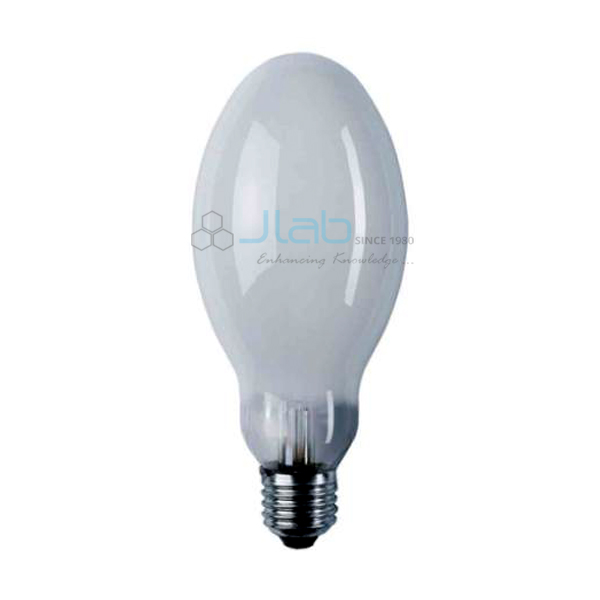
- Mercury Vapour Lamp Hg for use with above Photo Voltaic Cell — a mercury vapour lamp with its choke, in a wooden box with a slit for the light.
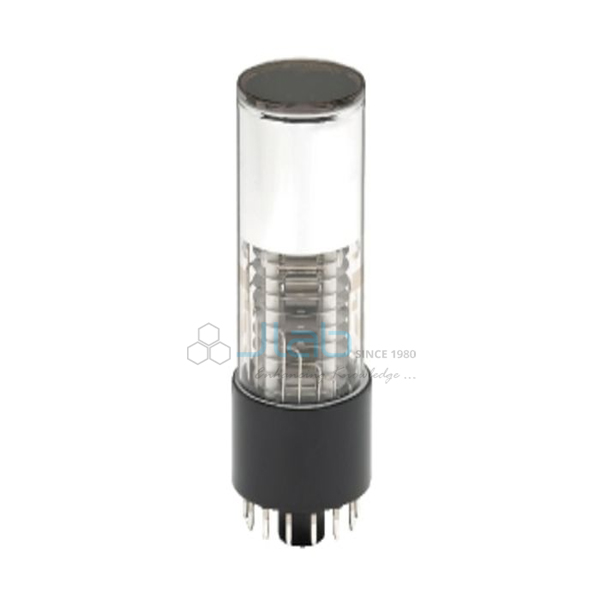
- Photo Multiplier Tube 931 with Housing — a photoemissive detector for light far too weak for an ordinary photo cell.
Browse the OPTO Electronic Devices range or the wider Scientific Instrument range.
Request a Quote
Quotes come direct from the manufacturer. Use the Add To Cart enquiry button on this page, or send the quantity (minimum 10 sets), your mains voltage, any spare photo cells or filter data you need, and the delivery location through the contact page.
Last updated: 9 October 2026