Potentiometer Manufacturer,Supplier and Exporter in India

Product Code : EL-SLE-4686
Jlab Export is a leading Potentiometer Manufacturer,and suppliers in India
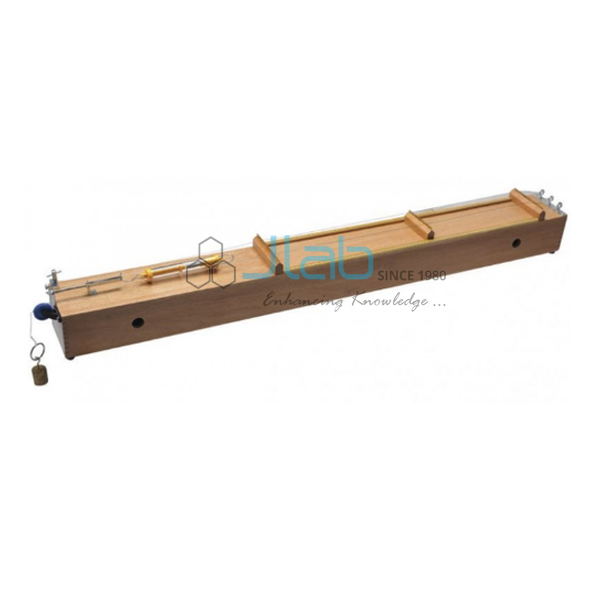
Potentiometer (code EL-SLE-4686) is a wire potentiometer offered with a pencil jockey, used to measure the potential in a circuit in school and college physics labs. It balances an unknown voltage against the fall of potential along a wire, so it reads a cell’s EMF without drawing current from it, and 4-wire and 10-wire versions are also available. It is made by Jain Laboratory Instruments Pvt Ltd (JLab) at its works in Ambala, India.
Specifications
| Parameter | Detail |
|---|---|
| Type | Wire potentiometer for measuring potential in a circuit |
| Jockey | Offered with a pencil jockey |
| Versions | 4-wire and 10-wire versions also available |
| Quality check | Each potentiometer is visually inspected before dispatch |
| Pack quantity | Each (sold individually) |
| Minimum order quantity | 10 units |
| Dispatch time | Usually 7–10 working days |
| Product code | EL-SLE-4686 |
| Manufacturer | Jain Laboratory Instruments Pvt Ltd (JLab) — OEM |
| Country of origin | India (made in Ambala, Haryana) |
How Does It Compare with Other JLab Potentiometers?
| Model | Wires (as listed) | Construction (as listed) | Jockey |
|---|---|---|---|
| This potentiometer (EL-SLE-4686) | 4-wire or 10-wire versions | Not stated in this listing | Pencil jockey |
| Potentiometer with Pencil Jockey | Four constantan wires, 24 SWG, one metre long | Clamped under heavy brass strips; wires easily replaceable; negligible end errors | Pencil jockey |
| Potentiometer 4 Wire | Four constantan wires, 24 SWG, in series | Polished wooden base, brass strips, two 4 mm socket terminals, box wood metre scale | Pencil jockey; knife-edge jockey also named |
| Potentiometer, 10 wire | Ten bare constantan wires, 24 SWG, 1 m each | Powder-coated aluminium extrusion, metre rule, brass clamping plates, 4 mm sockets | Supplied with jockey |
The three linked models list their wire, gauge and base in full. Choose this listing if you want to discuss the 4-wire or 10-wire build with JLab directly, and ask for the construction details to be confirmed in the quotation.
What Is the Potentiometer Used For?
A potentiometer compares potentials by the null method. A steady current from a driver cell flows through a uniform wire, so the fall of potential along the wire is proportional to its length. The cell under test is connected through a galvanometer to the jockey, which is touched along the wire until the galvanometer shows no deflection; the balancing length then gives the EMF. Because no current flows from the test cell at balance, the potentiometer measures its EMF rather than its terminal voltage, which an ordinary voltmeter cannot do. In CBSE class 12 physics practicals it is used to compare the EMFs of two primary cells and to find the internal resistance of a primary cell, and college labs also use it to check the calibration of a voltmeter.
The driver EMF must be larger than the EMF being measured, and the positive terminals of both cells go to the same end of the wire. Press the jockey gently and briefly rather than dragging it, since scraping the wire spoils its uniform cross-section, and open the key between readings so the wire does not warm up.
What to Specify When Ordering
- Number of wires — the 4-wire or the 10-wire version.
- Construction — ask JLab to confirm the wire material and gauge, the scale and the base, as this listing does not state them.
- Circuit items — galvanometer, rheostat, plug keys, cells and leads are separate items that can go on the same enquiry.
- Quantity — the minimum order is 10 units; class 12 labs usually plan one set per student pair.
Frequently Asked Questions
What is a potentiometer used for in a physics lab?
It measures the potential in a circuit by the null method. Typical class 12 practicals are comparing the EMFs of two primary cells and finding the internal resistance of a cell.
Why use a potentiometer instead of a voltmeter to measure EMF?
At the balance point no current flows from the cell being tested, so there is no voltage drop across its internal resistance and the reading is its true EMF. A voltmeter always draws some current and so reads the terminal voltage.
Is a jockey included?
The potentiometer is offered with a pencil jockey. JLab also lists the pencil jockey separately if you need spares.
Which versions are available?
4-wire and 10-wire versions are listed as available. More wires give a longer total wire length, which spreads the balancing points out and makes the readings easier to resolve. State the version in your enquiry.
What should an export quotation request include?
Send the quantity and version, the destination country and port or city, the delivery terms you prefer (for example FOB or CIF), any packing or labelling needs, and the tender reference if there is one.
Who manufactures this potentiometer?
JLab, the trading name of Jain Laboratory Instruments Pvt Ltd, makes it at its works in Ambala, Haryana, India, and quotes for it directly as the manufacturer.
OEM Manufacturer
JLab is the trading name of Jain Laboratory Instruments Pvt Ltd, a physics lab instrument manufacturer in India, incorporated in 2017 and based on Hargolal Road, Ambala, Haryana. The potentiometer is built at JLab’s own works rather than bought from a trader, so schools, colleges, dealers and importers buy it factory-direct, each unit is visually inspected before dispatch, and repeat orders and spare jockeys are handled by the manufacturer. JLab exports worldwide and ships to buyers in every region, for example Fiji in Oceania, Hong Kong in East Asia, Lebanon in the Middle East, Algeria in North Africa and Brunei in Southeast Asia. For tender purchases, see the JLab lab tenders page.
Potentiometer Circuit Accessories
- Pencil Jockey — a spare sliding contact with an insulated handle and brass plated contact.
- Galvanometer — the null detector for bridge and potentiometer practicals.
- Rheostat — a sliding-contact single-tube rheostat for setting the driver current.
- Plug Key — brass blocks on a Bakelite base for switching the driver circuit on and off.
- Potentiometer, 10 wire — a fully specified 10-wire model on an aluminium extrusion.
See more apparatus in the School Lab Equipment range.
Request a Quote
Quotes come direct from the manufacturer. Use the Add To Cart enquiry button on this page, or send the quantity (minimum 10 units), the 4-wire or 10-wire version, any galvanometers, rheostats or keys to add, and your delivery location through the contact page.
Last updated: 4 October 2026