Vacuum Blood Collection System Manufacturer,Supplier and Exporter in India
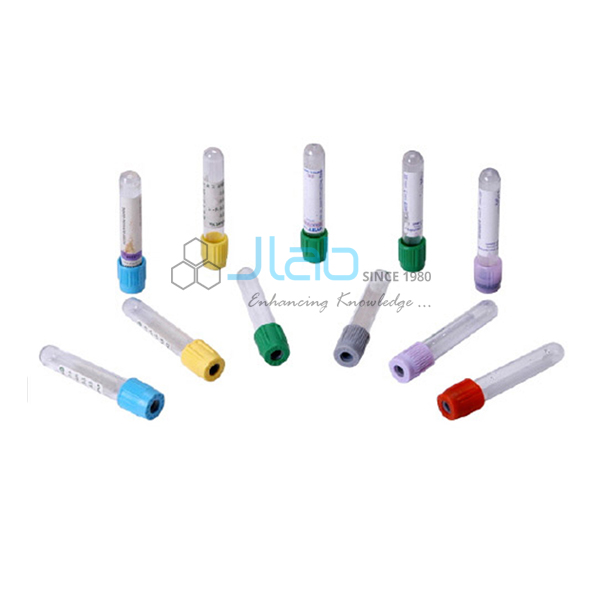
Product Code : EL-PALE-9849
Jlab Export is a leading Vacuum Blood Collection System Manufacturer,and suppliers in India
Vacuum blood collection tubes come ready-made with their additive inside and a set vacuum that draws the blood in. Because the sample goes straight into the tube, there is no step of pouring blood from a syringe into separate vials. In anticoagulant tubes the blood meets the anticoagulant as soon as it enters.
Specifications
| Type | Evacuated blood collection tubes |
| Additives | Ready-made tubes with different additives |
| Transfer | Blood goes straight into the tube, with no transfer from a syringe to vials |
| Anticoagulant contact | Immediate, as blood enters the tube |
| Minimum order quantity | 100 units |
| Dispatch time | Usually 3–5 working days |
| Manufacturer | JLab (Jain Laboratory Instruments Pvt Ltd), Ambala, India |
Specimen Handling Practicals for MLT Students
In a medical laboratory technology course, students learn what each tube type yields. A sample in a plain or clot activator tube is left to clot and then spun in a Centrifuge beside a sample in an anticoagulant tube. The class compares the clear serum above the clot with plasma above the packed cells.
For haematology tests, anticoagulated tubes are kept evenly mixed on a Blood Tube Roller Mixer until the sample is taken out. Teachers also show a deliberately underfilled tube, so students see how a short draw changes the blood-to-additive ratio.
Frequently Asked Questions
What do the different additives do?
Anticoagulants such as EDTA, citrate or heparin stop the blood from clotting, so whole blood or plasma can be tested. Clot activators speed up clotting for serum, and some tubes carry a gel that sits between serum and cells after centrifuging. Each additive suits particular tests.
Why are the tubes mixed by gentle inversion?
Turning the tube slowly upside down and back a few times spreads the additive through the blood. Too little mixing can leave small clots in an anticoagulant tube. Shaking hard breaks red cells, and a haemolysed sample is not fit for many tests.
Can an underfilled tube still be used?
Often not. The vacuum is set for a fixed volume, and the amount of additive matches that volume. A short draw changes the ratio, which matters most in citrate tubes for clotting tests. The laboratory decides from the test whether the sample is accepted.
Which tubes give serum and which give plasma?
Plain and clot activator tubes give serum, the fluid left after blood clots. Anticoagulant tubes give plasma, which still contains the clotting proteins. Both are separated from the cells by centrifuging.
How should unused tubes be stored?
Keep them in their packs at room temperature, out of direct sunlight, and use them before the expiry date printed on each tube. An old tube can lose part of its vacuum and draw less blood than it should.
Other Blood Sample Equipment
- Machine Made Capillary
- Test Tube Rack
- ESR Tube Stand (ESR stand)
For a quote, use Add To Cart or send us a message through the contact page.
Last updated: 12 November 2026