Anti-Locking Braking System Trainer Manufacturer,Supplier and Exporter in India
Product Code : EL-AELE-9378
Jlab Export is a leading Anti-Locking Braking System Trainer Manufacturer,and suppliers in India
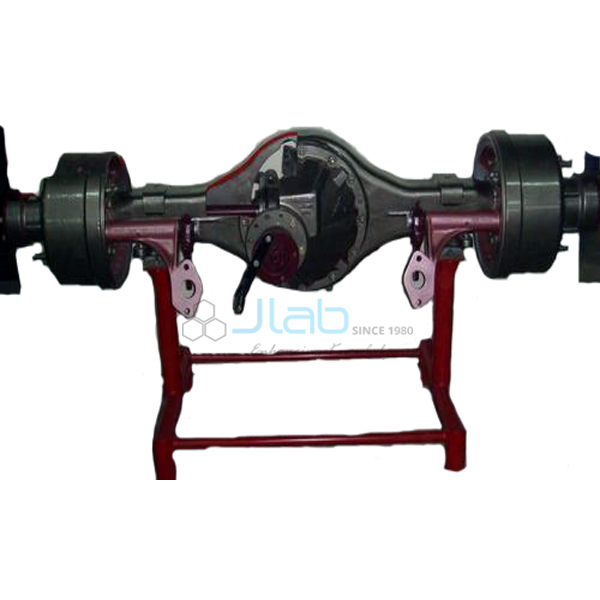
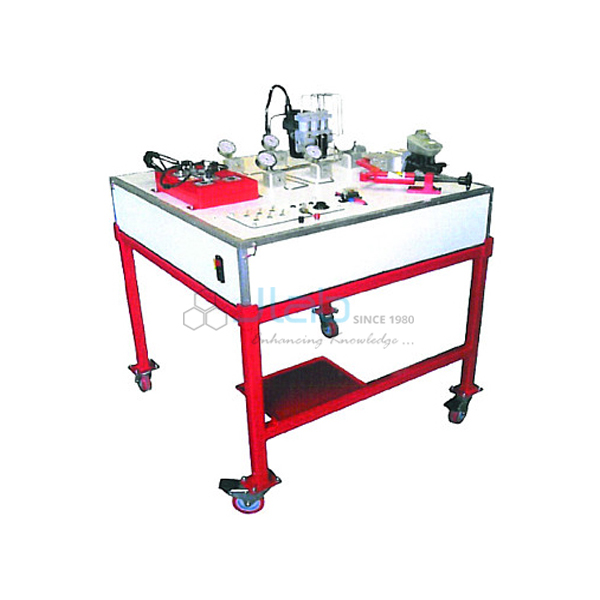
When a wheel starts to lock under hard braking, an anti-lock system eases the pressure at that wheel for an instant and then reapplies it. The tyre keeps its grip and the driver can still steer. This trainer mounts original automotive ABS components on a mobile floor stand, with a colour-coded schematic chart of the system and its circuit.
Specifications
| Type | Anti-lock braking system (ABS) trainer |
| Components | Original automotive ABS brake components |
| Control | Computer-controlled anti-lock (skid control) |
| Stand | Integrated floor stand on wheels |
| Stand material | Powder-coated electro-galvanised steel |
| Reference chart | Colour-coded schematic of the ABS system and circuit, under a polycarbonate screen |
| Minimum order quantity | 1 unit |
| Dispatch time | Usually 14–18 working days |
| Manufacturer | JLab (Jain Laboratory Instruments Pvt Ltd), Ambala, India |
Practicals on Anti-Lock Braking
Students begin by finding each part on the stand and on the chart. They locate the wheel speed sensors and toothed rings, the hydraulic modulator with its valves and pump, and the control unit. Because ABS sits on top of a normal hydraulic brake system, students learn the base brakes first on the Hydraulic Brake Chassis Trainer.
Electrical checks come next. With a Digital Multimeter, students test a wheel speed sensor and its wiring for resistance and continuity, and check the supply and earth at the control unit. The ABS warning lamp, which tells the driver the system has a fault, is covered on the Vehicle Displays Principles Systems Trainer.
Frequently Asked Questions
What does ABS do?
It stops the wheels from locking under hard braking. The control unit watches each wheel speed sensor. When one wheel slows much faster than the vehicle, it releases and reapplies the pressure at that wheel several times a second.
What are the main parts of an ABS?
Wheel speed sensors read the speed of each wheel. The control unit compares the signals and decides when a wheel is about to lock. The hydraulic modulator, with its solenoid valves and return pump, holds, releases and reapplies brake pressure at that wheel.
What happens if the ABS develops a fault?
The control unit switches anti-lock off and lights the ABS warning lamp. The normal hydraulic brakes still work, but the wheels can lock under hard braking until the fault is found and repaired.
Why does the pedal pulse when ABS works?
The modulator valves open and close quickly and the return pump pushes fluid back towards the master cylinder. The driver feels this as a pulsing pedal, which is normal during an ABS stop.
Is bleeding an ABS system different?
The wheel brakes are usually bled in the normal way. If air has reached the modulator, many systems need a scan tool to run the pump and valves during bleeding. The service procedure for the system should be followed.
Other Brake Trainers and Models
- Pneumatic Air Brake Trainer
- Model of Disc Brake System
- Model of Hydraulic Brake Unit Four Wheel Type
For a quote, use Add To Cart or send us a message through the contact page.
Last updated: 5 November 2026