Carbon Rod Manufacturer,Supplier and Exporter in India
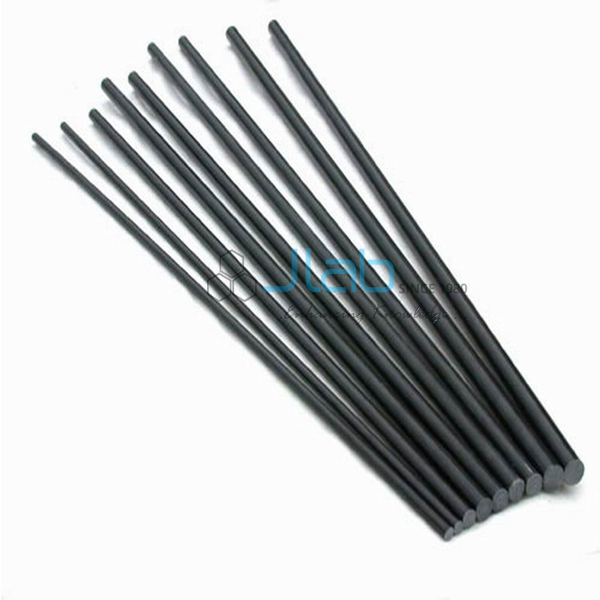
Product Code : EL-SLE-4783
Jlab Export is a leading Carbon Rod Manufacturer,and suppliers in India
Carbon Rod (code EL-SLE-4783) is a 9 in long, 6 mm diameter carbon rod used in physics labs for studying static electricity charges, where it serves as the conducting rod that students compare with insulating rods such as ebonite and glass. It is made for laboratory use in schools and colleges by Jain Laboratory Instruments Pvt Ltd (JLab) at its works in Ambala, India.
Specifications
| Parameter | Detail |
|---|---|
| Material | Carbon |
| Length | 9 in (about 229 mm) |
| Diameter | 6 mm |
| Listed use | Studying static electricity charges |
| Quality check | Each rod is visually inspected before dispatch |
| Pack quantity | Each (sold individually) |
| Minimum order quantity | 10 units |
| Dispatch time | Usually 7–10 working days |
| Product code | EL-SLE-4783 |
| Manufacturer | Jain Laboratory Instruments Pvt Ltd (JLab) — OEM |
| Country of origin | India (made in Ambala, Haryana) |
How Does It Compare with Other JLab Rods?
| Rod | Size | Electrical behaviour and listed use |
|---|---|---|
| This carbon rod (EL-SLE-4783) | 9 in x 6 mm | Conductor; listed for studying static electricity charges |
| Ebonite Rod | 12 in long, 9 mm diameter | Insulator; charged by rubbing with fur or wool for friction-charge experiments |
| Electrode Carbon Rod | 100 x 5 mm | Conductor; listed as an electrode for electrolysis |
Use this rod alongside an insulating rod when you want students to see the difference between conductors and insulators in electrostatics; for electrolysis cells, the shorter carbon electrode rod is the listed choice.
What Is the Carbon Rod Used For?
Carbon conducts electricity, which is exactly why it is useful in a static electricity lesson. If students hold a carbon rod in the hand and rub it, it shows no lasting charge on an electroscope, because any charge flows away through the hand — while an ebonite or glass rod treated the same way does hold a charge. Mounted on an insulating handle, the carbon rod can be charged, and the charge spreads over its whole surface. These observations support the treatment of conductors, insulators and charging by induction in the Electric Charges and Fields chapter of class 12 physics, and the introductory electrostatics taught in earlier classes and in college labs.
Carbon rods are also widely used as inert electrodes, for example in electrolysis; this listing is given for electrostatics, so ask JLab if you intend to use it in an electrolysis cell. Carbon rods are brittle, so store them where they cannot roll off the bench, avoid bending them, and wipe off dust and grease before an experiment.
What to Specify When Ordering
- Intended use — electrostatics or electrode work, so JLab can confirm the right rod.
- Quantity — the minimum order is 10 units.
- Comparison rods — add ebonite or glass rods for conductor–insulator demonstrations.
- Detection — a gold leaf electroscope or electrostatic kit completes the set-up.
Frequently Asked Questions
What size is the carbon rod?
It is 9 in long (about 229 mm) with a diameter of 6 mm.
How is a carbon rod used in static electricity experiments?
As a conductor. Held in the hand it does not keep a charge when rubbed, which contrasts with insulating rods such as ebonite or glass; on an insulating handle it can be charged and the charge spreads over its surface.
Can it be used as an electrode for electrolysis?
Carbon is a common inert electrode material, but this rod is listed for electrostatics. JLab also lists a separate carbon electrode rod for electrolysis, so state your use when you enquire.
Who manufactures this carbon rod?
Jain Laboratory Instruments Pvt Ltd, trading as JLab, makes it at its works in Ambala, Haryana, India, and quotes for it directly.
OEM Manufacturer
JLab is the trading name of Jain Laboratory Instruments Pvt Ltd, a physics laboratory equipment manufacturer in India, incorporated in 2017 and based on Hargolal Road, Ambala, Haryana. The carbon rod is produced at JLab’s own works rather than sourced from a trader, so schools, colleges, dealers and importers buy it factory-direct; each rod is inspected by eye before dispatch and repeat orders are handled by the manufacturer. JLab exports worldwide and ships to buyers in every region — for example Bangladesh in South Asia, Australia in Oceania, Canada in North America, Morocco in North Africa and Ivory Coast in West Africa.
Related Electrostatics Apparatus
- Ebonite Rod — an insulating rod charged by friction with fur or wool.
- Gold Leaf Electroscope — detects whether a rod carries a charge.
- Electrostatic Kit — an electroscope, polythene plates, an electrophorus and other parts for electrostatics.
- Glass Rod — soda glass rods, a common insulating rod for comparison.
- Electrode Carbon Rod — the carbon electrode listed for electrolysis.
See more items in the School Lab Equipment range.
Request a Quote
Quotes come direct from the manufacturer. Use the Add To Cart enquiry button on this page, or send the quantity (minimum 10 units), your intended use and your delivery location through the contact page.
Last updated: 4 October 2026