Classification of Pathogenic Fungi Model Manufacturer,Supplier and Exporter in India
Product Code : EL-BE-6209
Jlab Export is a leading Classification of Pathogenic Fungi Model Manufacturer,and suppliers in India
Classification of Pathogenic Fungi Model (code EL-BE-6209) is a microbiology teaching model on how the fungi that cause human disease are grouped — from superficial skin infections to deep, systemic and opportunistic mycoses. It supports class 11 lessons on Kingdom Fungi and college microbiology, medical and nursing courses. Jain Laboratory Instruments Pvt Ltd (JLab) makes it at its works in Ambala, India.
Specifications
| Parameter | Detail |
|---|---|
| Topic | Classification of the fungi that cause disease in humans |
| Suggested courses | Class 11 biology (Kingdom Fungi), undergraduate microbiology, medical and nursing teaching |
| Parts, labels, size and material | Not described in this listing — ask for a description and photo with your quote |
| Quality check | Each model is visually inspected before dispatch |
| Pack quantity | Each (sold individually) |
| Minimum order quantity | 10 units |
| Dispatch time | Usually 7–10 working days |
| Product code | EL-BE-6209 |
| Manufacturer | Jain Laboratory Instruments Pvt Ltd (JLab) — OEM |
| Country of origin | India (made in Ambala, Haryana) |
What Is the Pathogenic Fungi Model Used For?
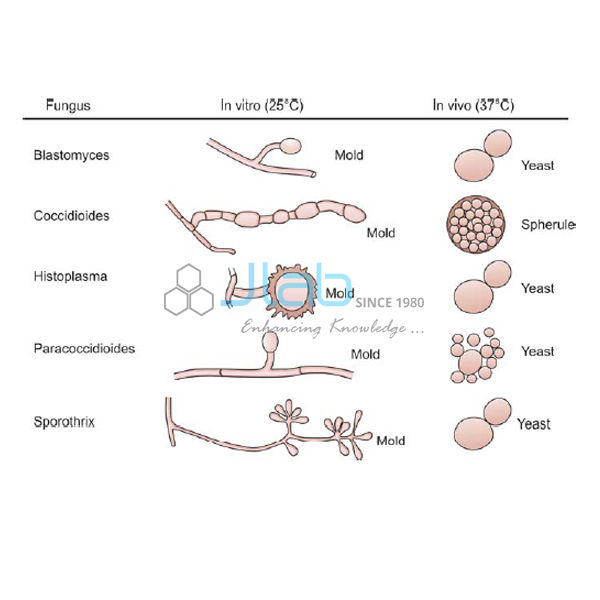
Fungi are eukaryotes with cell walls of chitin and membranes containing ergosterol, the target of many antifungal drugs. Medically important fungi grow as budding yeasts or as moulds made of branching hyphae. Dimorphic fungi switch between the two: they grow as moulds in soil at room temperature and as yeasts or spherules in tissue at body temperature.
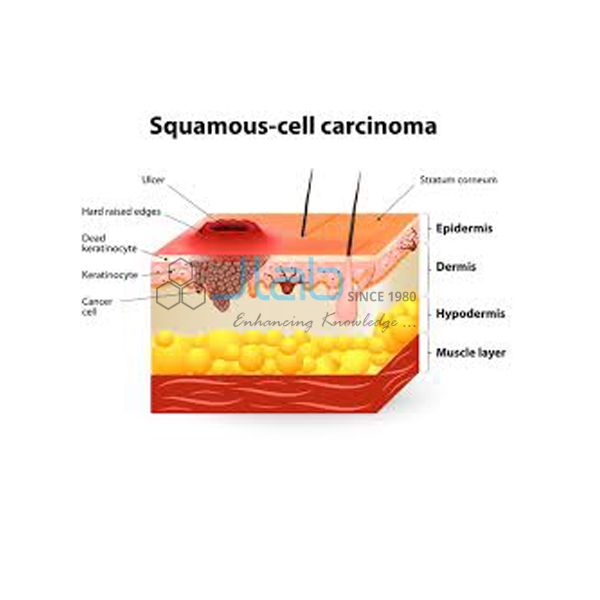
Clinically, mycoses are classified by the depth of infection. Superficial mycoses, such as pityriasis versicolor caused by Malassezia, affect only the outermost skin. Cutaneous mycoses are caused mainly by the dermatophytes Trichophyton, Microsporum and Epidermophyton, which digest keratin and cause ringworm (tinea), the fungal disease named in class 12 Human Health and Disease. Subcutaneous mycoses, such as sporotrichosis and mycetoma, follow injury by thorns or splinters. Systemic mycoses, such as histoplasmosis and coccidioidomycosis, begin when spores are inhaled. Opportunistic fungi such as Candida, Aspergillus and Cryptococcus mainly cause serious disease when immunity is weak. Laboratories start with a potassium hydroxide (KOH) mount and culture on Sabouraud dextrose agar.
Frequently Asked Questions
What does the fungi model cover?
The classification of pathogenic fungi, as its title states. The listing does not describe the parts, labels, size or material, so ask JLab for a description and photo with your quotation.
What is a dimorphic fungus?
One that grows as a mould outside the body and as a yeast or similar tissue form inside it, such as Histoplasma or Sporothrix.
How does it differ from the Cutaneous and Subcutaneous Mycoses Model?
That model concentrates on fungal infections of the skin and the tissue beneath it, while this one sets out the whole classification. Ask JLab to confirm what each shows before ordering both.
OEM Manufacturer
JLab, the trading name of Jain Laboratory Instruments Pvt Ltd, manufactures biology lab equipment in India, including microbiology teaching models. Incorporated in 2017 and located on Hargolal Road, Ambala, Haryana, it builds this model at its own works and sells it factory-direct rather than through traders. JLab exports worldwide and ships to buyers in every region — for example North Macedonia in Southern Europe, Angola in Central Africa, Samoa in Oceania, Cambodia in Southeast Asia and Botswana in Southern Africa.
Related Mycology and Cell Models
- Cutaneous and Subcutaneous Mycoses Model — fungal infections of the skin and the tissue beneath it.
- Lung Abscess Complicated by Fungus Ball Model — a fungus ball formed in a lung abscess.
- Comparison of Prokaryotic and Eukaryotic Cells Model — why fungal cells differ from bacteria.
- Classification of Virus Model — the matching classification model for viruses.
Browse the full series in Biology Equipment and the wider Biology Lab Equipment range.
Request a Quote
Ask for a quotation direct from the manufacturer through Add To Cart or the contact page, stating the quantity (minimum 10 units) and the destination.
Last updated: 4 October 2026